
Car care
Common Toyota Corolla Problems and How to Deal With Them
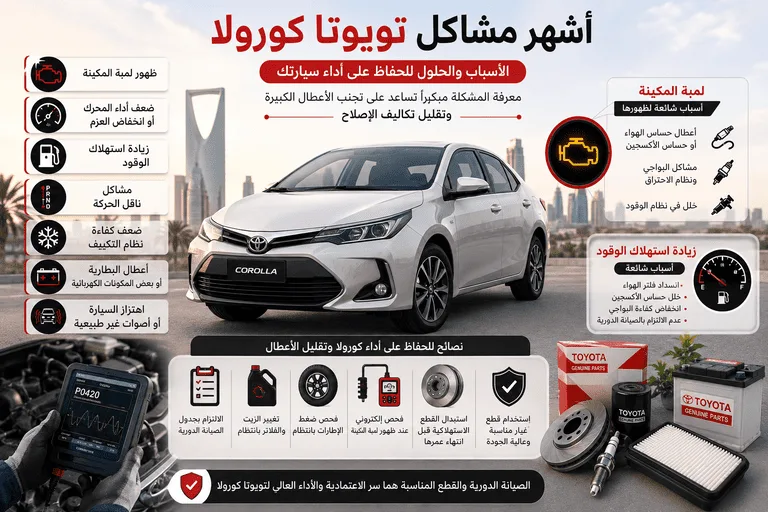
The Toyota Corolla is one of the most widespread cars in Saudi Arabia and around the world. It is known for its reliability, low running costs and the wide availability of its spare parts. Still, like any car, it can develop faults over time, from heavy use or from delayed routine maintenance. That is why many owners look up the most common Toyota Corolla problems: to learn their causes and how to deal with them before they turn into bigger, more expensive faults.
What are the most common Toyota Corolla problems?
The faults a Toyota Corolla can face vary with the model year, the mileage and how the car is used. However, a set of problems comes up again and again among many owners, including:
- The check engine light coming on.
- Weak engine performance or reduced torque.
- Higher fuel consumption.
- Transmission problems.
- Weak air conditioning performance.
- Battery faults or faults in some electrical components.
- The car vibrating or making unusual noises while driving.
Some of these faults may be minor at first. Ignoring them, though, can damage other parts and raise the repair cost. So it is always advisable to have the car inspected when you notice any change in how it performs.
Why does the check engine light come on in a Toyota Corolla?
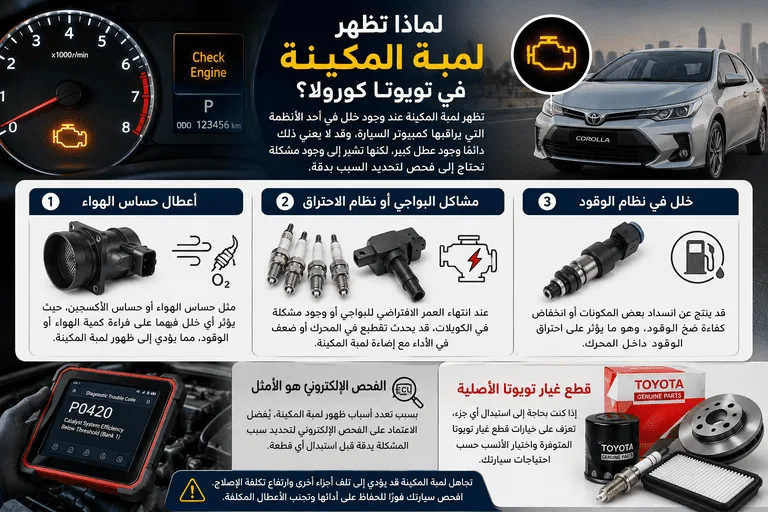
The check engine light is one of the faults that most often sends drivers searching for the most common Toyota Corolla problems. It does not always mean a major fault. It may point to a problem in one of the systems the car's computer monitors.
The most common causes include:
1. Air sensor faults
This includes the air sensor or the oxygen sensor. Any fault in either one affects the reading of the amount of air or fuel, which makes the check engine light come on.
2. Spark plug or ignition system problems
When the spark plugs reach the end of their service life, or there is a problem with the ignition coils, the engine may misfire or lose performance, and the check engine light comes on.
3. A fault in the fuel system
This can come from some components becoming clogged or from weaker fuel pumping, which affects how fuel burns inside the engine.
Because the check engine light has many possible causes, it is best to rely on a computer diagnostic scan to pinpoint the problem before replacing any part.
If you need to replace a part, you can browse the available Toyota spare parts options and choose what best suits your car's needs.
Why does fuel consumption increase in a Toyota Corolla?
The Corolla is known for its fuel economy, so higher consumption may be a sign of a problem that needs checking.
The main causes include:
A clogged air filter
When the engine does not get enough air, it tries to compensate by using more fuel. This lowers efficiency and raises consumption.
A faulty oxygen sensor
The oxygen sensor measures the amount of oxygen in the exhaust and helps the control unit adjust the fuel mixture. When it fails, the car may inject more fuel than it needs, which shows up in consumption.
Worn spark plugs
Damaged spark plugs cause incomplete combustion. As a result, the car burns more fuel without getting the full benefit from it.
Skipping routine maintenance
Delaying oil and filter changes and neglecting to check wear parts can gradually reduce the car's efficiency and increase fuel consumption, without the driver noticing the real cause.
What causes a Toyota Corolla to vibrate while driving or when stopped?
Vibration can be minor in some cases, but it can also point to a fault that needs repair.
The most common causes include:
Damaged engine mounts
Engine mounts absorb vibration. When they are damaged, the vibration passes to the car's body.
Unbalanced tyres
Tyres that are not balanced or that wear unevenly can make the car vibrate, especially at high speeds.
Spark plug and ignition coil problems
When one of the cylinders is not working as well as it should, the driver feels a clear vibration, especially when the car is stopped.
Suspension faults
Some suspension components, control arms or shock absorbers can cause vibration or unusual noises while driving.
Why does the air conditioning get weak in a Toyota Corolla?
Weak air conditioning is a common fault, especially in summer. It can have several causes, including:
Low refrigerant level
A low amount of refrigerant directly affects cooling performance. It can come from a leak in the system or simply from the need to recharge the refrigerant after a period of use.
A damaged compressor
The compressor is the heart of the air conditioning system. Any fault in it leads to weak cooling or the whole system stopping. So it is best to have it checked when you notice a sudden drop in cooling performance.
A clogged cabin air filter
The cabin air filter cleans the air entering the cabin. When dust and dirt build up on it, airflow drops and the air conditioning performs worse, even if the system itself is working normally.
Regular checks of the air conditioning system and cleaning its components help keep cooling efficient, especially in hot weather.
When do Toyota Corolla parts need replacing?
The service life of car parts depends on the type of part and how the car is used. So it is best to follow the maintenance schedule recommended by the manufacturer.
The parts that most often need periodic replacement include:
- Air filter.
- Oil filter.
- Spark plugs.
- Battery.
- Brake pads.
- Wiper blades.
- Some sensors when they fail.
When a replacement is needed, it is important to choose parts that suit the car's model to ensure performance and reliability. You can compare the different options available in Toyota spare parts and choose the part that fits your needs and budget before you buy.
How can you reduce Toyota Corolla problems and keep the car performing well?
Many faults can be prevented with a few simple habits that help look after the car and lower maintenance costs. The most important are:
- Follow the routine maintenance schedule recommended by the manufacturer.
- Use suitable spare parts when replacing any part of the car.
- Change the engine oil and filters on schedule.
- Check tyre pressure regularly to keep the car stable and reduce fuel consumption.
- Do not ignore unusual noises or vibration while driving.
- Get a computer diagnostic scan when the check engine light comes on to pinpoint the cause.
- Replace wear parts before the end of their service life to avoid sudden breakdowns.
Paying attention to these steps helps keep the car efficient, lowers the chance of costly faults and improves safety while driving.
Conclusion
The Toyota Corolla is known as one of the most reliable cars. However, constant use and skipped maintenance can lead to some faults over time. Knowing the most common Toyota Corolla problems and their causes helps you spot them early and make the right decision before they get worse.
Choosing the right parts when replacing them matters just as much as the maintenance itself, because it helps preserve the car's performance and service life. When you need to replace a part, compare the available options and choose what suits your car to get the best performance and quality over the long term.
Frequently asked questions
1. What are the most common Toyota Corolla problems?
The most common Toyota Corolla problems include the check engine light coming on, weak engine performance, higher fuel consumption, transmission faults and weak air conditioning, as well as some electrical problems and the car vibrating while driving.
2. Why does the check engine light come on in a Toyota Corolla?
The check engine light can come on because of a fault in the air sensor or the oxygen sensor, damaged spark plugs, or a problem in the fuel system. A computer diagnostic scan is recommended to pinpoint the cause.
3. What causes higher fuel consumption in a Toyota Corolla?
The main causes are a clogged air filter, a damaged oxygen sensor, worn spark plugs, delayed routine maintenance, or low tyre pressure.
4. When should Toyota Corolla spare parts be replaced?
The replacement time depends on the type of part and how the car is used. It is best to follow the routine maintenance schedule and replace wear parts such as spark plugs, filters and the battery when they reach the end of their service life.
5. How can you reduce Toyota Corolla problems?
You can reduce faults through routine maintenance, using suitable spare parts, checking oils, filters and tyres regularly, and not ignoring any warning signs or unusual noises.
Related articles
 Car care
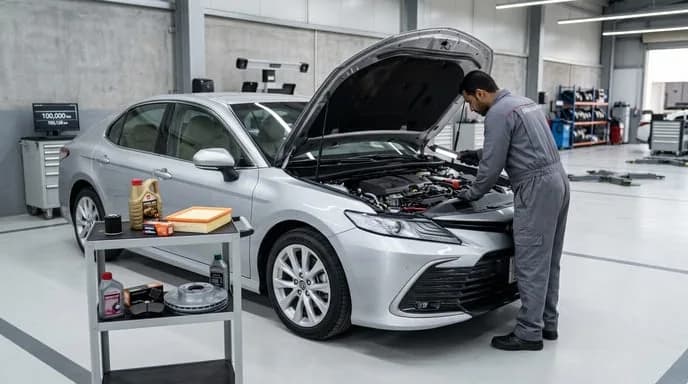
Toyota 100,000 km service: which parts need replacing?
Toyota maintenance after 100,000 km: the key checks and parts to review, from oil, filters and brakes to the battery, tyres and suspension.
5 min read Car care
How to Find Toyota Parts by VIN Number
Learn how to find Toyota parts by VIN, step by step, to get genuine parts that fit your car exactly and avoid buying mistakes.
8 min readCar care
Car Noises That Mean Something Is Wrong and How Serious They Are
Car noises that signal a problem can start small but warn of bigger faults. Learn the main causes, how to prevent faults early and how to save on repairs.
6 min read