
Tires & wheels
Best Tire Pressure for Summer and How to Set It
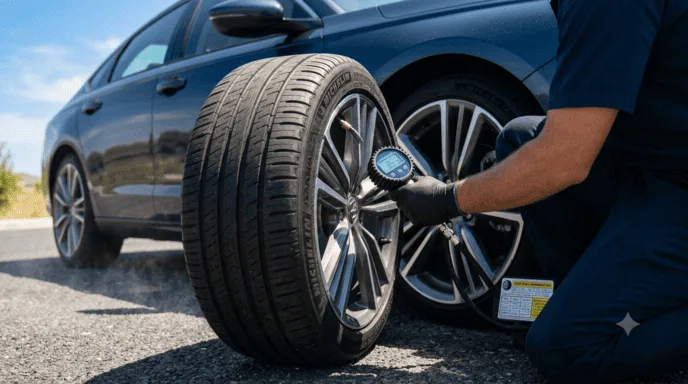
As temperatures rise in summer, tires become one of the car parts most affected by the weather. A change in temperature changes the air pressure inside the tire, and this can affect the car's stability, fuel consumption and tire life.
That is why many drivers look for the best tire pressure for summer to drive safely and keep the car running efficiently.
What is the best tire pressure for summer?
There is no single number that suits every car, because the best tire pressure in summer depends on the car type, the tire size and the manufacturer's recommendations. So the main reference is the pressure the manufacturer specifies, not the number printed on the tire itself.
You can find the correct pressure on:
- The sticker on the driver's door pillar.
- The car owner's manual.
- The sticker inside the fuel filler door on some cars.
Tire pressure is usually measured in PSI. Stick to the recommended value for the best performance and safety while driving.
Does summer heat affect tire pressure?
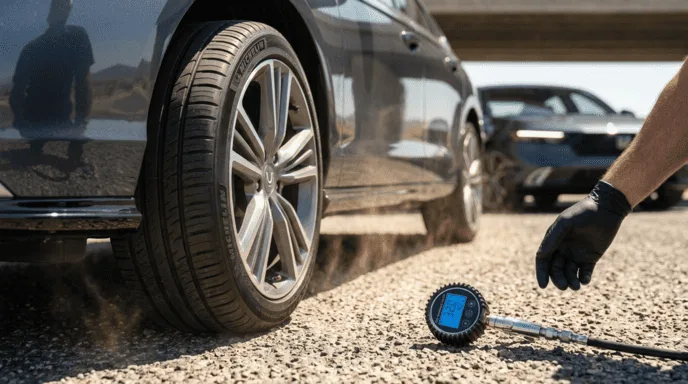
Yes. High temperatures directly affect the air pressure inside the tire. Air expands as it heats up, so the pressure rises compared with cooler weather.
But this does not mean you should let air out of the tire in summer, because the manufacturer sets the right pressure values with different weather conditions in mind. So always measure the pressure when the tires are cold, before driving or after the car has been parked for several hours, to get an accurate reading.
How do you find the right pressure for your car's tires?
To make sure your tires work as they should, follow these steps:
Check the tire pressure sticker
The sticker inside the driver's door shows the recommended pressure for the front and rear tires, both for daily driving and for when the car carries extra load.
Use a reliable pressure gauge
A tire pressure gauge gives you an accurate reading. It is easy to use at home or at a petrol station.
Do not rely on the number printed on the tire
The number on the tire shows the maximum pressure the tire can handle, not the right pressure for daily use. So do not rely on it when you fill the tires with air.
What happens when tire pressure is too high?
Some people think higher pressure improves performance, but in fact excess pressure can cause several problems, including:
- Less grip on the road.
- A longer stopping distance when braking.
- Fast wear in the center of the tire.
- A less comfortable ride because the tire is stiffer.
- A higher chance of tire damage when you hit potholes or speed bumps.
So it is always best to stick to the pressure the manufacturer recommends.
What harm does low tire pressure cause?
Low pressure is just as serious a problem as high pressure. It can cause:
- Higher fuel consumption.
- The tire heating up while driving.
- Faster wear on the tire's sides.
- Poor stability, especially in turns.
- A higher chance of tire damage or a blowout on long trips.
That is why checking tire pressure regularly is a basic part of car maintenance.
When should you check tire pressure in summer?
For the best results, follow these guidelines:
- Check the pressure in the morning before you start driving.
- Make sure the tires are cold before measuring.
- Check the pressure at least once every two weeks, or once a month at minimum.
- Check the tires before long trips.
- Do not forget to check the spare tire too.
Following these steps helps keep your tires performing well and lowers the chance of sudden breakdowns.
Tips to look after your tires in summer
Besides setting the right pressure, several habits help extend tire life, including:
- Sticking to the pressure the manufacturer recommends.
- Checking the tires regularly for cracks or bulges.
- Rotating the tires according to the recommended maintenance schedule.
- Avoiding overloading, which puts extra stress on the tires.
- Driving smoothly and avoiding sudden acceleration or braking.
- Getting a wheel alignment when you notice uneven wear.
When do you need to have your tires checked or replaced?
If you notice the air pressure dropping repeatedly, unusual wear, or vibration while driving, do not ignore the problem. These signs can point to tire damage or a fault in the suspension or wheel balance.
In that case, you can use the car maintenance service for a full tire inspection, to make sure the tires are safe before the problem turns into a bigger fault.
How does Speero help you get the right spare parts?
Sometimes you may need to replace the tires or related components, such as the tire pressure sensor, the valves or the rims. Speero makes buying easier here: it lets you compare multiple offers and prices before you decide, so you can choose the right part for your needs and budget.
If you are looking for reliable spare parts for your car, you can visit the car spare parts store to see the available options and compare prices easily.
Conclusion
Sticking to the best tire pressure in summer improves driving safety and the car's stability, lowers fuel consumption and extends the life of your tires. Checking the pressure regularly and following the manufacturer's recommendations are among the simplest steps, and they make a big difference to how the car performs. When you need maintenance or a replacement for any car component, Speero offers practical solutions that combine a range of options with the ability to compare prices, so you can make the right decision with confidence.
Frequently asked questions
1. What is the best tire pressure in summer?
The best tire pressure in summer is the pressure your car's manufacturer recommends, not the number printed on the tire. You can find it on the driver's door sticker or in the owner's manual, for the best performance and safety while driving.
2. Should I increase tire pressure in summer?
No. Raising tire pressure just because temperatures are high is not recommended. Hot weather naturally raises the air pressure inside the tire, so sticking to the manufacturer's recommended value is enough.
3. When is the best time to check tire pressure?
Check tire pressure when the tires are cold, for example in the morning before driving or after the car has been parked for several hours. Driving heats the tires and affects the accuracy of the pressure reading.
4. What happens if tire pressure is low?
Low tire pressure can increase fuel consumption, speed up tire wear and make the tires heat up while driving. It also weakens the car's stability and raises the chance of tire damage.
5. How do I find the right tire pressure for my car?
You can find the right pressure on the tire pressure sticker inside the driver's door or in the car owner's manual. Use a reliable pressure gauge to make sure the tires stay within the recommended values.
Related articles
 Tires & wheels
The importance of tire rotation and when should it be done.
Learn why tire rotation matters, how uneven wear affects braking and stability, and how regular checks help protect your tires.
4 min read Tires & wheels
5 Factors that Cause Tire Wear
Learn five factors that cause tire wear and how tire rotation supports stability, wet-road traction, and longer tire life.
4 min read Tires & wheels
Types of tire patches and when you need them.
Tire patches are essential tools that can save money, time, and effort. Learn about their different types and when to use them.
4 min read