
Suspension
Types of Car Suspension Systems
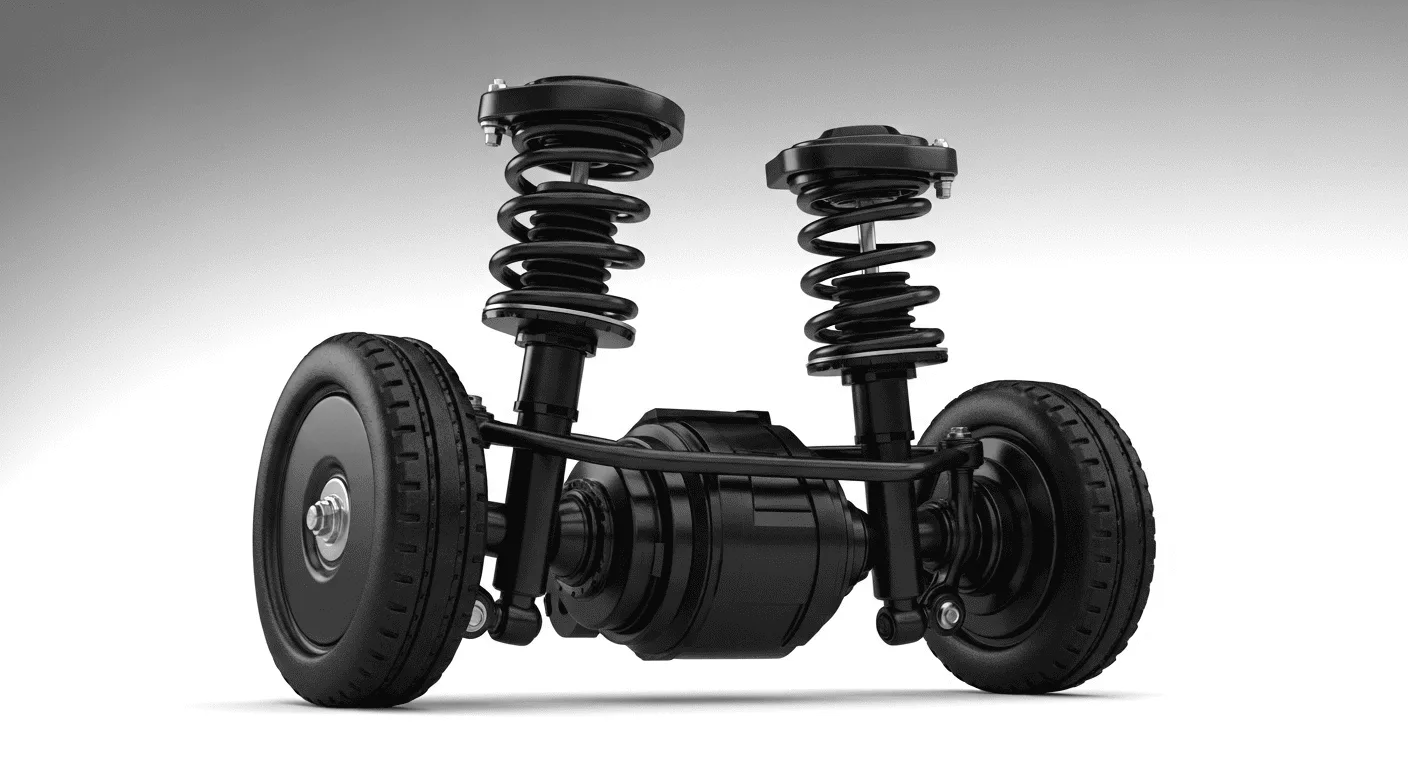
In its simplest form, you know your car takes you from point A to point B safely and comfortably, or at least it should. But have you ever thought about the complex system of mechanisms that makes a smooth drive possible? A vehicle's suspension system is a key part of keeping every road trip comfortable and safe, even if it rarely gets the credit it deserves. This comprehensive guide covers the different types of car suspension systems, what they do, how to choose the right system for your car, and tips for keeping it performing at its best.
What is a car suspension system?
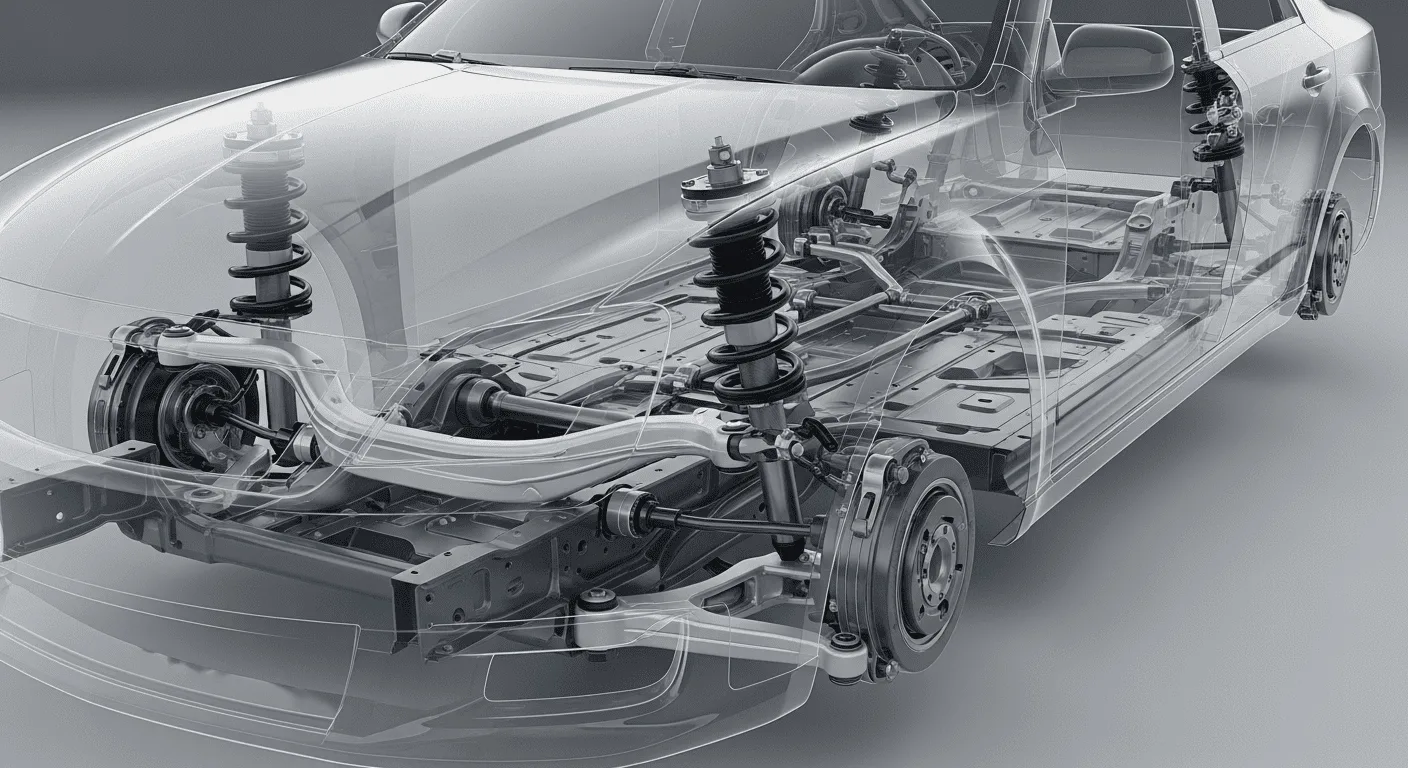
A car's suspension system works like its backbone. It supports the weight and absorbs shocks and bumps from the road surface. The suspension system is a key part of the car's overall performance, handling and safety.
More specifically, the suspension system increases friction between your tyres and the road for steady steering and better handling. The suspension system is made up of several components:
- The frame: holds the car's cabin in place
- Springs, shock absorbers and struts: support the car's weight and absorb and reduce excess energy from road shocks
- Anti-roll bar: transfers wheel movement and steadies the car
Suspension problems or failures can cause other problems in your car. They often happen after an accident or after driving over a large pothole or a rough surface. The suspension can affect wheel alignment, cause early tyre wear, or lead to a tyre balance problem.
Main functions of the suspension system
Each suspension component plays a specific role. From the shock absorbers to the springs, every part keeps the drive comfortable and stable. Below are the system's main functions and the key components that support them.
Improving ride comfort
One of the main functions of the suspension system is absorbing road shocks, which gives passengers a smoother, more comfortable ride. Several components work together to provide this comfort:
- Springs: absorb or soften the shocks from the road's contact with the wheels so they do not reach the car body
- Shock absorbers: dampen the up-and-down movements, or oscillations, produced by the springs
Keeping the car stable
Beyond comfort, the suspension system is essential for keeping the car stable, especially when cornering and manoeuvring. Most of the system's components work together for a steadier drive:
- Ball joint: takes lateral and horizontal loads on the car and acts as a pivot point when the car turns, for better stability.
- Stabiliser bar: keeps the body balanced when cornering, to reduce the risk of rollover when turning at higher speeds.
- Lateral control rod: holds the axle when a load comes from the side.
- Steering knuckle: connects the suspension to the wheel assembly to control movement, keep the wheels correctly aligned and maintain stability.
- Upper and lower arms: connect the steering knuckle to the car's frame so the wheels can be mounted on it, while letting it move up and down within the suspension for stable turning. Not every suspension system has an upper arm, but all have a lower arm.
- Strut rod: holds the lower arm so the front wheels work correctly when steering. It also stops the lower arm from moving forwards or backwards.
Keeping the tyres in contact with the road
Last but not least, the suspension system keeps the tyres in full contact with the road surface for better safety and performance. These important components include:
- Springs: increase the wheels' traction on the road.
- Steering knuckle: keeps the tyres aligned and controls their movement, which affects how the tyres contact the road.
Different types of car suspension systems
There are different types of suspension systems, and each has its pros and cons. Understanding the different types will help you pick the right system for your car if you want a particular kind of driving experience.
Conventional coil spring suspension
Conventional coil spring suspension, or simply coil suspension, is common in many passenger cars and is a more affordable option. In this system, each wheel is connected to the car's body or chassis by coil springs that support the car's weight and absorb road shocks and vibrations. Conventional systems also include other important components, such as shock absorbers, control arms and stabiliser bars, to improve ride comfort, stability and handling.
The main advantages of conventional suspension are its simplicity, reasonable price and reliability. It is widely used in everyday passenger cars because it balances comfort and performance well. However, its adjustability and its performance in harsh conditions can be limited compared with more advanced systems, such as air or multi-link suspension.
Leaf spring suspension
Leaf spring suspension is usually used in large vehicles and those built for heavy-duty use, such as trucks, pickups, 4x4 vehicles and trailers. It takes its name from the multiple layers, or "leaves", of spring steel joined in a pack. These layers are curved or arched and are usually fixed to the vehicle's frame at both ends, with the axle or wheel placed in the middle of the spring pack.
The main function of leaf spring suspension is to support the car's weight while giving the flexibility needed to absorb road shocks and vibrations. When you drive over bumps, potholes and uneven ground, the leaf springs compress and flex. This lets the wheels move independently while reducing body roll to keep the car stable.
Leaf springs are known for their durability, load capacity and relatively simple design. They can handle heavy loads and harsh driving conditions, which makes them well suited to off-road use and towing. However, these springs can also give a stiffer ride and less precise handling than other types, such as coil springs or air suspension. Modern designs and technologies are producing more advanced designs that help reduce these problems.
Torsion bar suspension
As the name suggests, torsion bar suspension uses torsion bars, or torsion springs, to support the car's weight and absorb road shocks. Unlike coil or leaf springs, which compress and extend vertically, torsion bars twist along their axis to provide suspension movement. In this system, each bar is usually fixed to the car's body or chassis at one end and connected to the suspension or control arm at the other. When the wheel meets bumps or uneven road surfaces, the torsion bar twists, storing energy and absorbing the shock for a smoother ride.
One of the main advantages of torsion bar suspension is adjustable ride height. You can raise or lower the ride height to suit the driver's preference or driving conditions simply by adjusting the tension of the torsion bars. This makes torsion bar suspension popular with off-road enthusiasts and performance drivers who want more flexibility in their suspension settings.
Despite these advantages, torsion bar suspension can be more complex and more expensive to maintain than other suspension types. These systems can also be prone to uneven wear over time, which can lead to problems if they are not properly maintained.
Air suspension
Air suspension offers excellent ride comfort and a high level of adjustability, which makes it very popular with luxury car owners. This system uses air-filled rubber bags or bellows, also called air springs, instead of conventional coil or leaf springs, to support the car's weight and absorb road shocks. In this system, the air springs usually sit between the car's body or chassis and the axle or wheel assembly.
The main advantage of these springs is a smooth, adjustable ride. The driver can easily adjust ride height and stiffness to suit their preference simply by controlling the air pressure in the springs. This adjustability gives a more comfortable ride, better handling and better stability, especially when carrying heavy loads or towing trailers.
Some air suspension systems have automatic or semi-automatic levelling to help keep a constant ride height regardless of the car's load or changes in weight distribution. This is useful for any vehicle that carries varied loads or tows, to keep performance and safety at their best at all times.
Air suspension is commonly used in luxury cars, luxury SUVs and high-performance cars because of its ride comfort and adjustability. It is also often used in commercial vehicles, buses and trucks, where load capacity and ride quality matter a great deal.
Unfortunately, these systems can need longer maintenance than conventional systems because air spring components are complex and need specialised equipment during servicing. They are also usually more expensive to make and repair, which means higher upfront and ownership costs.
MacPherson strut suspension
Named after its inventor, Earle S. MacPherson, MacPherson strut suspension combines the functions of the shock absorber and the suspension components in a single unit. It is usually used in front-wheel-drive cars, compact cars and sedans. Its main component is the strut assembly, which is made up of a coil spring, a shock absorber and a strut mount. The coil spring supports the car's weight and absorbs road shocks, while the shock absorber dampens and controls suspension movement.
In this setup, the strut assembly is usually mounted between the vehicle's body or frame and the wheel assembly, providing both structural support and suspension. This design simplifies the suspension, reduces weight and saves space, which makes it ideal for small vehicles with limited engine bay space.
The main advantages of MacPherson strut suspension are its simplicity and cost-effectiveness. This single component is easier and cheaper to make and install than other systems that need separate coil springs and shock absorbers. However, drivers may face some limits. Adjustment and tuning options for MacPherson suspension are limited compared with more advanced systems, which can affect ride quality and handling in high-performance or demanding driving conditions. It can also be more prone to wear and damage over time, needing replacement or maintenance for the best performance.
Multi-link suspension
Also called multi-link rear suspension or independent multi-link suspension, this system is widely used in modern vehicles, especially high-performance cars and luxury vehicles. Because it lets each wheel move independently, multi-link suspension gives excellent handling, stability and ride comfort, reducing the effect of road irregularities on the vehicle's body.
In this system, multiple links or suspension arms connect the wheel hub to the car's body or subframe. These links are usually arranged in a multi-link layout, which allows precise control of wheel movement in several directions: vertical (bump), lateral (side to side) and longitudinal (front to back).
The main advantage of multi-link suspension is that it works as an independent suspension. It separates each wheel's movement from the other wheels on the same axle, which increases stability and grip, especially when cornering or manoeuvring. This design lets each wheel respond on its own to changes in the road, keeping tyre contact and grip at their best at all times. It also gives excellent ride comfort by effectively isolating the cabin from road noise, vibrations and rough surfaces. Drivers can also tune the suspension more precisely, including spring rates, damping and geometry, for a smoother, more controlled drive than other suspension types.
Multi-link suspension is more complex and more expensive to make and maintain. Even so, its benefits in handling and ride comfort make it increasingly common in modern passenger cars, SUVs and crossovers.
Double wishbone suspension
Double wishbone suspension, also known as independent double wishbone suspension, is commonly used in high-performance vehicles, such as sports cars and some luxury cars. These systems are known for excellent handling, precise control and their ability to keep the tyres gripping the road well.
In this system, each wheel is connected to the vehicle's body or underbody by two wishbone-shaped control arms, usually shaped like the letter "A". One control arm is fixed to the wheel hub at the top and the other at the bottom, forming the shape. The main advantage of double wishbone suspension is that it works as an independent suspension, giving independent control of wheel movement in several directions, including vertical (on impact), lateral (side to side) and longitudinal (front to back). This design lets each wheel move independently to reduce changes in camber angle, and gives excellent handling and stability when cornering and manoeuvring.
It also gives excellent ride comfort by effectively isolating the cabin from road imperfections, vibrations and harshness. The geometry of the control arms can also be optimised to strike the right balance between ride comfort and handling, for a smooth, controlled drive.
Double wishbone suspension is complex and costly to make and maintain. Even so, it has become a popular choice for car enthusiasts and performance-minded drivers looking for the highest level of suspension performance.
Read also: The difference between ceramic and metallic brake pads and which suits your car
Choosing the right suspension system for your car
When it comes to choosing the right suspension system for your car, there are several factors to consider, such as your car type, how you use the car and your personal preferences.
- Dependent suspension: best for heavy-duty or heavy-load uses. Available as driven (solid axle) or non-driven (beam axle).
- Pros:
○ Can handle high loads
○ Easy to maintain
○ Strong off-road capability
○ Higher ground clearance and visibility
- Cons:
○ Poor handling
○ Heavy
○ Limited adjustability
○ Unstable at high speeds
- Independent suspension: ideal for comfort and better handling. MacPherson strut, double wishbone and multi-link suspensions are independent suspension systems. The pros and cons of these systems vary with the suspension type you choose. The pros and cons below are based on a general assessment of independent suspension systems.
- Pros:
○ Better handling
○ Better ride comfort
○ Better stability
○ More adaptability and flexibility for upgrades
○ Lower unsprung weight thanks to lighter, more compact assemblies
- Cons:
○ More complex and more expensive to design, make and maintain
○ May need more body or frame space, which limits design flexibility
○ Difficult maintenance and repair
○ Less durable or rugged in some off-road or heavy-duty uses
If you are not completely sure, or you are struggling to choose between several suspension types, getting professional advice may be necessary to make an informed decision.
The types of car suspension systems are not just technical details. They are what keep your trips safe and comfortable on the Kingdom's roads. Investing in the right system means your family's safety and your car's best performance. Do not wait for signs of damage: go to your nearest service centre today for a full inspection, and enjoy a comfortable, safe drive.
Keep your car in good shape with the best spare parts solutions from Speero: Best Kia spare parts store and Nissan spare parts
If you notice a change in your car's performance or unusual noises, it may be time to check your spare parts. Speero gives you reliable options for Kia and Nissan spare parts for better performance and safe driving.
Frequently asked questions
What are the main types of car suspension systems?
The main types are conventional coil spring, leaf spring, torsion bar, air, MacPherson strut, multi-link and double wishbone suspension. MacPherson strut, double wishbone and multi-link are independent suspension systems.
Which suspension is best for trucks and heavy loads?
Leaf spring suspension is usually used in trucks, pickups, 4x4 vehicles and trailers. It is durable, handles heavy loads and suits off-road use and towing, but it gives a stiffer ride.
Why is air suspension used in luxury cars?
Air suspension gives excellent ride comfort and lets the driver adjust ride height and stiffness by controlling the air pressure in the springs. It is usually more expensive to make and repair than conventional systems.
What causes car suspension problems?
Suspension problems often happen after an accident or after driving over a large pothole or a rough surface. They can affect wheel alignment, cause early tyre wear or lead to a tyre balance problem.
Is independent or dependent suspension better?
Dependent suspension suits heavy-duty and heavy-load uses and is easy to maintain. Independent suspension gives better handling, ride comfort and stability, but it is more complex and more expensive to make and maintain.
Related articles
 Suspension
Sway bar link: 5 signs that call for a check
A worn sway bar link can click over bumps and let the car lean in corners. Five signs that call for inspection, link versus bushing, and safe checks.
9 min read Suspension
4 Symptoms Indicating Damage to the Car's Scissors
Car's scissors help maintain vehicle balance and stability. Learn the most common symptoms of damage and their role in safe driving.
4 min read Suspension
4 signs indicating damage to the car's axles
Learn four signs of car axle damage and how analyzing visible symptoms can help identify the source of a fault without checking every part.
4 min read