
Steering
What causes a squeaking noise when turning steering wheel?
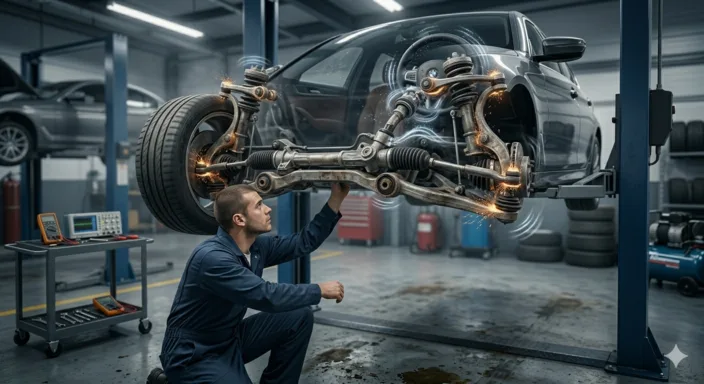
Hearing a squeak or a clicking sound when you turn the steering wheel is not just a passing noise. It is a technical sign that one of the steering or suspension components has a problem. Over time, the noise can get louder and affect steering response and the car's stability. This raises the risk of accidents and takes away your comfort and control on the road. Grouping the main causes, the reasons for a squeaking noise when turning steering wheel come down to five main areas:
- Damaged ball joints
- A fault in the steering column or its joints
- Worn control arm bushings or suspension arms
- A problem in the suspension system (shock absorbers or springs)
- Low power steering fluid or a problem with the steering pump
Each of these causes produces a squeak or click when the wheel angle changes during a turn. It usually shows up clearly at low speeds or when driving over speed bumps.
Understanding the noise: why do you hear a squeak or click when turning the steering wheel?
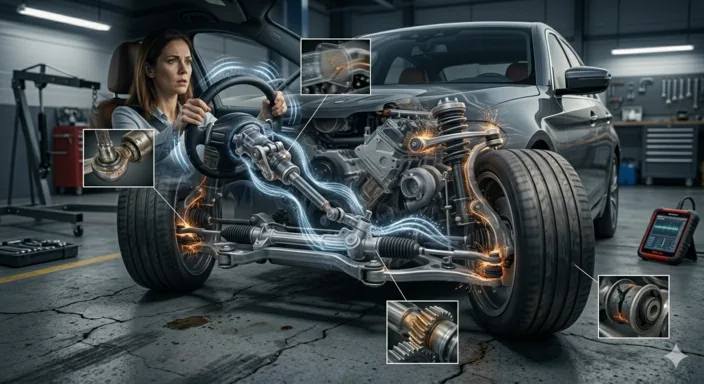
Steering control depends on the steering and suspension components working together. When something fails, a squeak or click appears during sideways movement or turning. Drivers describe the sound as a "squeak" or "metal-on-metal friction". It comes from play in the joints or a lack of lubrication.
The noise is clearest at low speeds, in sharp turns or over speed bumps, where the parts are under rapidly increasing load. In modern cars, it may be linked to the electric power steering system (EPS) or the hydraulic system. Ignoring it puts the car's stability at risk.
Main causes of a squeaking noise when turning steering wheel
1) Damaged ball joints: a common cause of clicking during turns
Ball joints are spherical joints that connect the control arms to the car's wheels. They let the wheel angle change during a turn without losing grip or stability. When these parts wear or get damaged, play develops inside the joint. The metal surfaces then meet and touch unevenly under load, producing a clear click or squeak when you turn the steering wheel.
This noise usually appears at low speeds or in sharp turns. These conditions push the joints to their maximum working angles and expose any damage or wear inside them. Ignoring the noise is not just annoying. It can lead to poorer steering response and loss of precise control over the car, which raises the chance of an accident.
Fixing the problem requires a qualified technician to inspect the ball joints. It is best to replace damaged parts as soon as they are found, to protect the rest of the steering and suspension components.
2) A fault in the steering column or its connected joints
The steering column is the main link between the steering wheel and the steering mechanism. The turning motion passes through it to the wheels. Any fault in the column or its joints (links, universal joints or other metal parts) shows up directly as a noise when you turn the wheel. The fault may be looseness, wear at the connection points or damaged joints. These create abnormal friction paths that you hear as an annoying sound when turning.
The trouble with this fault is that the noise may start faint and then grow over time until it is annoying in every turn. If you keep driving like this, other parts of the system can get damaged, and steering precision and the car's stability suffer. To fix the problem, have a qualified technician inspect the steering column and its joints, and replace damaged parts to bring back a quiet, comfortable drive.
3) Worn control arm bushings or suspension arms
Control arm bushings and rubber arm parts absorb the shocks and vibrations from the car's movement and reduce metal-on-metal friction. When these bushings crack or lose their flexibility, harsh metal friction occurs. This produces a squeak or click when you turn the steering wheel, especially in turns or over speed bumps.
Even if the noise seems minor at first, ignoring worn bushings exposes metal parts to rust, puts more load on the joints and bolts, and makes the car less stable when turning. The best fix is to inspect all the rubber bushings in the control arms and suspension arms, and replace damaged parts to bring back a quiet, comfortable drive.
4) A problem in the suspension system (shock absorbers or springs)
The suspension system absorbs shocks and vibrations and keeps the car stable on the road. Any fault in the shock absorbers or springs causes an annoying noise when turning or going over speed bumps, because these parts are under heavy load when the wheel angle changes.
When a shock absorber's performance drops or the springs are fatigued, noises come from undamped movement, and you hear a harsh sound when turning. To fix the problem, check the condition of the shock absorbers and springs. Make sure there is no damage or cracking in the joints or the rubber mounts connected to them.
5) Low power steering fluid or a problem with the steering pump
Power steering fluid lubricates the internal components of the steering system and reduces friction between the metal parts. When the fluid level is low, the components do not get enough lubrication. This causes a click or squeak when you turn the wheel, and the driver feels that the steering is heavier than usual.
A damaged or faulty steering pump also causes a similar noise, sometimes with oil leaking from under the car. To fix the problem, check the power steering fluid level and top it up if it is low. Also have a qualified technician inspect the steering pump and replace it if needed.
How do you know the noise is serious and needs an immediate repair?
If the noise starts appearing often, gets louder over time or appears in every turn, this is a serious sign you should not ignore. Feeling that the steering is not responding, or that the car's path changes abnormally while turning, are also serious symptoms.
Ignoring a steering squeak can lead to complete ball joint failure, a damaged steering column or worn suspension components. This will cost you large amounts in repairs later.
How do you fix this problem step by step?
- Start with a technical inspection: go to a qualified technician at car service centers to check the ball joints, links and steering column.
- Check the power steering fluid level: check the fluid level in the reservoir. If it is low, top it up with the right type for your car.
- Inspect the rubber joints: ask the technician to inspect the control arm bushings and suspension arms and replace damaged parts.
- Inspect the steering pump and shock absorbers: make sure there is no oil leak, and check the condition of the shock absorbers and springs.
Practical tips to get ahead of the problem
- When you first notice a faint noise when turning the steering wheel, do not wait for it to get worse. See a specialist in good time.
- Check the power steering fluid level regularly. It is a simple step, but it works well to protect the pump and the rest of the steering components from damage caused by low lubrication.
- If an inspection shows worn control arm bushings or arms, replacing them early is necessary to prevent annoying noises later and to protect the joints and suspension arms.
Read also: Engine oil leaking from underneath
Conclusion
If you hear a squeak or click when turning the steering wheel, keep the map of the five causes in mind: ball joints, the steering column, control arm bushings/arms, the suspension system (shock absorbers or springs), and power steering fluid/steering pump. Note when the noise appears. Is it loudest in sharp turns or at low speeds? Does it come with driving over speed bumps? This description helps the technician aim the inspection at the most likely part. Then start with the simplest step: check the power steering fluid level. Next, move on to inspecting the rubber and joint parts and replacing any that are damaged. With this method, you do not just treat the symptom. You fix the root cause and bring the steering system back into balance. The noise goes away, your car gets back its normal response, and you get back your confidence behind the wheel.
Frequently asked questions
1. What causes a noise when turning the steering wheel?
The causes fall into five main areas: damaged ball joints, a fault in the steering column or its joints, worn control arm bushings or arms, a suspension problem such as shock absorbers or springs, and low power steering fluid or a faulty steering pump.
2. What causes a friction noise when moving the steering wheel?
When you turn the wheel, a friction noise may point to wear in the joints that transfer movement, such as ball joints. It may also mean a fault in the steering column and its joints, or worn control arm bushings, which are supposed to isolate movement and reduce noise.
3. What causes a clicking noise in the car when turning the steering wheel?
The main causes include: damaged ball joints, a fault in the steering column, worn control arm bushings or arms, faults in the suspension system (shock absorbers or springs), and low power steering fluid or a pump problem.
4. Does low power steering fluid cause a noise?
Yes. Low power steering fluid can stop the system from getting enough lubrication, which creates resistance and noises when you turn the wheel.
5. When should I worry and go for a repair?
When you hear the noise constantly or notice it getting worse over time, a technical inspection becomes necessary.
Related articles
 Steering
Top 3 Signs Indicating Damage to the SAS Steering Sensor
Learn what the steering sensor does, where it is located, and how it supports traction, stability, and safer steering control.
4 min read Steering
5 Signs Indicating Damage to the Steering Wheel Chip
Steering wheel chip damage can affect vehicle control. Learn warning signs, why regular inspections matter, and when damaged parts need replacement.
4 min read Car Guide
Toyota Hilux Maintenance Guide: Parts Most Prone to Wear
The Hilux is a work truck, and some parts wear faster: rear leaf springs, brake shoes, clutch and filters. Which parts to watch and when to change them.
4 min read