
Car care
Toyota 100,000 km service: which parts need replacing?

Reaching 100,000 km means the car has covered a long distance, and some of its parts now need a closer check. That is why the Toyota 100,000 km service is an important stage. It confirms that the engine, brakes, cooling system, suspension and other parts affected by constant use are working well.
Reaching this distance does not mean every part must be replaced. Maintenance needs vary by Toyota model, model year, engine type and the recommended maintenance schedule. Inspecting the car and checking its past service record help you find the parts that actually need replacing.
What does the Toyota 100,000 km service include?
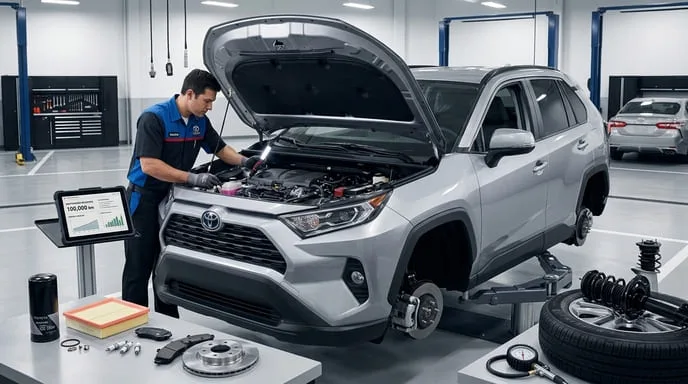
Toyota maintenance after 100,000 km includes a set of inspections and replacements. The aim is to catch worn parts before they affect how the car performs. It usually covers the oils and fluids, filters, brakes, tyres, battery, engine parts and suspension.
Some parts may need replacing because they have reached the end of their service life. Others only need an inspection if they are in good condition.
Does 100,000 km maintenance differ by Toyota model?
Yes. Maintenance requirements differ from one car to another. The maintenance schedule for a Toyota Corolla may differ from a Camry, Yaris or RAV4. The parts needed can also vary by model year and engine type.
So it is better not to rely on a fixed rule that says a certain part must be replaced as soon as the car reaches 100,000 km. Check your car's own maintenance schedule and inspect its actual condition instead.
Which parts should be inspected or replaced after 100,000 km?
Several parts and systems deserve special attention when the car reaches this distance.
1. Engine oil and oil filter
Engine oil is one of the most important items to keep checking. Its properties change with use, high temperatures and engine cycles. At the 100,000 km service, make sure the oil is changed according to the time or distance set in the maintenance schedule.
The oil filter must also be replaced on time. It removes the impurities from the oil that can affect engine parts.
2. Air filter
Dust and dirt build up inside the air filter with use. A clogged filter can affect the airflow to the engine.
Inspect the filter and replace it if it is dirty or has reached the end of its recommended service period.
3. Spark plugs
Spark plugs wear over time. When their performance drops, you may notice signs such as hard starting, misfiring or rough running.
The replacement interval for spark plugs depends on their type and the engine. Refer to your car's maintenance schedule rather than relying on one fixed distance for all Toyota cars.
4. Brake pads and discs
The brake system is one of the most important parts to inspect during Toyota maintenance after 100,000 km. The inspection covers the brake pads and discs and checks for wear that affects stopping performance.
Signs that the brakes need checking include unusual noises, the car vibrating when you press the pedal, or a change in brake response.
If replacement is needed, choose Toyota spare parts that fit your car's model and specifications.
5. Belts and timing belt
Inspect the drive belts for cracks or wear, and replace them when needed according to the manufacturer's recommendations.
As for the timing belt, not every Toyota needs it replaced at 100,000 km. Some engines use a timing chain instead. The replacement interval depends on the engine type and the car's maintenance schedule.
6. Car fluids
Check the condition and levels of the different fluids, such as brake fluid, coolant and the system oils your car requires.
The change interval for each fluid varies by model, system type and driving conditions. Follow the manufacturer's recommendations rather than one interval for all cars.
7. Battery
Battery performance can drop after years of use. It is best to test it at 100,000 km, especially if the car is hard to start, the lights are weak or electrical problems keep coming back.
The test shows whether the battery needs replacing or is still working well.
8. Tyres and suspension
Inspect the tyres to make sure the tread is sound and there are no cracks or uneven wear. Also set the tyre pressure to the correct specification.
It is also best to inspect the shock absorbers, control arms, bushings and other suspension parts. Wear in these parts can affect the car's stability and ride comfort.
Which parts do not need automatic replacement at 100,000 km?
Reaching 100,000 km does not mean all of the car's parts need replacing. Some parts are replaced on a set time or distance schedule. Others are replaced based on their actual condition.
For example, some suspension parts may be in good condition even after 100,000 km, while brake pads may need replacing before that distance because of driving style.
So it is important to tell the difference between inspecting a part and replacing it. Do not replace any part without a technical reason or a clear recommendation.
What are the signs a Toyota needs maintenance after 100,000 km?
Some signs may indicate the car needs an inspection, including:
- Weak engine performance or response.
- Higher fuel consumption.
- Hard starting.
- Vibrations or unusual noises.
- Weak brake performance.
- Engine overheating.
- Reduced air conditioning performance.
- Warning lights on the dashboard.
These symptoms do not necessarily mean a specific part has failed. Have the car inspected to find the cause before replacing any part.
How do I know which parts my Toyota needs replaced?
To confirm what your car needs after 100,000 km, start with its model, model year and engine type. Then review the maintenance schedule and the past service record.
After that, the wear parts and main systems can be inspected to find the parts that have reached the end of their life or show signs of damage.
When replacement is needed, check the part number, its specifications and whether it fits your car before you buy, especially when looking for Toyota spare parts.
Does a car need maintenance after 100,000 km?
Yes. It is important to have the car fully inspected at this stage and to follow the maintenance schedule for your model. Do not wait for the scheduled service if you notice signs such as weak brakes, engine overheating or unusual noises.
You can use the car maintenance service to inspect the parts that need attention and identify the ones that need replacing.
Tips for looking after your Toyota after the 100,000 km service
After the service, regular care helps keep the car performing well. The key tips are:
- Stick to the oil and filter change intervals.
- Check fluid levels regularly.
- Keep an eye on tyre pressure and condition.
- Inspect the brakes when you notice any change in how they perform.
- Do not ignore unusual noises and vibrations.
- Keep a service record.
- Use parts that match your car's specifications.
- Follow the maintenance schedule for your model.
Summary
Toyota maintenance after 100,000 km helps assess the car's condition and inspect parts that may have worn with long use. Reaching this distance does not mean all parts must be replaced. The decision depends on the maintenance schedule, the condition of each part and the car's model.
Regular inspections, and choosing the right Toyota spare parts when replacement is needed, help keep the car running well and avoid replacing parts without need.
Frequently asked questions
Do I have to replace every part on my Toyota at 100,000 km?
No. Replacement depends on your model's maintenance schedule and the condition of each part. Some parts only need an inspection if they are in good condition.
Does every Toyota need a new timing belt at 100,000 km?
No. Some Toyota engines use a timing chain instead of a timing belt. The replacement interval depends on the engine type and the car's maintenance schedule.
Is the 100,000 km service different for a Corolla and a Camry?
Yes. The maintenance schedule can differ between the Corolla, Camry, Yaris and RAV4. The parts needed also vary by model year and engine type.
When should I get my Toyota checked before the scheduled service?
Get your car checked without waiting for the scheduled service if you notice weak brakes, engine overheating, unusual noises or vibrations, or warning lights on the dashboard. These signs do not necessarily mean a specific part has failed, so find the cause with an inspection before replacing any part.
Related articles
 Car care
Buying Ford parts in Saudi Arabia: genuine, Motorcraft or aftermarket?
Genuine, Motorcraft or aftermarket Ford parts: how to spot counterfeits, get the part number from your car, and save without risk.
4 min read Car care
Common Toyota Corolla Problems and How to Deal With Them
Learn the most common Toyota Corolla problems and their causes, from the check engine light and high fuel use to weak AC and vibration, plus maintenance tips.
6 min read Car care
How to Find Toyota Parts by VIN Number
Learn how to find Toyota parts by VIN, step by step, to get genuine parts that fit your car exactly and avoid buying mistakes.
8 min read