
Car care
How to Remove Rust from a Car
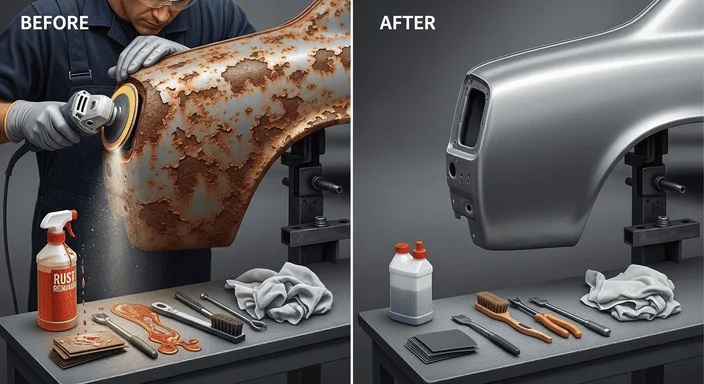
Rust is the hidden enemy of car bodies, especially in places like Saudi Arabia, where high humidity on the coasts meets intense heat and dry air inland. Over time, rust can grow from a small problem into damage that affects the car's safety and its resale value. That is why every owner who cares about their car should understand how to remove rust and deal with it early.
What Causes Rust on Cars
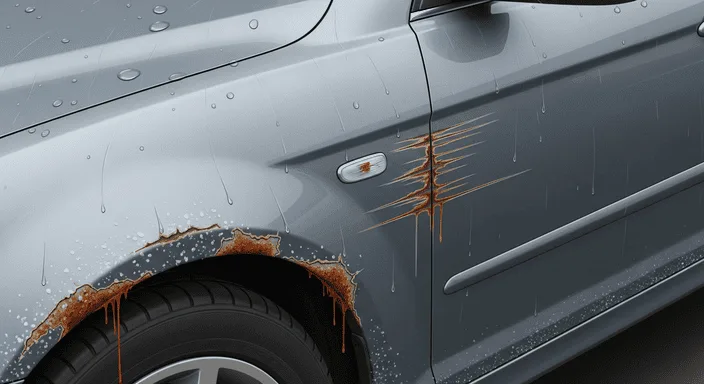
Rust, known scientifically as iron oxide, forms through a natural reaction between iron, oxygen and moisture in the air. On cars, several factors directly help rust form and spread.
Humidity
The coastal regions of Saudi Arabia have very high humidity, so rust forms faster on car bodies there. The moisture gets through the outer layers and reaches the car's base metal, which starts the oxidation process.
The Effect of Salt
Air near the sea is full of salt particles, and this greatly speeds up rust. The salt sticks to the car's surface and acts as a catalyst for the chemical reaction that causes rust.
Wear, Damage and Scratches
Any scratch or dent exposes the base metal directly to air and moisture, which makes it an ideal starting point for rust. Once the outer paint is damaged, the metal loses its natural protection.
Skipping Regular Maintenance
Without regular maintenance, dirt and moisture build up on the metal body. This buildup creates ideal conditions for rust to form and spread faster.
Where Rust Usually Appears on Cars
Rust does not appear at random. It collects in specific areas that are more exposed to moisture and dirt.
The Underbody
The underside of the car takes water and dirt thrown up from the road while you drive, which makes it the area most prone to rust. It also has less paint protection than other parts of the car.
Around the Wheels
The wheel areas are constantly hit by gravel, salt and the chemicals used to melt ice. This area combines every factor that causes rust, so it is one of the most vulnerable spots.
Doors and Outer Edges
Doors, especially around the hinges and the lower edges, are prone to rust, particularly if the paint already has scratches or damage. Sharp edges and corners tend to collect more moisture.
Read also: Car tire care: 6 different ways
The Risks of Rust to Your Car and Your Safety
Leaving rust untreated does not only spoil the car's appearance. It has serious effects on the car's performance and value.
A Weaker Metal Body
Rust gradually eats away the car's metal and weakens the load-bearing structure. This can reduce the car's ability to absorb impact in an accident.
Lower Car Value
Cars with rust lose their market value very quickly. When you try to sell, rust will be one of the main reasons the price drops.
Road Safety Problems
In very advanced cases, rust can reach vital parts of the car such as the seat mounts or brake components, which puts passengers at real risk.
Your Guide on How to Remove Rust from a Car
Removing rust from a car takes great care and a lot of patience, especially if you want to do it yourself. This guide gives you detailed, practical steps for professional results.
Tools and Materials You Need
Before you start, make sure you have all the tools and materials you need. You will need:
- Sandpaper in different grits (coarse and fine)
- Personal protective gear such as gloves and safety glasses
- Cleaning products such as alcohol and degreaser
- Clean cloths
- Rust-inhibiting primer
- Paint that exactly matches your car's original color
- Body filler to fill pits, and polish for the final finish
- Masking tape to protect the surrounding areas, and a plastic cover to protect the rest of the car.
Step 1: Preparation
Start by putting on all your protective gear to keep yourself safe while you work. Cover a wide area around the rust with plastic sheeting and masking tape, so you have enough room to work without feeling cramped. Clean the area around the rust well with degreaser or alcohol to remove all dirt and built-up oil that could get in the way.
Step 2: Sand Off the Rust
Use coarse sandpaper (40 grit) to start removing the rust firmly and effectively. Sand down to the car's bare metal, and work on an area slightly wider than the rust itself. This helps the paint go on evenly and smoothly. Once the main rust is gone, move to medium and then fine sandpaper (220 and 1000 grit) to smooth the surface gradually and level it very well.
Step 3: Deep Cleaning
Clean the area again very carefully to remove every trace of sanding dust. Use a burlap cloth first to wipe the larger areas, then use an acid solution such as phosphoric acid to remove any small rust residue. After that, use a soft, dry cloth to make sure the area is free of any moisture, dust or particles that could affect how well the paint sticks.
Step 4: Fill Pits and Gaps
If the metal has pits or deep corrosion, use body filler to fill them. Apply the filler carefully and evenly, then leave it enough time to dry according to the instructions on the pack. Once dry, sand these areas lightly so they sit level with the rest of the surface.
Step 5: Apply Rust-Inhibiting Primer
Apply a thin, even coat of rust-inhibiting primer over the whole area. Use spray paint for a smooth, even spread. Let the coat dry completely for the time recommended on the pack. This may take longer in a humid climate.
Step 6: Sand the Primer
Once the primer is completely dry, use very fine sandpaper (600-1000 grit) to sand the primer coat lightly. This helps the color coat stick to it. Clean the dust off the area again with a soft cloth.
Step 7: Apply the Color Coat
Start applying the paint that exactly matches your car's original color. Spray from about 30 centimeters from the surface, and apply several thin coats instead of one thick coat. Let each coat dry for 15-60 minutes before the next one, depending on the type of paint. You may need 2-3 coats to get an even color.
Step 8: Apply the Protective Clear Coat
Once the color coat is dry, apply several coats of protective clear coat over the whole area. The clear coat protects the color coat from UV rays and the weather. Let the clear coat dry according to the instructions on the pack.
Step 9: Polishing and Final Finish
At least 48 hours after you finish painting, you can start polishing the treated area. Use a high-quality polish and a very soft cloth, and polish in circular motions until you get a smooth shine that matches the rest of your car. Wait at least 30 days before you apply car wax to the area.
Tips to Prevent Rust
Prevention is better than cure. These tips help protect your car for years to come.
Regular Washing and Cleaning
Wash your car regularly, especially after rain or high humidity. Focus on the underside and the sides, where salt and dirt build up. Use clean fresh water, and do not leave water sitting on the car for long periods.
Clean the Drain Holes
Make sure all drain holes and drain tubes under the doors and windows are clear and clean. These holes let rainwater and moisture drain out. If they get blocked, moisture builds up and causes rust.
Fix Scratches Right Away
Repair any scratches or dents right away, before rust reaches the base metal. Use a color-matched touch-up pen to fix small scratches straight away.
Use Protective Wax
Wax your car every 3-4 months for an extra layer of protection against moisture and the weather. Wax is an effective barrier that stops moisture and salt from reaching the paint.
Regular Inspections
Check your car regularly for early signs of rust, especially around the wheels, the doors and the underside. Catching it early makes treatment easier and stops it from spreading.
Use Rust-Prevention Products
Use anti-rust sprays such as WD-40 in tight, critical areas under the body and on the hinges. These products add protection in places that are hard to reach.
Removing rust from a car takes effort and patience, but it is necessary to keep your car safe and protect its value. When you understand what causes rust and take the right precautions, you can avoid most rust problems before they start. With regular washing, routine maintenance and frequent checks, you will keep your car in excellent condition for many years. Remember that the effort you put into caring for your car now will save you a lot of costs and trouble later, and give you a safe, good-looking car you can enjoy driving for as long as possible.
FAQS
1. How do I stop deep rust ("baroomah") from spreading in my car body?
Answer: Baroomah is rust that eats through the metal and causes holes, and surface cleaning alone cannot stop it. The only effective fix is to cut out the affected section completely and replace it with a new metal patch at a professional panel beater, then treat it with a sealant (undercoating or epoxy primer) to stop it coming back. Temporary fixes such as covering it with filler will let the problem get worse under the surface, hidden and dangerous.
2. Can rust and dents in the car body make me fail the periodic inspection in Saudi Arabia?
Answer: Yes, and very often. One of the main reasons cars fail the periodic vehicle inspection (MVPI) is rust or corrosion in the chassis or underbody, as well as protruding dents or sharp edges caused by corroded metal. Inspectors check the body's condition very closely because rust weakens the car's rigidity and puts passengers at risk in an accident.
3. What is the best sealant to protect the underside of my car from rust (undercoating)?
Rubberized undercoating is better than traditional tar undercoating because it is flexible and does not crack. Book a full car detailing and care service from Speero for professional undercoating.
4. How do I remove rust from my car without sanding or damaging the original paint?
Answer: This is a very common question from people who want easy solutions. Laser rust removal is the newest technology. It removes rust with remarkable precision without touching or damaging the healthy metal, but it is very expensive and not available at every workshop. The chemical alternative is a rust converter, which chemically turns rust into an inert black layer you can paint over, without deep sanding. It suits tight areas that are hard to reach.
5. Does rust repair and bodywork affect my car's resale price?
Answer: Yes, but the effect depends on the quality of the repair. Leaving rust untreated cuts the price drastically, because it tells the buyer the car is worn out and unsafe. On the other hand, a professional rust repair may show up on a paint thickness gauge, but it is still far better than selling a car with deep rust. To reduce the loss, keep photos of the car before and after the repair to show the buyer that the bodywork treated surface or preventive rust and was not caused by a major accident.
Related articles
Car care
Car Whistling Noise Causes and How to Diagnose Them
Learn what causes a whistling noise in your car, the common faults behind it such as brakes, belts and the AC, and how to diagnose it and avoid costly repairs.
10 min readCar care
Periodic Car Maintenance Schedule
The periodic car maintenance schedule: a full guide to when to inspect and replace parts by mileage and age, to protect your car's performance and lifespan.
7 min readCar care
Regular Car Maintenance: Protecting Spare Parts from Early Damage
Regular car maintenance keeps your car running well, prevents sudden breakdowns, cuts costs, extends engine and parts life, and keeps you safe on the road.
12 min read