
Engine
Clogged Catalytic Converter Symptoms: 7 Signs and How to Test
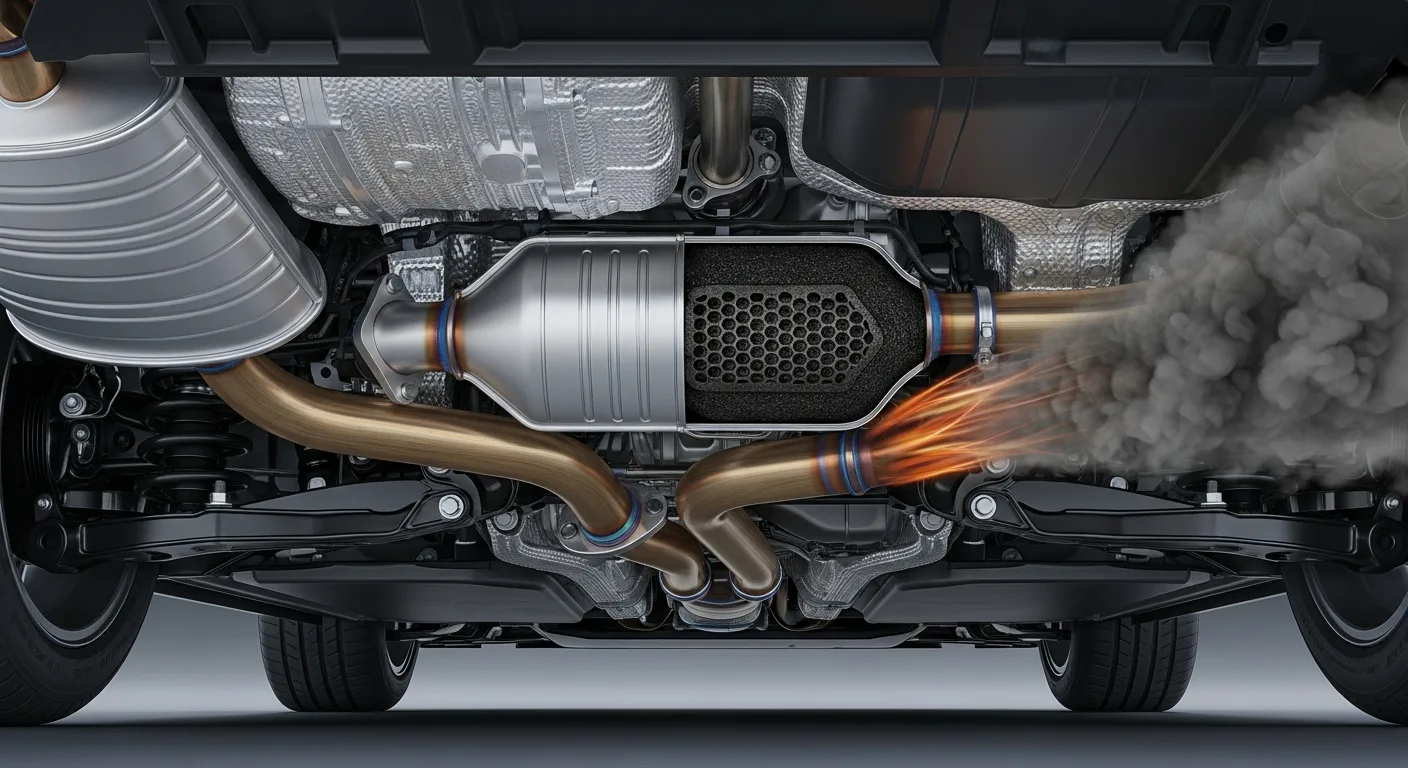
What is a catalytic converter and where is it in the car?
The catalytic converter (in Saudi Arabia also called dabbat al-talawuth or dabbat al-bee'a) is a cylindrical part in the exhaust line. You find it under the car, right after the exhaust manifold and before the rear muffler. Inside, it has a honeycomb ceramic block coated with precious metals (platinum, palladium, rhodium). Exhaust gas passes through these tiny cells, and the toxic gases turn into less harmful gases before they leave the exhaust.
These tiny cells are the weak point. Any oil, coolant or unburned fuel that reaches them turns into carbon and deposits that block the pores, and any excess heat melts the ceramic and closes the passage. The result is the same: the exhaust has nowhere to go, and the engine chokes.
Clogged catalytic converter symptoms in detail
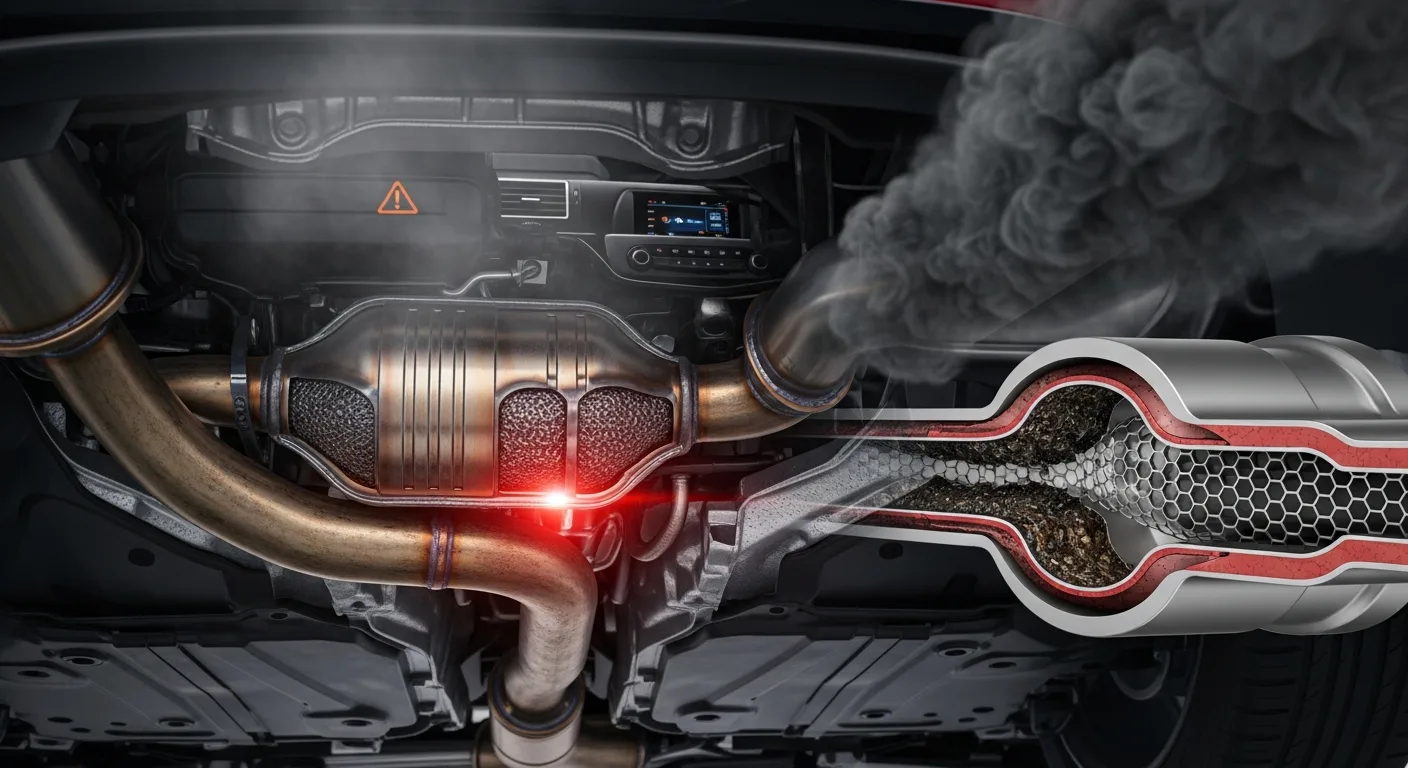
The symptoms appear gradually, and you usually notice two or three of them together before you are sure. Here are the seven, in the order most drivers notice them:
1. Weak power, especially uphill
The first thing you feel is that the car does not pull. You press the accelerator and the response is slow, and on hills or when overtaking the engine feels choked. The reason is that the exhaust is trapped behind the blockage, so the engine cannot push out old gases and draw in fresh air at the same speed. The automatic transmission is affected too: shifts come late because the engine does not reach the torque it needs.
2. Higher fuel consumption
When power drops, you make up for it by pressing harder, and the car's computer makes up for the faulty exhaust readings by adding more fuel. The result is that the tank empties faster than usual, with no fuel leak and no change in how you drive. If you notice a clear drop in kilometres per fill-up along with weak pulling, the catalytic converter is a prime suspect.
3. Check engine light comes on
The car has two oxygen sensors: one before the catalytic converter and one after it. When the converter works properly, the two readings differ. When it fails or clogs, the two readings get close, so the computer logs a catalytic converter efficiency fault and turns on the check engine light. The most common code linked to this is P0420. Note: the light itself comes on for many reasons other than the converter, so do not judge by the light alone. See the article on check engine light turning on and off to tell the causes apart.
4. Rotten egg smell from the exhaust
Fuel contains a small amount of sulphur, and a healthy catalytic converter turns it into an odourless compound. When the converter fails, the sulphur comes out as hydrogen sulphide, which smells like rotten eggs. You notice it clearly when standing behind the car or when stopped at a traffic light. This is one of the clearest signs because it has no other common cause.
5. Abnormal heat under the car
Exhaust trapped behind the blockage pushes the temperature of the converter and the exhaust line higher than usual. You feel heat from the floor at the front passenger area, or smell burning after a long drive. In advanced cases, the engine temperature itself rises because the hot gases cannot escape. If the radiator is fine, the coolant level is right and the engine temperature rises on hills, check the exhaust.
6. Rattling noise from under the car
When the ceramic block breaks inside, you hear a rattling or clunking noise under the car at start-up or when going over a speed bump. Sometimes you can hear it if you tap the converter by hand with the car off and cold. Broken pieces can move and suddenly block the outlet completely. This is the scenario where the car stops running a few minutes after starting.
7. Failing the periodic inspection
The periodic inspection measures the concentration of gases coming out of the exhaust. A clogged or damaged converter does not treat the gases, so the readings come out above the limit and the car is rejected. If your car fails the emissions test with no clear mechanical symptoms, the converter is the first thing to check.
How do you confirm the cause is the catalytic converter and not something else?
Weak power, high fuel use and the check engine light are symptoms shared by the catalytic converter, the oxygen sensors, the spark plugs and the fuel filter. This is how a technician confirms it:
- Computer reading: the scan tool shows the stored code. A catalytic converter efficiency code with close readings from the two oxygen sensors points to the converter. A code for a single sensor points to that sensor.
- Exhaust back pressure test: the front oxygen sensor is removed and a pressure gauge is fitted in its place. High pressure when the revs go up means a blockage after the measuring point, in the converter or the muffler.
- Temperature test: with an infrared thermometer, at the converter inlet and outlet. In a healthy converter, the outlet is hotter than the inlet. If they are equal, or the inlet is much hotter, the converter is not working or is clogged.
- Visual and sound check: melting or discolouration on the converter body, and a rattle when you tap it.
Does cleaning a catalytic converter work, and can it cause damage?
It works in one case: light carbon deposits in a converter whose block is still intact. Catalytic converter cleaners added to the fuel tank, or a long highway drive at high revs, raise the converter's temperature and burn off part of the carbon. That is all cleaning can do.
Cleaning causes damage when it is used in the wrong situation:
- Washing with water or a pressure washer breaks the ceramic or leaves moisture that turns into steam and cracks the block at the first start.
- Hitting the converter or pushing tools into it to clear the blockage breaks the cells and turns a partial blockage into a full one.
- Overusing tank cleaners or octane boosters does not fix a converter that has melted or broken, and sometimes leaves new deposits.
- Cleaning the converter without fixing the cause (oil or coolant reaching the exhaust, worn spark plugs) means it will clog again within weeks.
The rule: if the block is melted or broken, the only fix is to replace the converter.
Causes of a clogged catalytic converter
The converter does not clog by itself. Something from the engine clogs it. The most common causes:
- 1The engine burns oil: burnt oil leaves deposits that coat the cells. The signs are blue smoke and a low level on the dipstick.
- 2Coolant leaking into the combustion chamber (often from the cylinder head gasket): the coolant and its additives damage the metal coating.
- 3Unburned fuel: worn spark plugs or ignition coils, or a leaking injector, send raw fuel to the converter, where it burns and melts the ceramic.
- 4Poor-quality fuel or unsuitable additives.
- 5Mechanical impact: a hit from a speed bump or a stone breaks the block inside.
So replacing the converter without treating the root cause means replacing it again soon.
Is removing the catalytic converter a solution?
No. Removing or hollowing out the converter makes the exhaust louder, keeps the check engine light on because the rear oxygen sensor reads untreated gases, fails the car on the emissions test at the periodic inspection, and increases its emissions. The right fix for a damaged converter is to replace it with a part that fits your car and to treat the cause that damaged it.
When to clean and when to replace?
- Clean if the symptoms are mild and recent, the block is intact on inspection, and the root cause (spark plugs, oil, coolant) has been fixed.
- Replace if you hear rattling, the converter is melted or discoloured, the code comes back after cleaning, or the car fails the periodic inspection twice.
When replacing, pick your car (make, model and year) on Speero to see only the engine and exhaust parts that fit it, and browse the engine parts section. If the check engine light brought you to this article, the article on car dashboard warning lights and their meanings explains the other lights that may come on with it.
Frequently asked questions
What are the symptoms of a clogged catalytic converter?
A clogged catalytic converter causes weak power (especially uphill), higher fuel consumption and the check engine light. Other signs are a rotten egg smell from the exhaust, abnormal heat under the car, a rattling noise and a failed periodic inspection.
What code means a bad catalytic converter?
The most common code is P0420, a catalytic converter efficiency fault logged when the readings from the two oxygen sensors get close. The check engine light comes on for many other reasons, so do not judge by the light alone.
Can I clean a clogged catalytic converter instead of replacing it?
Cleaning works only for light carbon deposits in a converter whose ceramic block is still intact. If the block is melted or broken, the only fix is to replace the converter.
Can I just remove the catalytic converter?
No. Removing it makes the exhaust louder, keeps the check engine light on, fails the car on the emissions test at the periodic inspection and increases its emissions.
Why does a catalytic converter get clogged?
Something from the engine clogs it: burning oil, coolant leaking into the combustion chamber, or unburned fuel from worn spark plugs, ignition coils or a leaking injector. Poor-quality fuel and a hit from a speed bump or a stone can also damage it.
Related articles
Engine
Diesel vs petrol engine: what is the difference?
Learn how diesel and petrol engines differ in performance, fuel consumption, torque and routine maintenance, and which one suits your car and daily driving.
6 min readEngine
The new car break-in period
A new car's break-in period protects the engine and improves performance. Learn how to drive in the first 800 to 1,600 km to avoid wear and extend engine life.
6 min readEngine
Car Oil Pump Failure: Causes and Signs It Needs Replacing
The car oil pump lubricates and cools the engine and protects it from wear and heat. Learn why it matters, failure signs, causes and maintenance tips.
13 min read