
Electrical
Bad car starter symptoms and how to test it
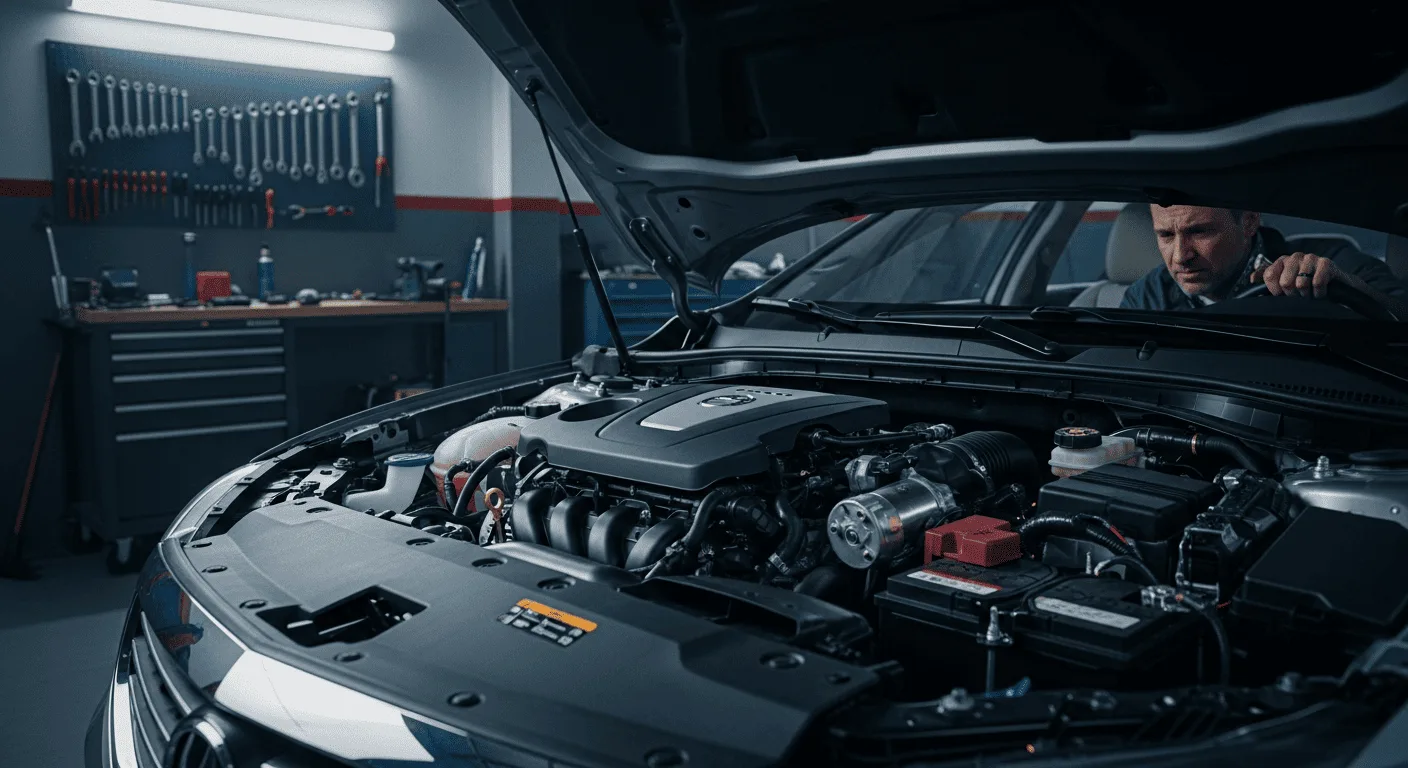
Bad car starter symptoms come in eight forms: the engine does not turn over when you start it, clicking without cranking, slow and heavy cranking, a metallic grinding sound, the starter spins but the engine does not start, intermittent starting, lights that dim at the moment of starting, and a burning smell from the engine bay.
Most of these look like a weak battery or corroded terminals, so the check starts with the battery, the connections and the relay before you replace the starter. That saves you buying a good part you do not need.
What is a car starter?
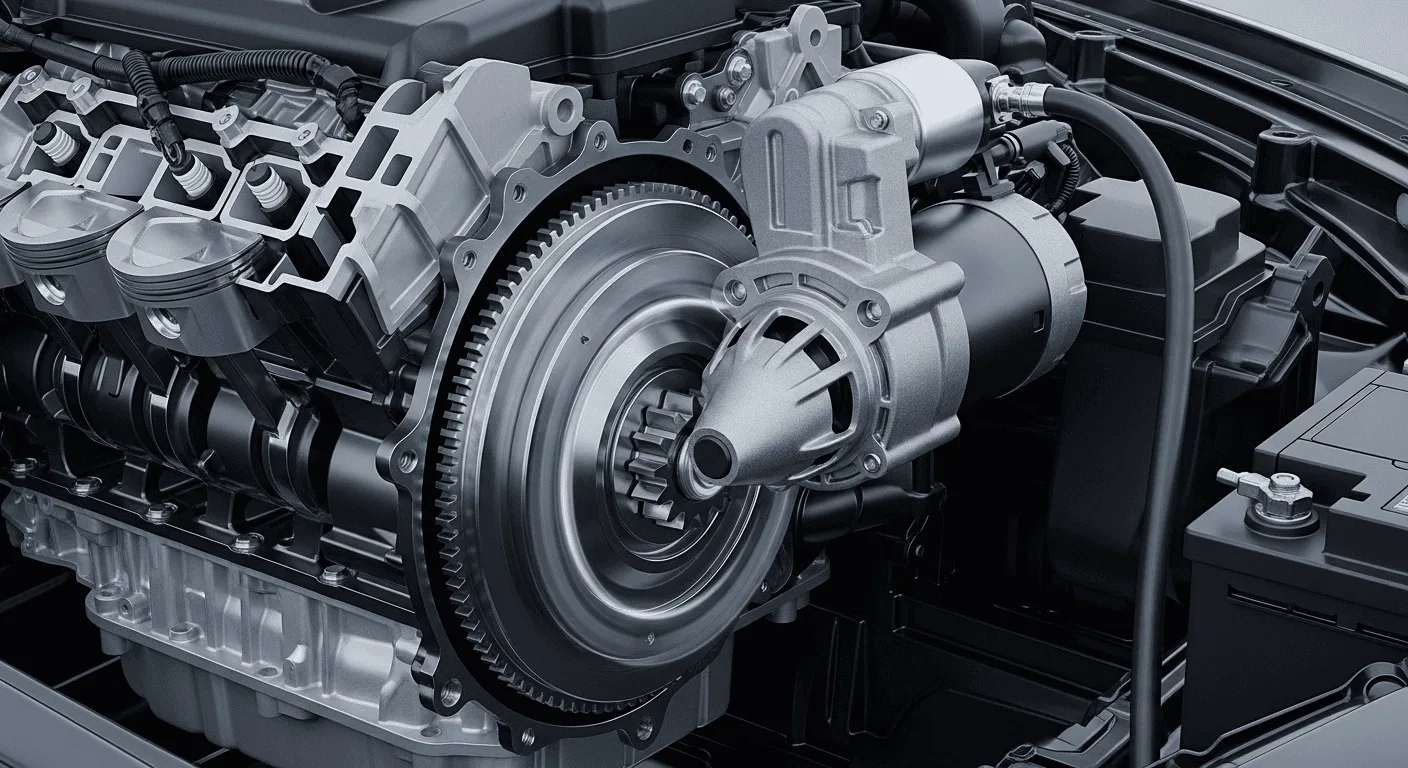
A car starter is a small electric motor. Its job is to turn the engine over in the first moments of starting, until the combustion cycle begins and the engine runs normally.
The starter runs on battery power and works for only a few seconds when you start the car. So any weakness in the electrical supply, or internal wear in the starter, shows up directly as hard starting or no start at all.
Bad car starter symptoms
Below are the most common symptoms of a bad car starter that drivers usually notice, with a short explanation of what each sign means in practice.
The engine does not turn over when you start it
If the engine does not turn over when you turn the key or press the start button, this is one of the clearest signs of a possible fault in the starter or its circuit.
The same symptom can also appear when the battery is very weak. Do not settle on the cause before checking the voltage and the connections.
Clicking sound (a single click or repeated clicks)
A "clicking" or "ticking" sound without the engine turning over usually points to a problem with current reaching the starter, a fault in the starter relay or solenoid, or the start of internal wear in the starter itself.
This symptom in particular is where starter symptoms are most often confused with a weak battery or corroded battery terminals.
Slow or heavy engine cranking (Slow Crank)
If the engine cranks slowly and with clear effort before it starts, the starter may be drawing more current than normal, or it may have internal wear that reduces its efficiency.
The cause can also be weak connections or low battery voltage, so a quick electrical check is needed before you decide.
Metallic grinding or squealing when starting
Grinding or squealing while you try to start can mean the teeth of the starter gear are worn, or are not meshing properly with the flywheel gear.
Ignoring this sound can cause more gear wear and raise the repair cost later.
The starter runs but the engine does not start
You may hear a spinning or whirring sound from the starter while the engine does not start. This happens when the starter gear spins without managing to engage or turn the flywheel.
This symptom calls for a check of the starter gear (the Bendix drive or main gear) for possible wear or sticking.
Intermittent starting: sometimes it starts, sometimes it does not
Intermittent starting (it works sometimes and fails at other times) can point to a problem with the starter relay, a weak electrical connection, or internal wear that makes performance inconsistent.
This type of fault usually gets worse over time. It starts as intermittent and then turns into an almost constant failure to start.
Lights dim when you try to start
If you notice a clear drop in light brightness when you try to start the car, the starter may be drawing a high current because of an internal fault or high resistance in the circuit.
A weak battery can also make the lights dim, so always pair this symptom with a battery voltage reading and a check of the terminals.
Burning smell or smoke from the engine area
A smell of burning wires, or smoke while you try to start, is a dangerous sign. It can point to a short circuit or excessive current draw that has overheated the starter or the wires.
When this sign appears, stop trying immediately and have the car checked to avoid more damage or safety risks.
The starter keeps running after the engine starts
If the starter keeps running after the engine has started, this can indicate a stuck or faulty solenoid, or a starting circuit that stays active when it should not.
This fault can wear the parts quickly, so the cause needs to be fixed immediately before the damage gets worse.
Read also: Common car brake problems and the best ways to prevent them
How to tell the fault: starter or battery?
The symptoms of a bad car starter are similar to those of a weak battery, especially the "clicking", slow engine cranking and dimming lights.
So always start with simple steps: measure the battery voltage, check that the terminals are clean and tight, and make sure the ground cable and the positive cable to the starter are in good condition.
If starting improves with a good battery (or a jump start), the problem is more likely the battery or the connections than internal damage in the starter.
Practical fixes and repairs
When symptoms of a bad car starter appear, it is best to work from the easiest step to the hardest to save time and money.
- Check the battery first (charge and test it), because a weak battery can cause almost the same symptoms.
- Check the connections, clean the terminals and tighten the contact points, because dirt and rust weaken the current reaching the starter.
- Test the starter relay or cut-out (swap it temporarily with a matching part if one is available), because a faulty relay can cause intermittent starting or clicking without actual starting.
- Inspect the starter visually and listen to the sound while starting to identify whether it is "clicking", "grinding" or "whirring", because each sound points to the right diagnosis.
- In some temporary cases, "light tapping" on the starter body can free brushes or parts stuck inside. This is an emergency fix, not a permanent repair.
- If a burning smell or smoke appears, or the starter keeps running after the engine starts, the priority is to stop and have the car checked immediately for a possible short circuit or stuck solenoid.
Once the starter is confirmed faulty, pick your car on Speero by make, model and year so that only the starter that fits it is shown, genuine or aftermarket, and have an auto electrician fit it and check the whole circuit before handing the car back.
Tips to extend starter life
A few simple habits reduce repeat faults and protect both the starter and the battery.
- Avoid long, back-to-back starting attempts. Leave a short pause between attempts.
- Turn off the AC, the lights and accessories when starting, to reduce the electrical load while the starter is working.
- Look after the battery (regular checks and clean terminals), because a weak supply strains the starter and brings on symptoms of a bad car starter sooner.
- Deal with grinding sounds immediately, because continuing to drive can damage the starter gears or the flywheel and raise the repair cost.
How to test the car starter yourself before the workshop
Testing a car starter starts with five steps that need no part removed. Working from the easiest to the hardest saves you a workshop visit in half of the cases.
- 1Make sure the gear is in P or N and that the brake or clutch pedal is pressed as the owner's manual asks. Try starting in N if it fails in P.
- 2Watch the dashboard and the headlights at the moment of starting. If they dim hard or go out, the problem is most likely the battery or its terminals. If they stay bright and you hear one click, the problem is most likely the starter or its solenoid.
- 3Read the battery voltage with a multimeter with the engine off. A reading below the battery's nominal voltage (12 volts) means a weak battery that needs charging or replacing before any verdict on the starter.
- 4Try a jump start from another car. If the engine starts at once, the cause is the battery or the connections. If the single click stays even with the jump, the cause is the starter or its cable.
- 5Check the starter fuse and relay in the fuse box, and swap the relay temporarily with an identical one from the same box if there is one.
If all five steps pass and the car still does not crank, the next check is the starter cable and the ground strap, then the starter itself at an auto electrician.
No crank at all versus cranks but does not start: what is the difference?
"Does not crank" means the engine does not turn over at all when you start it: you hear nothing, or a single click. This is the case where the starter, the battery or the starting circuit is the suspect.
"Cranks but does not start" is a different case entirely: the starter turns the engine with its usual sound but combustion never begins. Here the starter is fine, and the cause is usually fuel, spark or a sensor, most often the crankshaft sensor. Never replace the starter in this case.
The car does not crank and the battery is new
A new battery does not mean current reaches the starter. The causes that remain after a battery change are:
- Loose terminals, or a corroded ground strap between the engine and the body.
- A new battery that is not fully charged because it sat in the shop for a long time.
- A battery with a lower capacity or cranking current than the car's specification.
- A weak alternator that lets the battery drain while driving. Its symptoms are in the article on car alternator failure symptoms.
- The starter relay, its fuse or the solenoid itself, especially if the symptoms were there before the battery change.
- A key the car does not recognise because of the remote's battery, or a gear lever that is not in P or N.
Where is the starter in the car?
The starter is bolted to the engine block where the engine meets the gearbox, because its gear has to mesh directly with the flywheel ring gear. In most cars it sits low on the engine and is easier to see from under the car than from above.
A technician recognises it by its shape: a metal cylinder about the size of a hand, with a smaller cylinder on top that is the solenoid, and a thick cable running to it straight from the battery's positive terminal.
Repair the starter or replace it?
Speero's view is that the repair-or-replace decision depends on which part inside the starter has failed. The brushes, the solenoid and the Bendix drive are replaced on their own at an auto electrician for less than a complete starter.
A full replacement is the choice when the armature winding is burnt, when faults return after a repair, or when the starter has already been opened more than once. In that case pick your car on Speero by year so that only the starter made for it is shown, genuine or aftermarket, and each part's page states which kind it is.
Symptoms of a bad car starter do not usually appear suddenly without warning. A clicking sound, slow engine cranking, dimming lights or a burning smell are all clear signals. They are worth stopping to check, rather than trying to start again and again until the problem gets worse.
The smart choice in Saudi Arabia is to start with a simple diagnosis (battery, connections and relay) before you think about replacing the whole starter. Many cases come down to a simple electrical cause that looks like a major fault.
Once starter damage is confirmed, having it repaired by a specialist or replacing it with a suitable part restores reliability and spares you sudden breakdowns on the road.
Frequently asked questions
What are the most common symptoms of a bad car starter?
The most common symptom is a clicking sound when you start the car without the engine actually turning over. This can be linked to the starter or to the battery and connections.
Does a clicking sound mean the starter is 100% broken?
Not necessarily. Clicking can also appear with a weak battery, corroded terminals or a faulty relay, so an electrical check is needed before you replace the starter.
How do I know the problem is the starter and not the battery?
If the battery is in good condition, the voltage is good and the connections are clean and tight, but the engine still does not turn over, or there is grinding or whirring linked to the starter gear, the starter becomes the more likely cause.
Why do the lights dim when I start the car?
The lights can dim because the starter is drawing a high current due to an internal fault. They can also dim because of a weak battery, so check the voltage and the terminals first.
Is a burning smell while starting dangerous?
Yes. It can point to a short circuit or severe overheating from excess current draw. Stop trying to start the car and have it checked immediately.
What are the symptoms of worn starter brushes?
Starter brushes are worn when the starter works one time and refuses the next, needs a light tap on its body to turn, or turns slowly with a charged battery. The brushes are replaced on their own at an auto electrician and do not call for a complete starter.
What are the signs of a bad starter solenoid?
The starter solenoid is faulty when you hear one loud click with bright dashboard lights and the engine does not turn, or when the starter keeps spinning after the engine has started. The solenoid is replaced on its own in most cars.
How do I test the car starter myself?
Watch the lights at the moment of starting, read the battery voltage with a multimeter, try a jump start from another car, then check the starter fuse and relay. If the single click stays with a good battery and a jump, the starter or its cable is the suspect.
The car does not crank and the battery is new, what is the cause?
The causes that remain after a battery change are loose terminals or a corroded ground strap, a new battery that is not fully charged, the starter relay or solenoid, or a key the car does not recognise. Start by tightening the terminals and checking the ground strap.
Related articles
 Electrical
Car Key Repair: Repair or Replace Your Key?
Learn about car key repair, common faults, and whether repairing, programming, or replacing the key is the right option.
6 min readElectrical
How to Install Rear Parking Sensors on Your Car
A step-by-step guide to installing rear parking sensors: how they work, their main benefits, and the best types for safer, easier parking and fewer accidents.
6 min read Electrical
"Road Sensor: 4 Signs Indicating its Damage"
Learn four signs of road sensor damage and how car sensors support engine performance, fuel efficiency, component life, and safety.
4 min read