
Engine
Diesel vs petrol engine: what is the difference?
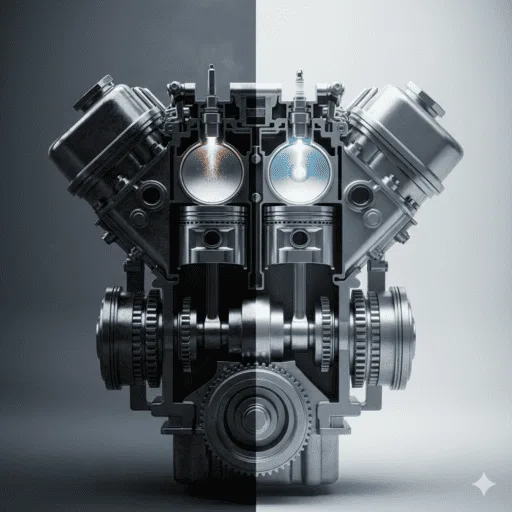
Whether your car runs on diesel or petrol, the engine does the same job: it turns the energy in the fuel into mechanical energy that pushes the car forward. But the two engine types do this in different ways. The diesel vs petrol engine difference also affects routine maintenance, which matters for keeping your car in good condition.
How do internal combustion engines work?
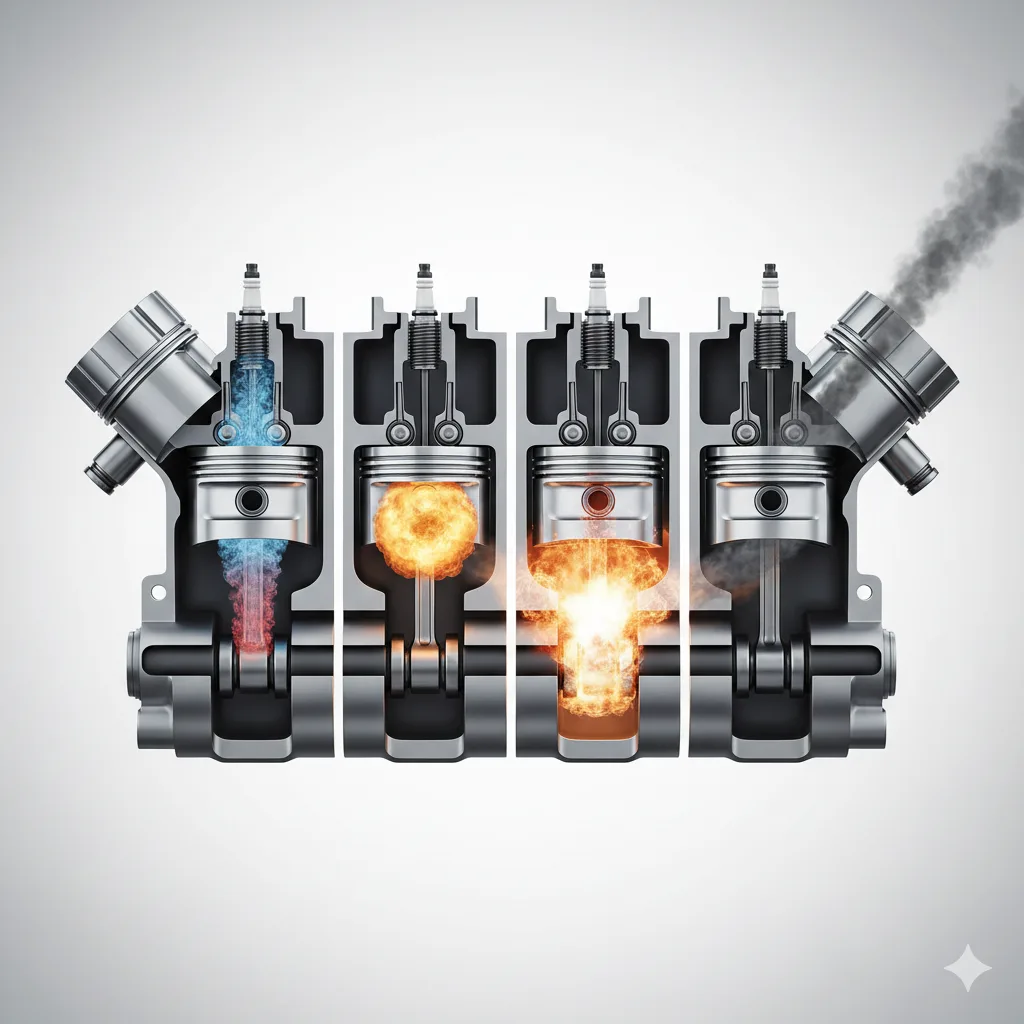
Diesel and petrol engines are both internal combustion engines (ICE) and work on a shared principle. They create controlled explosions inside the cylinders, which push the pistons up and down. The pistons connect to the crankshaft through connecting rods, which turn the linear motion into rotary motion that finally drives the wheels.
The difference in how combustion happens
In petrol engines, the fuel mixes with air first and is then compressed by the pistons. It is then ignited when the spark plugs produce an electric spark. In diesel engines, the air is compressed first, before it mixes with the fuel. The fuel is then injected into the hot compressed air, which makes it ignite without any need for a spark.
This difference in ignition leads to other differences in engine design, performance and characteristics.
Main components of diesel and petrol engines
Both types use a four-stroke combustion cycle: intake, compression, combustion and exhaust. Internal combustion engines include several systems that are critical to their performance, and understanding these systems explains why diesel and petrol engines work differently.
Fuel injection system
It delivers precise amounts of fuel to the engine at the right time. It is made up of low-pressure parts (the fuel tank, the fuel supply pump and the fuel filter) and high-pressure parts (the pump, the fuel injector and the injector nozzle).
The fuel supply pump moves fuel from the tank to the fuel injection pump, and the pump then sends it into the cylinders through the nozzle.
Diesel engines need higher injection pressures because they inject the fuel after the air is compressed. Petrol engines mix fuel and air before compression, so they work at lower pressure. The fuel itself also behaves differently. Diesel is heavier than petrol and evaporates slowly. Although diesel produces less carbon dioxide and methane, it produces higher levels of nitrogen compounds. Fuel filters reduce the risk of engine wear by stopping particles and water from entering the fuel injection system.
Lubrication system
The lubrication (oiling) system delivers the right amount of engine oil to key components such as the crankshaft bearings, connecting rods, valve mechanisms, timing chain, valve rods and the space between the pistons and the cylinder. The system includes an oil pump, an oil reservoir (the sump) and an oil filter that removes dirt and impurities.
Modern engine oil contains additives that reduce friction and prevent wear.
Cooling system
Internal combustion engines produce enormous heat that can cause damage if it is not managed well, so the engine has a cooling system. The water pump pushes coolant through channels in the engine, where it absorbs heat from the hot parts. The thermostat controls the coolant temperature. When it gets too high, the thermostat sends the coolant to the radiator, where airflow cools it, and the cooled coolant then returns to the engine to repeat the process.
Coolants are divided by chemical makeup into inorganic (IATs) and organic (OATs), with blends between these basic groups such as HOATs, P-HOATs or Si-OATs. The type of coolant needed depends on the car model. Each coolant is designed for specific engines, and using the right one is essential for the best protection.
Exhaust system and turbocharger
Internal combustion engines use after-treatment systems to reduce exhaust emissions. They work as follows:
- Diesel engines have diesel particulate filters (DPF), while petrol engines use gasoline particulate filters (GPF).
- The three-way converter turns carbon monoxide into carbon dioxide through chemical reactions.
- The muffler reduces noise.
Turbocharger
Many modern engines use a turbocharger to push extra air into the combustion chamber. This raises the pressure and lets the engine burn more fuel.
The result: better performance, higher torque and improved fuel efficiency, all from a smaller engine.
Transmission
It transfers power from the engine to the wheels. It is either manual or automatic, and each type needs a different oil.
The main components include the housing, the torque converter, a hydraulic pump, gears and brakes. Depending on the type of transmission in your car, the transmission oil can be manual or automatic.
Electrical system
The electrical system is made up of the battery, the alternator and the starter motor.
The alternator turns mechanical energy into electrical energy to charge the battery, while the starter motor runs on the battery and turns electrical energy into mechanical energy to start the engine. Once the crankshaft turns, the pistons start moving inside the cylinders.
Engine control unit
The engine control unit (ECU) monitors sensors throughout the engine and adjusts parameters for the best performance. It controls fuel injection and spark timing in petrol engines, and it relies on the crankshaft position sensor to fire the injectors and the ignition at the right time.
Read also: Causes of car oil pump failure and how to tell it needs replacing
Diesel vs petrol engines: pros and cons
Thermal efficiency
Diesel engines offer higher thermal efficiency than their petrol counterparts. This increases their power and torque and makes them ideal for heavy loads, thanks to the high density and weight of diesel.
Thermal efficiency directly affects fuel economy and running costs, so diesel engines are used in a wide range of applications, from generators to heavy vehicles.
Engine life
Diesel engines last longer, which suits long distances and commercial use. This comes from their high compression ratios, which require a stronger and safer build, such as stronger castings, thicker cylinder walls and replaceable liners.
Torque at low RPM
Diesel burns more slowly than petrol, so diesel engines run at lower revolutions per minute (RPM), which reduces wear.
Purchase and maintenance costs
Diesel engines are known for a higher purchase price and higher maintenance costs, while petrol engines have lower purchase and maintenance costs. So if a quiet, comfortable drive is your priority, petrol engines are the better choice. Diesel engines run at higher compression ratios, which makes them noisier and more prone to vibration.
Emissions and environmental impact
Diesel produces less carbon dioxide (CO2) per mile than petrol, but it generates nitrogen oxides (NOx) because of the high pressure and heat. Advanced systems such as particulate filters treat these emissions, and the technology keeps developing to reduce the environmental impact.
Diesel or petrol, the question is not which one is better but which one fits your use and lifestyle. If you drive long distances or carry heavy loads, you may prefer the efficiency and power of diesel. If you mostly drive in the city or want a car that is easy to drive, petrol is your best choice. Either way, take good care of your car's engine by using the best oil available to you. You can get it from Speero car spare parts store, the largest car spare parts store in Saudi Arabia.
Frequently asked questions
1. What is the main difference between how a diesel engine and a petrol engine work?
A diesel engine relies on the fuel igniting by itself because of the high air pressure inside the cylinder, while a petrol engine relies on an electric spark from the spark plug to ignite the petrol and air mixture.
2. Which is more fuel efficient, diesel or petrol?
Diesel engines are usually more fuel efficient, by as much as 20-30% compared with petrol engines of similar size and power, thanks to higher compression ratios and the greater energy density of diesel fuel.
3. What are the advantages of a diesel engine in terms of torque and uses?
Diesel engines deliver high torque at low speeds, which makes them ideal for heavy trucks, farm equipment and vehicles that need to tow and lift large loads over long distances.
4. Why do many people prefer a petrol engine in passenger cars?
Petrol engines run smoothly and quietly and give strong performance at high speeds. Their maintenance is often easier and their spare parts are widely available, which makes them suitable for daily use in passenger cars and motorcycles.
5. How do diesel and petrol engines differ in their effect on the environment?
Diesel engines emit less carbon dioxide per kilometre because of their higher fuel efficiency, but they produce higher levels of nitrogen oxides and fine particulates. Petrol engines produce more carbon dioxide, but they usually emit less NOx and PM, especially with modern emission control systems.
Related articles
Engine
Engine Oil Leaking From Underneath Car
An engine oil leak from underneath can damage the engine and raise repair costs. Learn the signs, common spots, safe checks and quick fixes.
4 min readEngine
Clogged Catalytic Converter Symptoms: 7 Signs and How to Test
A clogged catalytic converter cuts power, raises fuel use and triggers the check engine light. Its 7 symptoms, how to confirm it and when to clean or replace.
8 min readEngine
The new car break-in period
A new car's break-in period protects the engine and improves performance. Learn how to drive in the first 800 to 1,600 km to avoid wear and extend engine life.
6 min read