
Electrical
How to Install Rear Parking Sensors on Your Car
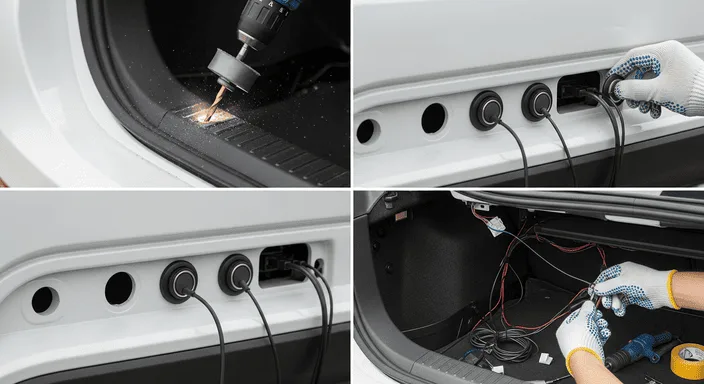
Rear parking and warning sensors are one of the main modern technologies designed to make driving safer and to prevent accidents while parking or reversing. This technology has become a standard feature in modern cars, and it can also be installed easily in older cars to improve safety and comfort.
This article explains how to install rear parking sensors on a car step by step, the benefits they offer, and the best types available in the Saudi market, along with tips to keep them working well for a long time.
About Parking Sensors
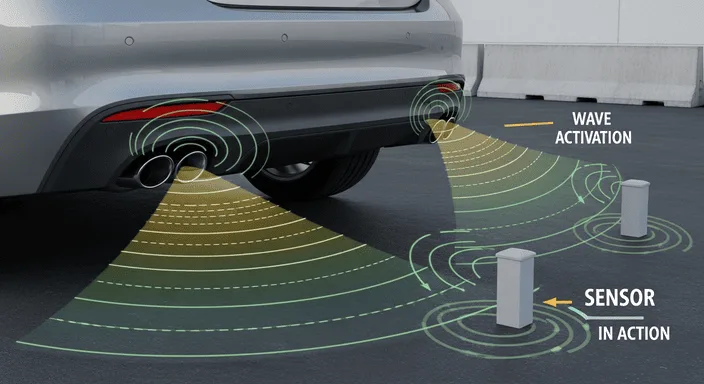
Parking sensors, also called Park Distance Control (PDC), are a system that monitors the distance around the car while parking, at the front or the rear.
When the system detects a nearby obstacle, it gives an audible or visual alert that helps the driver stop in time. The system turns on automatically as soon as you shift into reverse (R).
The driver can also adjust the volume or turn the system off temporarily from the settings screen in the front cabin.
How Parking Sensors Work
The sensors send out electromagnetic or ultrasonic waves that bounce back when they hit a nearby object. The system measures the time between sending and receiving to work out the exact distance.
The closer the car gets to the obstacle, the faster the alert beeps, until it becomes a continuous tone at just 20 to 30 cm. This means you must stop immediately.
Benefits of Rear Parking Sensors
Rear sensors make driving safer and easier, especially in crowded places or tight parking spots. The main benefits of installing rear parking sensors are:
1. Better Safety
The sensors reduce the risk of hitting objects or people behind the car. They alert the driver as soon as the car gets close to any obstacle, whether it is a wall, another vehicle or a pedestrian.
2. Easier Parking
The sensors give audible or light alerts that tell the driver how much space is left between the car and the obstacle. This makes parking easier, even for new drivers.
3. Protection From Scratches
The system helps you avoid minor bumps and scratches from hitting obstacles while reversing. This keeps the car's exterior in good shape and lowers maintenance costs.
How to Install Rear Parking Sensors
Any car owner can install rear sensors themselves by following the right steps, or hire a qualified technician for a professional installation. Here are the detailed steps to install rear parking sensors correctly:
1. Preparation
- Choose the right type of sensors from a trusted car store.
- Make sure the kit includes all the necessary parts: the sensors, the control unit, the wires and the installation manual.
- Prepare the tools you need, such as a drill, a screwdriver and a measuring tape.
2. Choose the Best Mounting Position
- Decide where to fit the sensors on the rear bumper.
- The best positions are usually at the two rear corners and at a medium height to cover a wider range.
- Use a marker to mark the hole positions according to the spacing recommended in the installation manual.
3. Prepare the Car
- Clean the rear bumper well to remove dust and oil so the sensors stay firmly in place.
- Before drilling, make sure there is nothing behind the bumper, such as electrical cables or important metal parts.
4. Fit the Sensors
- Use the drill to make holes that match the size of the sensors at the marked positions.
- Push each sensor gently into its hole. Make sure it is fixed firmly and angled slightly outward to cover as much of the area behind the car as possible.
5. Connect the Wires
- Connect the sensor wires to the control unit according to the manufacturer's instructions.
- Connect the control unit to the car's power supply, usually through the tail light wiring.
- Route the wires neatly and safely to avoid damage over time.
6. Mount the Control Unit
- Place the control unit in a suitable spot inside the car, such as the trunk or under the dashboard.
- Make sure the unit is away from heat and moisture and securely connected to the power supply.
7. Test the System
- Start the car and shift into reverse (R).
- The sensors will start working automatically and give audible or visual signals when the car gets close to an object behind it.
- Check that the system works properly and that all sensors respond as expected.
Note: The installation steps vary slightly depending on the car and the sensor model. Always read the product manual and follow the manufacturer's instructions carefully.
Best Types of Rear Parking Sensors
When you plan to install rear parking sensors, it is important to choose a reliable product that combines accuracy, quality and a fair price. These are the main recommended brands on the market:
1. Bosch
One of the world's leading companies in car technology. Bosch sensors are highly accurate and reliable, and they are known for working in all weather conditions.
2. Valeo
Valeo offers a range of sensors with advanced audible and light alerts. They have a neat design, are easy to install and suit all types of cars.
3. Parking Dynamics
Known for accurate, easy-to-install sensors, with smart systems that use electromagnetic waves to give more accurate warnings without drilling the bumper.
4. Cobra
Cobra sensors are simple and effective. They detect obstacles accurately with a fast response, and their small design fits the look of the car's rear.
5. Steelmate
A great choice if you want high quality at a fair price. The company offers sensors with digital displays and audible alerts that change with the distance.
6. ParkSafe
Park Safe offers affordable, reliable solutions with good performance that meets the latest safety standards. They suit family cars and small vehicles.
Buy rear parking sensors from the trusted Speero store, home to the best Kia spare parts store in Saudi Arabia, the best Nissan spare parts store in Saudi Arabia and spare parts for all car makes.
With the steps above, any driver can install rear parking sensors easily and benefit from what they offer, from easier parking to protection from scratches.
This technology is an important addition that makes driving safer and gives you more confidence when maneuvering in tight spaces. If you choose the right brand, you will get stable performance and a more comfortable, safer drive.
FAQS
1. Can I install parking sensors myself, or do I need a specialist?
Yes, you can install them yourself with simple tools such as a drill and a screwdriver in about 45 minutes, and YouTube videos show the detailed steps for any car. A specialist is better if the car needs electronic programming or integration with its original system, to make sure it works properly and does not void the warranty.
2. How much does it cost to install rear parking sensors in Saudi Arabia?
The cost ranges from 50 riyals for simple budget types (self-installed) to 2400 riyals for advanced original systems with professional installation at dealerships. A basic system (4 sensors + display) costs 500-1000 riyals including installation, depending on the brand, such as Bosch or Valeo, and extras such as dual alerts.
3. Why do rear parking sensors stop working, and how do I fix them?
Common causes: built-up dirt/mud, damaged wires or connectors, moisture/water, a faulty fuse or electronic unit, or a physical impact. The fix: clean the sensors with soap and water, check/repair the wires and fuses, use a diagnostic scanner, or replace the damaged sensor. Regular maintenance prevents the problem from coming back.
4. Do all cars have parking sensors?
No. They come as standard in modern and mid-range/luxury cars such as the Suzuki Swift or Chery Arrizo, while they are optional or not available in budget/older cars such as the Kia Picanto or Hyundai Pride. They can easily be installed as an after-market add-on in most models from Peugeot, Volkswagen and others through specialist stores.
5. What is the difference between front and rear parking sensors, and which matters more?
Both use ultrasonic waves, but rear sensors work when reversing (R) from 1.5-2 meters for limited visibility, while front sensors are for precise parking in tight spaces (up to 10 meters). Rear sensors are the first priority to avoid common everyday collisions, especially for new drivers, while front sensors are an extra for advanced parking. Many drivers start with rear sensors only to save on cost.
Related articles
 Electrical
TPS sensor: function, failure symptoms, location, testing
The TPS sensor tells the engine computer how far the throttle is open. When it fails you get weak acceleration, jerking, a high idle and a check engine light.
4 min read Electrical
Car Key Repair: Repair or Replace Your Key?
Learn about car key repair, common faults, and whether repairing, programming, or replacing the key is the right option.
6 min readElectrical
Bad Car Starter Symptoms
Signs of a bad car starter: clicking, slow cranking, dim lights. How to tell starter from battery faults and avoid sudden breakdowns and needless costs.
5 min read