
A/C
Is your car AC not cooling? Common Causes and Effective Fixes
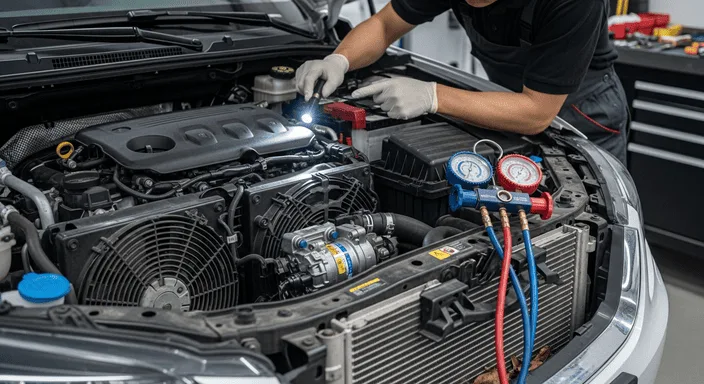
In the hot weather found across most of the Kingdom, a car's air conditioner is not just a luxury. It is essential for comfort and safety while driving. High temperatures can put heavy strain on the driver and passengers and raise the risk of heat stress. So keeping the AC system working efficiently becomes a top priority, especially when you find your car AC not cooling, which gets in the way of a comfortable and safe drive.
In hot weather, drivers rely heavily on the car's AC to stay comfortable throughout the trip. But over time and with heavy use, some problems start to appear that affect the AC's performance and cooling efficiency. Car AC faults range from weak cooling to bad smells, or even the AC suddenly stopping. This article gives you a complete guide to the main causes of weak cooling and the best practical solutions to fix the problem and keep the AC performing well all year.
Why does car AC care matter in the Kingdom?
The climate in Saudi Arabia calls for special care of your car's AC system, for several key reasons:
- Protection from heat stress: high temperatures can reach dangerous levels, exposing the driver and passengers to real health risks while driving.
- Better comfort and focus: driving in a comfortable environment helps the driver concentrate and make the right decisions on the road, which supports road safety.
- Protecting car components: high heat does not only affect passengers. It can also damage some of the car's interior parts over the long term.
- Keeping the system running: regular maintenance and early attention to any problem keep the AC system working efficiently and extend its service life.
How car AC works and its main components
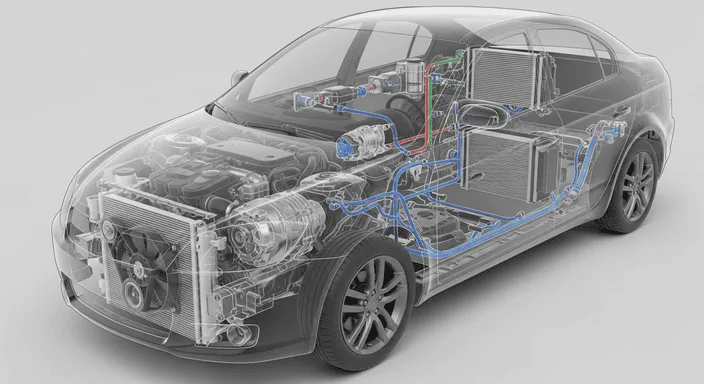
Before getting into faults and solutions, it helps to understand how a car's AC system works. Car AC uses a closed cooling cycle similar to the one in home air conditioners. The system is based on one main idea: circulating a special gas known as Freon and compressing it through the main parts.
Main components of the AC system
Compressor: It compresses the Freon gas and sends it on to complete its cycle in the system. This part is the heart of the AC system, and it works as a rotary pump that distributes refrigerant throughout the system.
Condenser: It cools the compressed gas and turns it into a liquid. The condenser works much like the radiator, operating together with the cooling fan. Air flows through the condenser tubes, cooling the hot refrigerant that has absorbed heat from inside the car.
Evaporator (cooling coil): At this stage, Freon turns from liquid back into gas. The gas absorbs heat from the air passing through the evaporator and cools it. The evaporator works like a giant block of ice: it lets the hot air inside the car flow through its core, cools it quickly, then blows it back into the car.
Expansion valve and air filter: They regulate the flow of Freon and stop impurities from entering the system. The orifice tube or expansion valve filters and regulates the flow of refrigerant through the AC system.
Accumulator and drier: It collects and absorbs moisture from the system. Moisture acts like poison for the internal components and can also damage the AC compressor.
Each of these parts does its job with great precision. When the driver turns on the AC, fresh, cool air enters the car. But a fault in any one part can lead to weak cooling and affect the comfort of the driver and passengers.
Common causes of a car AC not cooling
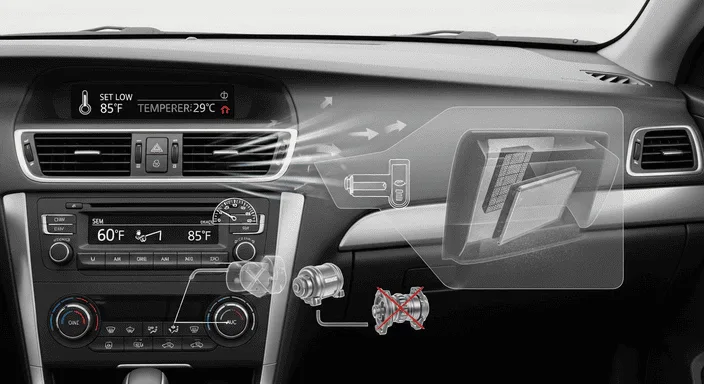
The car's AC system relies on a chain of connected parts to deliver effective cooling. Below are the main causes of weak AC cooling:
Low refrigerant (Freon) level
A shortage or low level of Freon is one of the most common problems. A refrigerant leak or low level can leave the system unable to produce the cooling needed. When a leak happens, the system gradually loses its ability to cool, and the driver may notice the AC blowing warm air or only mildly cool air.
Leaks are the most common problem in an air conditioning system. If the pressure is low, there may be a leak in the hoses, the connections, or even the compressor itself. Leaks can show up as a green, oily substance around the affected parts.
Clogged or dirty air filter
Dirt and dust building up on the air filter restricts the flow of cool air into the car, and this is one of the main causes of weak AC cooling. Dirty filters noticeably reduce AC performance, as built-up dirt blocks airflow and clearly weakens cooling efficiency.
The AC filter is the first line of defence against dust and impurities. If dirt builds up on it, it blocks airflow and greatly weakens cooling efficiency. In addition, bad, musty smells may come from the AC as dust and moisture build up and bacteria grow inside the filter.
AC compressor problems
When the compressor fails or is damaged, refrigerant pressure drops, and the driver may notice weak cooling due to the loss of actual compression. If the compressor clutch engages and disengages every few seconds, this is a clear sign of a low refrigerant level.
Strange noises such as clicking or grinding may occur when the AC is running, which points to internal damage to the compressor's moving parts. A weak compressor can also make the AC stop suddenly right after it is turned on.
Damaged or blocked AC condenser
If dust builds up on the condenser or its fins are damaged, the gas cooling process breaks down, which weakens the AC's ability to lower the temperature inside the car. Obstructions such as leaves, insects or dirt can stop air from passing through the condenser.
Refrigerant can leak from the condenser itself, and contaminant particles from the compressor can block refrigerant flow, leading to weak cooling overall.
Weak or failed cooling fan
When the fan spins weakly, less air is directed toward the heat exchanger, which weakens the flow of cool air and leaves the cabin not cool enough. When the blower motor or fan fails, the driver may notice weak airflow or none at all.
Electrical faults or failed sensors
A fault in the electronic sensors or wiring can disrupt the signals that control the compressor and fans, causing weak AC cooling to appear suddenly. A fault in the wiring, fuses or relays can stop the AC from turning on or make it work intermittently.
Thermostat problems
When the thermostat fails, the compressor will not receive the correct temperature signal, so it stops working and no cold air comes out. If the thermostat fails to read the temperature, the AC may run nonstop, which puts extra strain on the whole system.
Blocked air ducts
Debris can build up in the air ducts or the ducts can get damaged, which stops cool air reaching every part of the cabin. This leads to uneven distribution of cool air, and passengers feel that some parts of the cabin are cooler than others.
Frozen evaporator or pipes
When the thermostat fails to control the temperature properly, a layer of ice forms on the evaporator and pipes, and the driver notices a clear drop in airflow. The cause may be low Freon, a clogged air filter, or a poorly set AC temperature.
To improve your car's performance and look after its cooling system, you can visit Speero's page for car AC maintenance service.
How to diagnose weak AC cooling
Check the compressor and the gas level
The compressor is one of the key factors in how well a car's AC cools, as it is responsible for compressing and circulating refrigerant (Freon) in the system. If your car AC cools weakly or blows hot air instead of cold, experts advise checking the compressor and gas level with these steps:
- First: start the car and set the AC to maximum cooling, then listen for a clear sound of the compressor kicking in when the AC turns on.
- If you notice the compressor cutting out and back in repeatedly (every few seconds), there is most likely a refrigerant shortage or leak. This is a clear sign that a specialised service centre needs to recharge the gas after confirming the system is sound.
- No sound or no response from the compressor even though the AC is on usually points to an electrical or mechanical fault in the compressor or in the relay that controls it. In this case, a thorough check with a specialised device to measure voltage is recommended.
Detecting leaks
A UV AC leak detection kit is the easiest way to find a leak. Spray UV dye into the system, then use a UV light to pinpoint where the leak is.
Do a thorough check around all fittings to make sure they are all secure. Check the hose manifolds on the compressor, inspect the front seal and O-rings, check where the hoses attach to the fittings, inspect the Schrader valves, and look for pinholes in the condenser.
Practical steps to improve car AC cooling
There are many steps that raise the efficiency of your car's cooling system and keep the cabin comfortable while you drive:
Keep the air filter clean
Clean or replace the filter regularly every few months, especially given the dusty conditions common in the Kingdom. Replacing the air filter at every routine service gives stronger cooling and clean air inside the cabin.
Top up your car's Freon regularly
Freon is the core substance in the cooling cycle. A low level or a leak in the AC system reduces the AC's effectiveness and increases fuel consumption. Regular checks and recharging when needed are an important step to keep the cooling you need.
When cooling is weak, have a specialist check the Freon level, and deal with any leak right away to stop the problem getting worse.
Use air recirculation mode
Recirculation mode cools the air inside the car faster and more efficiently. It stops hot outside air from coming in and allows a faster cycle for cooling the inside air. This mode is especially effective on very hot days. It reduces energy use and spreads cool air faster.
Avoid parking in the sun
Parking in the shade or using sunshades and reflectors greatly reduces how hot the car gets and eases the load on the AC system when you turn it on. Use dedicated shades or covers for the front and rear windscreens, and try leaving the windows slightly open before starting to let hot air out.
Regular maintenance and full inspection
Early regular inspection catches any problems in the pipes, compressor or condenser before they get worse and cost more. Maintenance should cover all parts: the compressor, condenser, filters, electrical connections and hoses.
Clean the water drain outlets
If water in the AC system does not drain properly, it builds up, which guarantees bad smells and may damage some parts. Check and clean the drain tube regularly.
Run the AC regularly, even in winter
Running it regularly maintains gas pressure and stops the system's components from drying out. Turn on the AC from time to time even on winter days to keep the gas and oil moving inside it.
Check refrigerant levels regularly
Check whenever the cooling feels weak or before summer starts, since catching any shortage early stops the problem getting worse.
Practical solutions to fix weak AC cooling
Fixing the AC system depends on the specific type of fault:
To fix weak cooling or no cooling
Check the Freon level and refill it if it is low, and make sure there are no leaks in the system. Make sure the cooling fans on the condenser or radiator run when the air conditioning is on.
To fix bad smells
Clean or replace the air filter right away, and do not forget to clean the evaporator with dedicated products that stop bacteria and mould building up. You can use a special evaporator cleaning spray: spray it into the air vents and leave the solution to work as instructed to remove dust and bacteria.
To fix strange noises
Inspect the compressor belt and the fan carefully, and replace them if they are damaged or worn. Unusual noises can point to internal damage that needs immediate attention.
To fix water leaks
Clean the drain tube if it is blocked, and make sure the entire drainage system is sound to stop moisture building up.
To fix sudden on-off cycling
Check the thermostat and pressure sensors carefully, and make sure the electrical connections and fuses are sound. Inspect the fuses and relays, and if the problem continues, consult a specialist.
To fix a frozen evaporator
Check the Freon level and the filter, and adjust the AC settings to avoid the temperature dropping so low that it causes freezing.
To fix serious compressor problems
If the compressor is badly damaged, the whole part needs replacing by a specialised technician using genuine spare parts for durability and the best performance.
Extra tips to boost cooling quickly
Turn on the AC once the car is moving, not while it is stationary, and set the fan to maximum speed for the first minute. Use air recirculation right away, and open the windows for a few minutes to let hot air out of the cabin before closing them. Avoid turning on the AC the moment you start the car. Wait a little until the engine runs steadily.
Improve your car AC fan's performance
Look for signs of weakness or unusual noise in the fan, make sure the air paths are clear of obstructions, and clean them regularly. Use specialised cleaning products for the air circuit to improve how well air is distributed inside.
Reduce fuel consumption with the AC on
Use air recirculation to reduce the load on the engine, and avoid running the AC during long stops. Clean the filters regularly, as this improves overall efficiency and reduces strain on the system.
Read also: AC filter: 5 signs it is damaged and how to look after it
When do you need a specialised technician?
Some cases call for professional technical expertise and cannot be handled on your own:
- Weak cooling that continues: if the problem continues despite all the steps above, there is an internal fault that needs accurate diagnosis.
- Visible leaks: around the pipes or under the car, which can be a sign of serious damage in the system.
- Unusual noises: a constant humming or noise from the compressor or fan points to mechanical damage.
- Recurring bad smells: when the AC is on, despite repeated cleaning, they may point to a deeper problem in the evaporator or drainage system.
- Complete system failure: an AC that does not respond to any setting needs a full check of the electrical circuits and main components.
The car's AC is one of the systems that gives the driver and passengers real comfort while driving, especially during the hot summer days that Saudi Arabia sees for many months. But if the driver is not fully aware of what needs to be done, problems such as weak cooling, bad smells or other faults will appear and affect driving quality and overall comfort.
So it is very important to know the causes of weak AC cooling and keep up with regular maintenance, to keep the AC performing efficiently and stay comfortable throughout the trip. Early attention to any sign of weak performance, regular checks of all components, and using genuine spare parts when replacing are all factors that keep the system working at its best.
Always remember that prevention is better than cure, and that simple regular maintenance is far better and cheaper than the major repairs you may need if you neglect the AC system. Follow these tips, and you will enjoy a comfortable and safe drive all year, however hot it gets outside.
Frequently asked questions
How do I know if my Freon is low and needs topping up?
A noticeable drop in cooling even with the AC set to maximum, and an unusual sound or ticking from the AC system. You can also confirm it with a direct check at a service centre or by testing the pressure with dedicated gauges.
Why did my AC suddenly stop cooling?
Common causes include low Freon, a compressor fault, a clogged AC air filter, or electrical problems in the sensors and connections.
What are the main causes of weak car AC?
The main causes include low Freon, a dirty and clogged AC filter, a weak or damaged compressor, a blocked condenser, and problems with the thermostat or electrical circuits.
What are the main causes of a failed AC evaporator?
Built-up dirt and moisture, blocked pipes, Freon leaks, or natural wear from use and damage cause the evaporator to fail and perform poorly.
What causes an AC compressor to fail?
The main causes include low Freon, which makes the compressor run without enough lubrication, electrical problems in the clutch or connections, or running the AC constantly without regular maintenance.
What causes low Freon in a car AC?
There may be a leak in the hoses or connections, the car owner may not have had the Freon recharged during routine maintenance, or there may be cracks in the pipes or condenser.
What causes car AC gas to leak?
Damaged hoses or connections, cracks and rust in the pipes, damage to the compressor or condenser itself, or worn O-rings and seals cause Freon to leak from the system.
Related articles
 A/C
Bad Purge Valve Symptoms: The Main Warning Signs
Learn the symptoms of a bad purge valve, such as higher fuel consumption and the check engine light, and how to deal with them early.
7 min read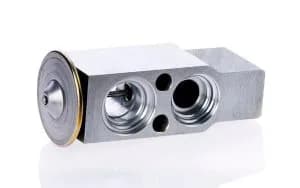 A/C
4 Signs of a Faulty Car AC Refrigerant Valve
Learn four signs of a faulty car AC refrigerant valve and how it affects refrigerant flow to the evaporator.
4 min read A/C
6 signs indicate damage to the air conditioner radiator.
Learn five signs of air conditioner radiator damage and why prompt repair helps keep your car's cooling system working properly.
4 min read