
Engine
When to Change Transmission Oil and How It Affects Your Car's Life
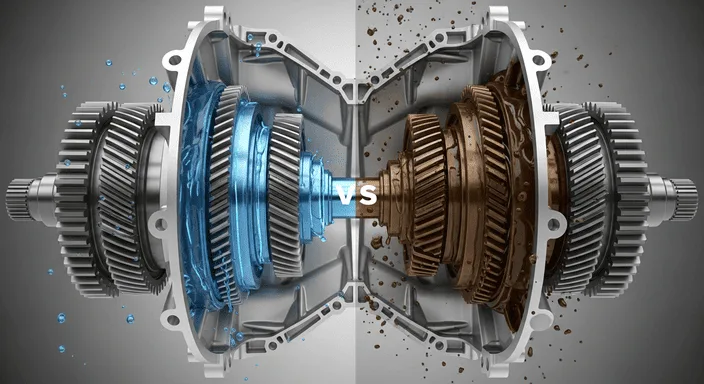
Your car needs regular care and constant attention to keep it performing well and to keep you safe on the road. Many drivers ask an important question: when should you change transmission oil? Of all the important fluids in your car, transmission oil is one of the most important. Its maintenance is often neglected, even though a late change can lead to serious problems and very high repair costs. Knowing when to change transmission oil, and sticking to it, is the foundation of protecting your car's life and the efficiency of its transmission.
What Transmission Oil Is and Why It Matters
Transmission oil, also called gearbox oil, is not just an ordinary fluid in your car. It is a lifeline for the gearbox and keeps it performing. This oil does several important jobs: it reduces friction between the gears and moving parts, absorbs the heat that this constant friction produces, ensures smooth and easy shifts between gears, and protects the internal metal parts from wear and damage.
When transmission oil does its job fully, the car responds easily to your commands, and gear changes happen smoothly without strange noises or vibrations. Over time and as the miles build up, this oil gradually loses its lubricating and cooling properties because of constant heat, oxidation and contamination. This has a negative effect on all of these vital functions.
Types of Transmission Oil
Not all transmission oils are equal in quality or endurance. The type of transmission in your car determines exactly which oil you need. There are two main types of transmission, and each has its own needs.
A manual transmission uses a mineral oil with relatively high viscosity. This type of oil is under constant pressure from heat and oxidation, so its properties break down faster than other types. When you drive a car with a manual transmission, especially under heavy use or in congested city streets, the load on the oil increases and it needs changing more often.
An automatic transmission relies on advanced synthetic oils designed specifically to withstand the very high temperatures and heavy pressures it is exposed to. These synthetic oils are more stable and last longer than ordinary mineral oils. That does not mean they do not need regular changes. The main difference is that the interval between changes can be slightly longer with advanced automatic oils.
Warning Signs That Tell You to Change Transmission Oil Right Away
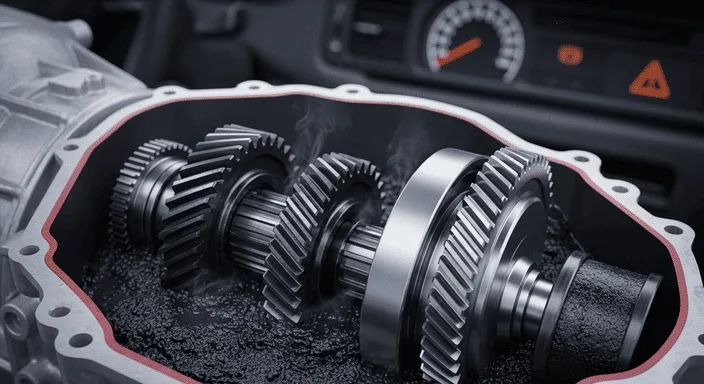
Before you decide to wait until your car reaches a certain number of kilometres, watch for signs that show the transmission oil urgently needs changing. These signs can appear before the scheduled time, especially if you drive hard or in tough conditions.
If you notice oil leaks under your car, especially around the gearbox, there is a problem. A leak means the oil level is dropping gradually. This reduces the gearbox's ability to work properly and stay correctly lubricated.
A yellow gear symbol on the dashboard is a direct message from your car that something is wrong in the transmission system. This warning can appear when the oil level drops significantly or when the car's sensors detect a problem.
Difficulty shifting gears, or a clear delay when moving from one gear to another, is a clear sign that the oil is no longer doing its job well and the gearbox needs prompt maintenance.
Strange noises such as humming or grinding while driving, especially during gear changes, may mean the metal parts have started rubbing against each other without enough protection from the oil.
An unusual burning smell while driving may be a sign that the oil has gone past its safe temperature limit or is heavily contaminated.
When to Change Transmission Oil by Transmission Type and Driving Conditions
The question most car owners ask is: when exactly should transmission oil be changed? The answer is not the same for every car. It depends on the transmission type and how you use the car.
Changing Manual Transmission Oil
If your car has a standard manual transmission, the recommended interval for changing the oil is 80,000 to 100,000 kilometres under normal driving conditions. This means a car that covers ordinary distances at reasonable speeds and does not face heavy loads can reach this point before the oil needs changing.
If you drive in urban areas and cities with constant congestion and heavy driving, it is wise to change the transmission oil every 50,000 kilometres. City driving and traffic put extra load on the transmission. This makes the oil temperature rise faster and its properties break down faster.
Changing Automatic Transmission Oil
An automatic transmission produces more heat than a manual one, so its oil is under more stress. The general recommendation is to change automatic transmission oil every 50,000 to 80,000 kilometres, according to the car manufacturer's recommendations.
Some cases call for earlier changes. When you drive in hard, harsh conditions, whether extreme heat, high humidity or sand and dust (a normal reality in Saudi Arabia), it is better to shorten the interval to 40,000 kilometres. This precaution keeps the gearbox performing at its best and noticeably extends its service life.
The Real Damage Caused by Neglecting a Transmission Oil Change
Neglecting to change transmission oil on time is not a small matter, and you cannot put it off without consequences. There is real, tangible damage that affects your car and its service life:
Rapid gear wear is the first thing that happens. When there is not enough oil, or when the oil loses its properties, the gears start rubbing directly against each other. This causes scratches and accelerated wear. In the end, it can lead to complete transmission failure, a repair costing hundreds of thousands of riyals.
Noticeably weaker performance is felt by the driver as difficulty shifting gears and a loss of power and torque. The car becomes slow to respond and inefficient, which affects driving safety.
Abnormally high fuel consumption happens when transmission efficiency drops. An inefficient gearbox means the engine has to work harder, and fuel runs out faster.
Transmission overheating happens when the oil loses its ability to cool. This rise in temperature can damage other components and can cause the car to break down in the middle of the road.
Practical Tips to Protect Your Gearbox and Extend Its Life
Looking after the gearbox is not limited to changing the oil. There are everyday driving habits you can follow to reduce the load on the gearbox and extend its life:
Warm up your car before driving, especially in cold weather. Let it run for a few minutes before you set off. This lets the oil reach a suitable operating temperature, which improves the performance of the gearbox and all the car's other components.
Shift gears carefully and without rushing. Avoid sudden, harsh shifts between gears. Always make sure the car has come to a complete stop before shifting into reverse (R). These habits protect the gears from shocks that can cause damage.
Check the oil level regularly. If your car has a dipstick, check it from time to time. Modern cars may have an automatic monitoring system, but it may be wise not to rely on it completely.
Watch for leaks. If you find yourself topping up transmission oil very often, there may be a leak. A small leak can get worse over time and cause big problems.
Avoid hard, aggressive driving that makes the transmission temperature rise quickly. Calm, steady driving keeps the gearbox healthy.
How to Choose the Right Transmission Oil for Your Car
The most important step in choosing the right transmission oil is to check the owner's manual provided by the manufacturer. This manual contains the exact specifications your specific car needs. Do not rely on guesswork or on what others say. Follow exactly what the manufacturer recommends.
In general, there are standard oil classifications such as GL-4 and GL-5. The difference between them is that GL-4 suits some manual transmissions, while GL-5 is used more widely in modern automatic transmissions.
For modern and new cars, synthetic oils are recommended instead of ordinary mineral oils. These synthetic oils are designed to withstand higher temperatures and give better performance over the long term. They may cost more to buy, but the investment is worth it because they last longer and keep the gearbox performing better.
Checking Transmission Oil and Understanding Its Condition
You can do a simple transmission oil check yourself. Park the car on a level surface, start the engine, then find the dipstick under the bonnet. Pull it out, wipe it clean, push it fully back in, then pull it out again. You will see marks on the dipstick that show you the level.
Healthy, clean oil is reddish pink. When you see this colour, the oil still has its properties. If the colour is brown or dark black, or if you smell a clear burning odour, this is definite proof that the oil is contaminated or its properties have broken down, and it is time to change it right away.
Steps to Change Transmission Oil Correctly
Changing transmission oil requires knowing the right steps. First, raise the car safely with a reliable jack and make sure it is completely stable. Never work under a car that is held up only by the jack.
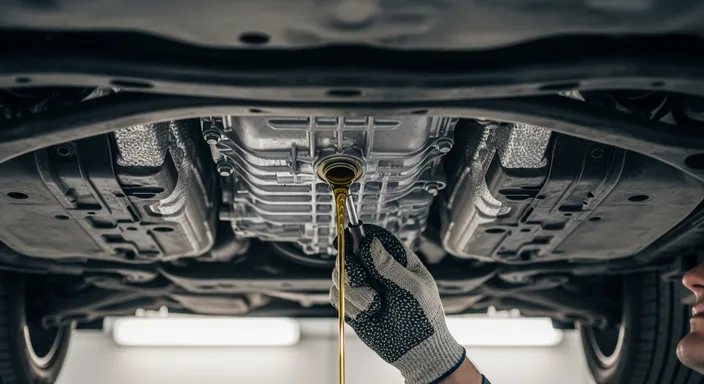
Second, drain the old oil by opening the drain plug and letting the oil flow into a container. Wait until all the oil has drained completely before continuing.
Third, check the oil filter and replace it if it is damaged or old. Replacing the filter ensures better performance and more effective protection.
Fourth, refit the plug and make sure the bolts are tightened correctly, but not overtightened.
Fifth, fill the gearbox with new oil of the correct type for your car. Follow the recommended quantity exactly.
Finally, test the car by driving it for a short time to make sure the oil is evenly distributed and to check that there are no new leaks.
The Difference Between a Transmission Oil Change and a Full Flush
You may hear about a transmission oil "change" and a transmission oil "flush" and think they are the same process. They are not quite the same.
A standard change drains between 30 and 40% of the old oil and replaces it with new oil. This is a simpler, cheaper process, and it is enough for normal routine maintenance.
A full flush rinses the entire system with a special cleaning solution that removes all residue and contaminants from the gearbox system. Then close to 100% of the old fluid is replaced. This process takes longer and costs more, but it may be necessary if the gearbox is in very poor condition or heavily contaminated.
How Gearbox Maintenance Affects Your Car's Overall Life
The key question every car owner asks is: how does looking after transmission oil affect the car's life overall? The answer is simple and clear: a very big effect.
The transmission is one of the most important systems in the car. If it fails or its performance declines, everything is affected. A car with a damaged gearbox may become unsafe to drive and may break down at the worst moment. Keeping up proper routine gearbox maintenance means the car will keep running efficiently for more years, with lower fuel consumption and better safety on the road. This translates directly into saving thousands in future repair and maintenance costs.
Changing transmission oil is not optional, and you cannot easily put it off. It is an absolute necessity to keep your car in its best condition. Knowing the right change interval for your transmission type and driving conditions is the first step. Sticking to this routine maintenance will save you many problems and large repair bills in the future.
Follow the recommendations in the owner's manual, use high-quality oils suited to your car, and check the transmission oil regularly. Calm, sensible driving and avoiding heavy loads on the gearbox all help extend its life. Remember that a small investment in routine maintenance now protects you from big expenses and painful breakdowns later. Your car deserves care, and you deserve safe, reliable driving.
If you want to maintain any part of your car, or you are looking for genuine spare parts to ensure the best performance from your transmission and other car parts, you can browse the dedicated Speero store for each make:
Kia spare parts store and Nissan spare parts
Frequently asked questions
When should I change manual transmission oil?
Under normal driving conditions, change manual transmission oil every 80,000 to 100,000 kilometres. If you drive in cities with constant congestion, it is better to change it every 50,000 kilometres.
How many km between automatic transmission oil changes?
The general recommendation is to change automatic transmission oil every 50,000 to 80,000 kilometres, according to the car manufacturer's recommendations. In extreme heat, high humidity or sand and dust, it is better to shorten the interval to 40,000 kilometres.
How do I know my transmission oil needs changing?
The main signs are oil leaks under the gearbox, a yellow gear symbol on the dashboard, and difficulty or delay when shifting gears. Humming or grinding noises and a burning smell while driving are also signs.
What colour is healthy transmission oil?
Healthy, clean transmission oil is reddish pink. If it is brown or dark black, or you smell a clear burning odour, the oil is contaminated and it is time to change it right away.
What is the difference between a transmission oil change and a flush?
A standard change drains between 30 and 40% of the old oil and replaces it with new oil, which is enough for routine maintenance. A full flush rinses the system with a special cleaning solution and replaces close to 100% of the fluid, and it may be necessary if the gearbox is heavily contaminated.
Related articles
Engine
Car Oil Pump Failure: Causes and Signs It Needs Replacing
The car oil pump lubricates and cools the engine and protects it from wear and heat. Learn why it matters, failure signs, causes and maintenance tips.
13 min read Engine
Cleaning the throttle without the need for programming.
Learn how to clean the throttle body correctly, with or without programming, and why preventive cleaning matters after 120,000 km.
4 min read Engine
The importance of the engine gasket and when it should be changed.
Learn how the engine gasket prevents oil leaks, why it matters, the main types, and when it should be changed to protect engine parts from wear.
3 min read