
A/C
Bad A/C compressor: the signs, how to test it, repair or replace
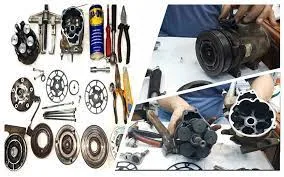
A failing A/C compressor shows itself in four ways: a squeal or metallic rattle when the A/C is switched on, warm or barely cool air from the vents, refrigerant and oil leaking around the compressor, and a clutch that will not engage or that engages and drops out every few seconds. In a Saudi summer these signs show clearly because the compressor runs at full load for most of the year. Before you buy a new compressor from A/C on Speero, run the checks below to be sure the fault is the compressor and not the refrigerant, the expansion valve or the filter.
What is the air conditioner compressor?
The A/C compressor is a pump driven by the engine through the belt. It compresses the refrigerant gas, raising its pressure and temperature, and pushes it to the condenser in front of the radiator. In the condenser the gas cools and turns to liquid, then passes through the expansion valve into the evaporator behind the dashboard, where it boils and absorbs heat from the air entering the cabin. Without the compressor's pressure the circuit does not turn and no cold air comes out.
Inside the compressor are fast-moving parts: pistons or a swash plate, valves and seals, all of which depend on the compressor oil that circulates with the refrigerant. At the front sits the clutch, which couples the compressor to the pulley when the A/C is on and releases it when it is off.
What are the signs of air conditioning compressor damage?
Hearing strange sounds and noise
Noise levels increase when there is a malfunction in the air conditioner compressor, and the sound can be a high whistle or a metallic noise similar to resonance.
This happens when the internal parts of the compressor start deviating from their natural course and wear, leading to friction and abnormal mechanical shocks. This deviation can occur due to damage to control valves or cracking inside the compressor.
Furthermore, an increase in noise levels can lead to overpressure and accelerated wear of the compressor, increasing the likelihood of it getting damaged and permanently malfunctioning.
For this reason, it is necessary to check for any unusual noises in the air conditioning system and carry out the necessary repairs as soon as possible to maintain the overall health of the system.
Also read: 4 signs of a failing A/C expansion valve
Insufficient air cooling
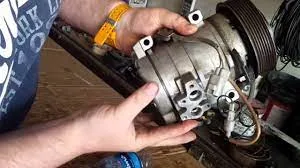
Insufficient air cooling may be due to damage to the compressor in the air conditioning system. When the compressor is damaged or stops working completely, it will not be able to pump enough refrigerant into the system, and therefore the air will not be adequately cooled, resulting in warm or mildly cool air coming out of the vents.
Leaks in the air conditioning system can also result in insufficient cooling. When refrigerant gas leaks from the system, part of the substance responsible for cooling is lost, leading to inadequate cooling.
So, if you notice that the air is not cooling sufficiently, check the air conditioner compressor and the system as a whole to ensure they are working correctly. If the air is cold but weak, the cause is usually the filter or the fan, not the compressor; the details are in weak A/C cooling.
Refrigerant (Freon) leakage
Freon leakage from the compressor is a sign of damage to the compressor's seal or any of its internal parts. This usually results in warm air instead of cold air, and can cause further damage to the air conditioner if not repaired in time. The visible sign on the compressor itself is a patch of oil mixed with dust around the front shaft seal or at the pipe joints.
The air conditioner compressor clutch is stuck
The A/C compressor carries a clutch driven by a pulley connected to the engine through the belt. When the A/C is switched on, the clutch coil receives current, the front plate locks onto the pulley, and the compressor turns, drawing gas from the evaporator, compressing it and pushing it to the condenser.
A broken or stuck clutch is a possible reason for the compressor failing to work correctly. When the clutch is broken, the compressor does not receive drive from the engine and cannot do its job, which ultimately leads to its failure.
Therefore, it is recommended to repair or replace the compressor clutch when necessary to maintain the efficient and proper performance of the car's air conditioning system.
How do I know the A/C compressor is bad?
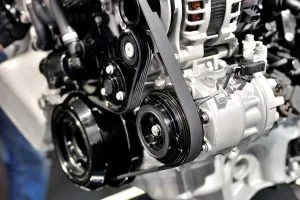
You can tell the A/C compressor is bad with a four-step check that needs no special tools. Open the bonnet, start the car, set the A/C to maximum cold and the fan to the highest speed, then watch the compressor.
- 1The clutch front plate: if the pulley spins and the front plate stands still, the clutch is not receiving current, its coil has failed, or the refrigerant is so low that the pressure switch blocks engagement. If the plate turns with the pulley, the clutch is fine.
- 1The sound on engagement: one light click when the clutch engages is normal. A continuous squeal or grinding after engagement that disappears when the A/C is switched off means internal damage in the compressor or in the pulley bearing.
- 1The pipes: a minute after start-up the thick pipe (low pressure) should be cold and sweating and the thin pipe (high pressure) hot. If both are at the same temperature while the clutch is turning, the compressor is spinning without compressing.
- 1Engaging and dropping out: if the clutch engages and releases every few seconds, the cause is usually low refrigerant, not the compressor; the next section explains it.
If the compressor passes all four steps and cooling is still weak, the fault is elsewhere: the A/C expansion valve, the cabin filter or the condenser fan.
Why does the A/C compressor cycle on and off quickly?
The A/C compressor cycles on and off quickly mostly because of low refrigerant, not because the compressor itself has failed. The low-pressure switch releases the clutch to protect the compressor when pressure drops; as soon as the compressor stops, pressure rises a little and the switch re-engages it, and the cycle repeats every few seconds.
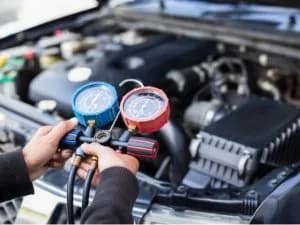
The other causes, in order: an overcharge of refrigerant, which trips the high-pressure switch; a condenser blocked with dust or a weak condenser fan, so temperature and pressure climb when the car is stationary; and a clutch gap widened by wear, so the plate slips when hot and engages when cold. Diagnosis starts with reading both pressures on a manifold gauge, and topping up refrigerant without fixing the leak brings the problem back within weeks.
Can a car A/C compressor be repaired, or must it be replaced?
A car A/C compressor can be repaired when the fault is in the clutch, its coil, the pulley bearing or the front shaft seal, and it must be replaced as a unit when the fault is internal. The rule A/C technicians follow:
- The clutch, its coil and the pulley bearing are sold as separate parts and replaced with the compressor in place. This repair is enough if the compressor compresses properly when the clutch is engaged by hand.
- The front shaft seal can be replaced on some types, but a leak there usually means the oil ran low and the internal parts have suffered.
- Internal grinding, no compression while the clutch turns, or metal shavings in the oil when the pipes are opened all mean replacing the whole compressor. A rebuild rarely lasts here.
When a compressor is replaced after an internal failure, the circuit must be flushed and the receiver drier and expansion valve replaced, because metal debris spreads through the system and destroys the new compressor within weeks if it stays. Pick your car on Speero and open A/C to see the genuine (dealer) and aftermarket compressor that fits your model and year with the original part number. Speero confirms fitment before shipping.
Reasons for damage to the air conditioner compressor
There are several potential reasons for damage to the car's air conditioning compressor, including:
1- Low compressor oil: if the compressor oil runs low because of a leak or a refrigerant top-up without oil, the internal parts wear quickly.
2- Running with low refrigerant: the refrigerant carries the oil to the compressor, so a low charge means running without enough lubrication.
3- Incorrect refrigerant charging: if the system is not charged with the correct amount in the correct way, pressure inside the compressor rises and damages it.
4- Damage from normal use: the compressor wears with normal use, especially on an old car with high mileage.
5- Oil leak: if oil leaks from the compressor, its internal parts corrode and fail.
6- Damage from external factors: the compressor can be damaged by accidents, collisions or heavy impacts.
Frequently asked questions
What are the signs of a bad car air conditioner compressor?
There are four signs: strange noises such as a high whistle or a metallic sound, weak cooling, Freon leaks and a stuck compressor clutch.
How do I tell a bad compressor from low refrigerant?
The difference is in the clutch's behaviour. If the clutch engages and releases every few seconds, the refrigerant is probably low. If the clutch turns continuously with a grinding sound, or with no temperature difference between the two pipes, the compressor is bad. If the clutch never turns, check the A/C fuse and the clutch coil before condemning the compressor.
Can a car A/C compressor be repaired?
It can when the fault is in the clutch, its coil or the pulley bearing; these are replaced with the compressor in place. Internal grinding, no compression or debris in the oil mean replacing the whole compressor, flushing the circuit and replacing the receiver drier.
Why is my car air conditioner not blowing cold air?
The compressor may be damaged and unable to pump enough refrigerant into the system. A refrigerant leak can also cause it. If the air is cold but weak, check the cabin filter first.
What causes an air conditioner compressor to fail?
Common causes are low compressor oil, running with low refrigerant and charging the refrigerant in the wrong amount or manner. Normal wear on old, high-mileage cars, oil leaks and accidents or collisions can also damage it.
Can a Freon leak damage the air conditioner?
A Freon leak from the compressor is a sign of damage to its seal or internal parts, and it usually means warm air instead of cold. If it is not repaired in time, it can cause further damage to the air conditioner.
Related articles
 A/C
Air Conditioner Refrigerant: 4 Signs Indicate Its Damage
Learn the common signs of air conditioner compressor damage and how they affect cooling performance, helping you take the right action to maintain it.
4 min read A/C
Compressor Oil: 4 Types Explained
Learn how compressor oil lubricates compressors, reduces friction, and improves efficiency, with an overview of the four different types.
5 min read A/C
Air Conditioner Section: Know the 3 Signs Indicating Its Damage
Learn 3 signs of air conditioner air distributor damage, including warm air or no airflow, and understand the role of its actuator.
4 min read