
Cooling
Losing radiator water: 7 causes, even with no leak or overheating
Is radiator water loss normal?
A very small drop in radiator water over months is normal, because some coolant evaporates in summer heat. Adding coolant every week, or after every long trip, is not normal. The cooling system is sealed, and coolant that keeps dropping is leaving somewhere. The 7 causes below cover every possibility.
Causes of radiator coolant loss: 7 causes
The causes run from the easiest to check to the most serious.
1. A failed radiator cap or cap seal
The radiator cap holds pressure inside the system. If its seal cracks or its spring weakens, steam escapes through it on every trip, so the level drops without any puddle under the car. This is the most common cause of loss with no leak, and the cheapest part to start with. See Radiator cap: 5 signs it has failed.
2. Damaged radiator hoses or clamps
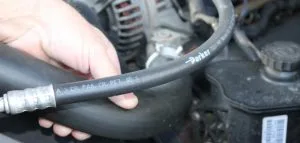
The upper and lower hoses carry coolant between the radiator and the engine. With heat and age the rubber dries and cracks, and the clamps loosen at the joints. The leak here usually shows as a white or coloured crusty residue around the joint. The catalogue names are Upper Radiator Hose and Lower Radiator Hose.
3. A cracked reservoir or reservoir hose
The plastic reservoir loses its rigidity with repeated heat and cold and cracks at the bottom or along the seam. A small crack weeps only when the engine is hot, and the coolant evaporates before it reaches the ground. If your problem is the opposite, coolant overflowing from the reservoir, read Water coming out of the radiator reservoir: 6 causes.
4. Radiator corrosion or a radiator leak
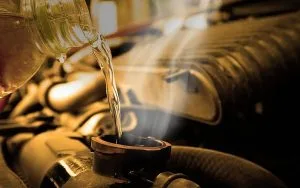
The radiator corrodes from inside when plain water is used instead of proper coolant, and pinholes appear at the fins or the side tanks. The sign is dampness or a coloured stain on the face of the radiator. See Car radiator: 4 signs it has failed.
5. A leaking water pump
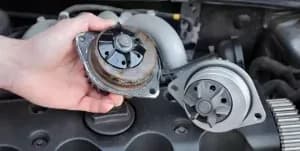
The water pump has a small weep hole under the shaft. When the pump seal fails, coolant drips from that hole a drop at a time, and you may only notice it as a dry trail behind the belt. Over time circulation weakens and the engine runs hot. See Water pump: 4 signs it has failed.
6. A thermostat stuck closed
The thermostat does not leak by itself, but if it stays closed the temperature climbs, the coolant boils and escapes as steam through the cap and reservoir. The result is repeated loss with a gauge that rises in traffic and drops on the highway.
7. A blown head gasket
This is the most serious cause and the most common one for loss with no external leak at all. When the head gasket fails, coolant enters the combustion chamber and leaves through the exhaust as steam. Its signs are thick white exhaust smoke, milky oil on the dipstick and constant bubbles in the reservoir while the engine runs. See Cylinder head: 4 signs it is damaged.
Why does coolant drop with no visible leak?
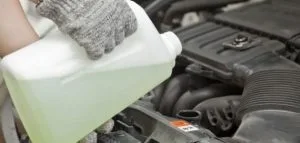
Loss with no puddle under the car has three explanations. First: coolant evaporates through a weak radiator cap. Second: there is a leak, but it lands on the hot engine and evaporates before reaching the ground, leaving a white or coloured crust. Third: coolant burns inside the engine because of the head gasket and leaves through the exhaust. Start with the cap, then check the joints for a dry residue, then watch the exhaust and the oil.
Why does coolant drop without the engine overheating?
The temperature stays normal as long as the system still holds enough coolant to do its job. A slow loss from the cap, a loose clamp or a small crack in the reservoir is covered by the reservoir itself for a while, so the gauge reads normal. The danger is that the loss eventually reaches the radiator itself, and then the temperature spikes suddenly in traffic. Loss without heat is an early warning, not a reason to wait.
How do you find where the coolant is going?
Do these checks with the engine cold.
- 1Mark the coolant level on the reservoir with a pen and watch it for a week. This tells you how fast it is dropping.
- 2Inspect the radiator cap and the reservoir cap. A cracked seal or weak spring means replacement.
- 3Look for a white or coloured residue around hose joints, under the reservoir and behind the water pump.
- 4Inspect the face of the radiator for dampness or corroded fins.
- 5Pull the dipstick. A milky colour means coolant is mixing with the oil.
- 6Watch the exhaust once warm. Thick white smoke that does not clear means coolant is burning.
- 7If nothing shows, ask a workshop for a pressure test and a combustion-gas test of the coolant.
Which parts might you need?
Speero's Cooling category lists parts such as the radiator, the radiator cap (Radiator Cap), the upper and lower hoses and the reservoir hose (Radiator Reservoir Hose). Pick your car by make, model and year first so that only compatible parts appear. Delivery across Saudi Arabia takes 2 to 4 business days, and returns are free within 7 days of delivery. When topping up, use the right type of coolant: see Radiator coolant: 6 types and change intervals.
Frequently asked questions
Why is my radiator water dropping with no leak?
The most common cause is a failed radiator cap that lets steam escape on every trip. A leak can also land on the hot engine and evaporate before reaching the ground, or coolant can burn inside the engine because of a blown head gasket.
How often is it normal to top up radiator water?
A very small drop over months is normal, because some coolant evaporates in summer heat. Adding coolant every week, or after every long trip, is not normal.
How do I know if my head gasket is blown?
The signs are thick white exhaust smoke, milky oil on the dipstick and constant bubbles in the reservoir while the engine runs.
Can I put plain water in my radiator?
Plain water used instead of proper coolant makes the radiator corrode from inside, and pinholes appear at the fins or the side tanks.
If the temperature is normal, can I wait to check it?
No, coolant loss without overheating is an early warning. The reservoir covers the loss for a while, but once the loss reaches the radiator itself the temperature spikes suddenly in traffic.
Related articles
 Cooling
Car water pump: 7 signs it is failing and how to test it
A failing water pump overheats the engine, leaks coolant under the pulley and whines. Seven signs, safe checks and replacement with the timing belt.
4 min read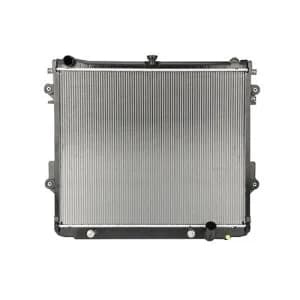 Cooling
4 signs indicate damage to the car radiator.
In the world of cars, the car's radiator plays a very important role in running the engine. The radiator helps to cool the engine and protects it from heat.
4 min read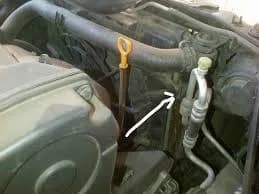 Cooling
Radiator Cap Damage Indicating Signs
Radiator cap damage can disrupt coolant flow and raise engine temperature. Learn the main signs that indicate a faulty cap.
5 min read