
Engine
5 Signs Indicating Clutch Pad Damage
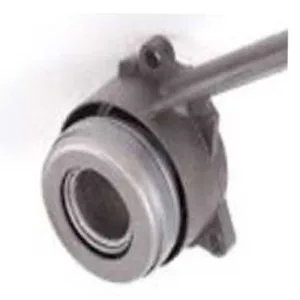
Cars with manual transmissions (standard gear) have a clutch pedal along with a brake and accelerator pedal. The clutch pedal is a combination of a clutch plate, a flywheel, pressure plate, and clutch linings that connect it to the engine's wheels. The clutch pad is responsible for disconnecting the wheels from the engine during gear change.
It is worth mentioning that the number of cars that rely on standard transmissions is continually decreasing. They are now rare in some developed countries due to their age, and the implementation of better and more efficient mechanisms, such as automatic transmissions. The clutch disc is a vital component of a car with a standard transmission; it is relatively small in size, about the size of a donut, yet it has a significant effect on the car that cannot be easily disregarded.
A damaged clutch disc shows 5 signs, which require immediate attention and prompt resolution of the issue.
How does the clutch pad work?
Before explaining clutch linings, it must be clarified that the clutch, also known as the gearbox or the coupling, are all different names used in the Arab countries for the same part of the car. That is, they all have the same meaning, but their usage varies according to the local market and what is commonly known among maintenance centers in a particular country.
The clutch throw out bearing is used to temporarily disconnect the engine from the manual gearbox or transmission when engaging gears. When you press down on the clutch pedal with your foot, the throw out bearing adheres to the clutch, thus pushing the clutch release fork inward, leading to the disconnect of the engine from the transmission. This allows you to then switch to another gear. When you lift your foot from the clutch pedal, the clutch returns to its original position, and the necessary power is transferred from the car engine to the gearbox (transmission).
It's worth mentioning that the clutch lining is one of the strong components, and it is exposed to great pressure and friction. However, over time and with the increase of pressure and friction, the lining will get damaged and won't be ready to work normally. It is necessary to replace the lining when changing the clutch plate.
Also read: The differential: 4 signs indicating its damage.
Signs of a worn clutch pad
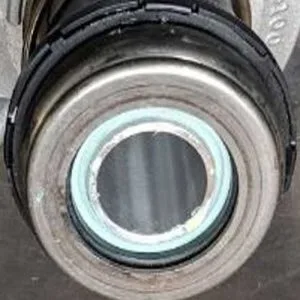
Firstly: Hearing noise when pressing on the clutch pedal: When you press the clutch pedal, the release bearing in turn presses on what is known as the clutch pressure plates. If the aforementioned components are not installed correctly, it will result in a variety of loud noises when stepping on the clutch pedal. These sounds disappear when lifting the foot off the pedal. This doesn't happen just once; you may constantly hear these sounds, and you'll notice their intensity increase when forcefully pressing the pedal and releasing it.
The release bearing needs proper lubrication to function correctly. If there is a lack of lubrication, it will make certain noises. This is because the appropriate lubricant greatly reduces the friction between the internal sliding surfaces and helps to prevent metal collision in the channels.
Secondly: An issue with gear shifting. The clutch pad is an essential component in the manual transmission, and its primary function is to assist in gear shifting. Therefore, if it gets damaged or stops working, it is natural that you would notice some problems with gear changes in the car.
Thirdly: Clutch pedal vibration: If the clutch disc gets damaged, you will find that the clutch pedal vibrates when you press it. This happens due to the interaction of pressure plates with the clutch disc, and the vibrations increase significantly as the clutch disc problem worsens. However, if the damage is still at an early stage, you might not notice or feel the vibrations.
Fourthly: The heaviness of the clutch pedal. The clutch disc will not be able to press on the pressure plates correctly if it becomes damaged. This is not a major problem, but you will need to press hard on the clutch pedal to be able to engage the gears. Also, as with the concept in the previous paragraph, the bigger the problem with the disc, the harder you will need to press on the pedal, while you will only need a slight pressure force in the early stages of the disc damage.
Sometimes, there can be a hang-up in the bearing, which temporarily damages the clutch pedal. This leads to several significant problems while driving the car.
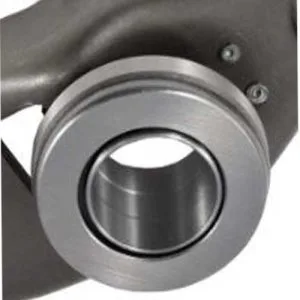
Fifthly: Hearing a grinding noise from the transmission: You might be able to hear grinding noises coming from the worn gears of the transmission or the flywheel. Each time you start the engine, or try to engage the transmission, and there's wear on the gears, you will hear this sound.
A failed clutch pad can also cause problems with the clutch plate, such as disconnection or reconnection. This issue would appear when you want to change gears, and you will hear a loud, clear grinding noise. Notably, you might be able to ignore this problem several times without taking any measures or action. However, you need to understand that leaving the situation as it is will cause future problems and make the situation much worse.
What is the clutch and what are its parts?
Speero files the clutch (also called the coupling) under Engine and transmission: it is the assembly that connects the engine to a manual gearbox and separates them when you change gear. The set that workshops call the clutch kit has three main parts. The clutch disc carries the friction lining. The pressure plate presses the disc against the flywheel. The release bearing (the clutch pad) frees the pressure plate when you press the pedal. With them come the flywheel bolted to the crankshaft and the release system: either a cable, or a master and slave cylinder in a hydraulic clutch.
Why does the clutch pedal go to the floor or not come back?
Speero's rule of thumb: a clutch pedal that drops to the floor with no resistance usually points at the release system, not the bearing itself. In a hydraulic clutch there are four causes: a leak in the master or slave cylinder, low clutch fluid in the reservoir, air in the line, or a cracked hose. In a cable clutch the cause is a snapped or stretched cable. If the pedal goes down and stays down, the first suspect is the pedal return spring, then a stuck slave cylinder, then a broken release fork. Check the fluid level first. In many cars the hydraulic clutch feeds from the same reservoir as the brake fluid, so a low level shows on both.
Light clutch pedal and the gear will not engage: what causes it?
Speero separates this case from the heavy pedal. A light pedal with a gear that will not engage means the clutch is not fully separating the engine from the gearbox. The usual cause is that the pedal's force never reaches the pressure plate: air or a leak in the hydraulic circuit, a slack cable, or a damaged release fork. If the pedal is heavy instead of light, it is the opposite: the pressure plate or release bearing has started to wear, as in the fourth sign above. The two cases differ in cause and in the part that needs replacing.
How do I know the clutch kit is worn?
Speero narrows a worn clutch kit down to four signs that show while driving. The first is clutch slip: engine revs rise but speed does not follow, especially on climbs and when overtaking. The second is a burning smell like scorched tyres after driving in traffic. The third is a high biting point, where the clutch only grips at the very end of the pedal travel. The fourth is a shudder when pulling away from a stop. Any one of these means the disc or pressure plate is finished. The kit is replaced as a whole: disc, pressure plate and release bearing together, because changing one part brings you back to the workshop within months.
Does the clutch affect the car's torque?
Yes, and Speero's explanation is simple: a slipping clutch wastes part of the engine's torque before it reaches the wheels. The engine spins fast but the worn disc does not grip the flywheel, so the car feels weak on climbs and under load, and fuel consumption rises. The engine is fine here; the problem is the clutch kit.
Is there a clutch in an automatic car?
Speero draws the line between the two cases: an automatic car has no clutch pedal, but it has clutches inside the gearbox. They are packs of friction plates worked by oil pressure and controlled by the transmission computer, together with the torque converter that does the connecting and disconnecting. A dual-clutch gearbox (DCT) has two clutches that work automatically. Do not confuse these with the air conditioning compressor clutch, which is a part of the A/C system and has nothing to do with the gearbox.
How do you protect the clutch from early wear?
Speero sums up clutch kit care in five habits. Do not rest your foot on the pedal while driving. Hold the car on a slope with the handbrake rather than the clutch. Do not keep the clutch pressed at traffic lights; put the gearbox in neutral instead. Pull away gently instead of burning the clutch. Change the clutch fluid when you change the brake fluid. When replacing, change the whole kit and inspect the flywheel. Clutch parts on Speero sit under Engine and transmission and show for your car once you set the make, model and year, for example Toyota Hilux. Also read: Manual gearbox: 5 signs it is failing.
Frequently asked questions
What are the signs of a damaged clutch pad?
There are 5 signs: noise when you press the clutch pedal, trouble shifting gears, a vibrating clutch pedal, a heavy clutch pedal, and a grinding noise from the transmission.
Why does my clutch make a noise when I press the pedal?
The noise usually comes from a lack of lubrication in the clutch pad, or from pressure plates that are not installed correctly. The noise stops when you lift your foot off the pedal.
Do I need to change the clutch pad with the clutch plate?
Yes. The clutch pad must be replaced when you change the clutch plate.
Can I keep driving with a damaged clutch pad?
You may be able to ignore the problem a few times, but leaving the clutch pad as it is will cause future problems and make the situation much worse.
The clutch pedal does not come back: what is the cause?
Speero ranks three causes in order: a broken pedal return spring, a stuck slave cylinder, or a broken release fork. If the pedal felt empty before it stuck, check the clutch fluid and leaks at the two cylinders first.
Is clutch fluid the same as brake fluid?
Speero's note: in many cars the hydraulic clutch uses the same brake fluid, often from the same reservoir. Check your car's manual before topping up, and change the clutch fluid together with the brake fluid.
Does an automatic car have a clutch?
Speero's answer: it has no clutch pedal, but inside an automatic gearbox there are clutch packs worked by oil pressure together with the torque converter, and a DCT gearbox has two automatic clutches. The air conditioning compressor clutch is a completely different part.
Related articles
 Engine
Should the engine be warmed up when the car is cold?
Learn whether warming up the engine is necessary when your car is cold, how outside temperature affects it, and how to do it properly.
4 min read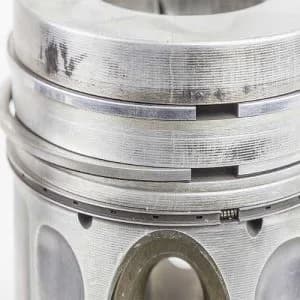 Engine
Piston rings: 5 signs they are worn, how to test and fix them
Piston rings seal the gap between piston and cylinder. Worn rings show as oil loss, blue smoke and weak power. How to test them and when a ring kit is enough.
4 min read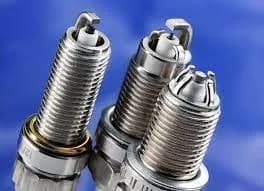 Engine
Spark plugs: laser vs regular, which is better for your car?
Learn how laser and regular spark plugs differ, and why laser plugs can offer better performance and a longer lifespan for some cars.
4 min read