
Cooling
Radiator cap: 5 signs it is bad and how to test it
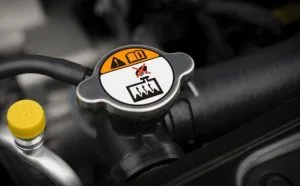
What does the radiator cap do?
The radiator cap is a pressure valve, not just a plug, and Speero lists it under the cooling category. Inside it are a spring and two valves. The pressure valve holds the coolant at the pressure printed on the cap, and that pressure raises the boiling point of the coolant so it does not boil in summer heat. When pressure exceeds the limit, the valve opens and sends the excess to the reservoir. When the engine cools, a small return valve opens and draws coolant from the reservoir back into the radiator.
If the spring weakens or the rubber cracks, that balance breaks. Coolant leaves for the reservoir too early and does not come back, so the radiator runs low and the temperature climbs.
How do I know the radiator cap is bad?
A failing radiator cap shows five signs. One sign alone can have another cause, but two or more together point to the cap.
1. Coolant loss with no visible leak
A weak cap lets coolant escape into the reservoir and evaporate through its vent, so the level keeps dropping and you never find a puddle under the car. See also causes of radiator coolant loss to rule out the other causes.
2. The reservoir overfills or boils over
If the cap opens below its rated pressure, coolant rushes into the reservoir until it fills and overflows. This case is covered in water coming out of the radiator reservoir.
3. Rising engine temperature
Without enough pressure the coolant boils at a lower temperature. Steam pockets form inside the engine and the gauge climbs, especially in traffic and under the sun.
4. A collapsed radiator hose
If the return valve sticks, a vacuum forms inside the radiator as the engine cools and the top hose collapses on itself. A hose that is sucked in or swollen after cooling points straight at the cap. See signs of a bad radiator hose to tell hose damage from cap damage.
5. Water marks or white crust around the cap
Dry stains or a white layer on the radiator neck or around the cap mean coolant is seeping past the rubber and evaporating.
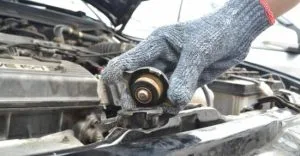
How do I test a radiator cap?
Check the cap two ways: by eye at home, and with a pressure tester at a workshop.
- 1Never open the cap while the engine is hot. Wait until the engine is fully cold.
- 2Check the rubber seals: cracked, hardened or flattened rubber means the cap is done.
- 3Press the spring with a finger: if it is loose or compresses too easily, it is worn.
- 4Look for rust or deposits inside the cap and around the radiator neck.
- 5The definitive check is a pressure tester at a workshop. The tester fits onto the cap and pumps up to the number printed on it. If the cap does not hold its rated pressure, it needs replacing.
Does a radiator cap cause overheating?
Yes. A weak radiator cap is one of the most overlooked causes of overheating. Without pressure the coolant boils at a lower temperature, and air pockets enter the system and block coolant flow inside the engine. If the temperature rises while the radiator, fan and thermostat are fine, check the cap first. It is the simplest part and the fastest to replace.
Does a radiator cap cause coolant loss?
Yes. A bad radiator cap is one of the most common causes of coolant loss with no visible leak. Coolant leaves for the reservoir too early and does not return to the radiator, then evaporates through the reservoir vent, so you notice the level dropping every week or two. Replace the cap before concluding there is an internal engine leak.
How do I know which radiator cap rating fits my car?
When you buy a radiator cap on Speero, match the pressure rating rather than picking the highest. The rating is printed on the cap itself in bar or psi, such as 0.9, 1.1 or 1.3 bar, and the right one is the number on your old cap or in the owner's manual. A cap rated above spec loads the hoses and radiator with pressure they were not designed for. Pick the make, model and year, then open the cooling category and only the parts that fit your car appear.
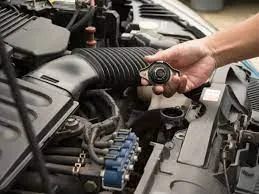
When should I replace the radiator cap?
Replace the radiator cap in three cases: when any of the five signs above appears, when it fails a pressure test, or when you see rust or cracked rubber even without symptoms. It is also worth replacing with every radiator or hose change, because the new part then works at full pressure.
If you find oil or a brown foam on the cap or inside the radiator neck, the problem is bigger than the cap. That points to oil mixing with coolant through the head gasket, and it needs a workshop check right away.
Frequently asked questions
Can I open the radiator cap when the engine is hot?
No. Wait until the engine is fully cold before you open the radiator cap.
Where do I find the pressure rating on a radiator cap?
The rating is printed on the cap itself in bar or psi, such as 0.9, 1.1 or 1.3 bar. The right one for your car is the number on your old cap or in the owner's manual.
Can I fit a radiator cap with a higher pressure rating?
No. A cap rated above spec loads the hoses and radiator with pressure they were not designed for, so match the rating rather than picking the highest.
Should I replace the radiator cap when I replace the radiator?
Yes, it is worth replacing the cap with every radiator or hose change, because the new part then works at full pressure.
What does brown foam on the radiator cap mean?
Oil or brown foam on the cap or inside the radiator neck points to oil mixing with coolant through the head gasket. The problem is bigger than the cap and needs a workshop check right away.
Related articles
Cooling
Best Toyota Coolant for Your Radiator
Genuine Toyota coolant controls engine heat and prevents rust and corrosion. See the best types in Saudi Arabia and how to pick the right one for your car.
6 min read Cooling
Water out of the radiator reservoir: 6 causes and radiator cap check
Coolant overflowing from the radiator reservoir usually means a failed cap or an overheating engine. Speero explains the 6 causes and how to check.
4 min read Cooling
There are 6 different types of radiator water and change intervals.
Radiator water helps maintain engine temperature and prevent damage. Learn about its types, change intervals, and how to prevent freezing.
4 min read