
Suspension
5 Signs Indicating the Damage of Control Arm Bushings
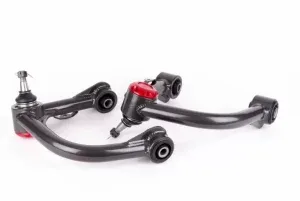
Control arm bushings - many people encounter some problems while driving their car, these issues may cause them annoyance and discomfort. Therefore, they wish to solve all the problems they face to be able to drive the car easily and safely. But the problem is that they do not know the source of the malfunction causing these annoyances, nor the reason this failure occurred. Knowing one of the problems that may bother the driver while driving helps him find practical solutions to this problem, overcome it, and prevent it from happening, and that problem is the damage to the control arm bushings.
What are the control arm bushings?
The bushings, also known as "car bushings", are made of a substance from one of the leather materials manufactured from both rubber and polyurethane. They are located in a specific place where they sit between the chassis and the car's control arms. As for their primary function, it is to maintain the car's balance so it can drive steadily, in addition to their role in reducing vibrations that may occur in the car's tires. When these bushings are damaged, the car begins to vibrate, and the driver feels discomfort while driving, in addition to some other annoying matters. These problems occur due to metal contact between the control arm and the car's chassis after the bushings are damaged. The bushings may be damaged due to the presence of a hole or vibration in them, which leads to pollutants getting into them and causing damage.
Signs Indicate Damage to the CV Joint Boot
Here are the top 5 signs a driver can notice during his driving resulting from a certain fault in the tire. These signs are:
- Steering wheel vibration while driving.
One of the most prominent indicators may be the damage to the car's ball joint boots. The car consists of many parts that form an integrated system working meticulously and orderly for the proper functioning of the car. Any malfunction in this system will cause a disruption in its operation or Car Balance A perfect example of this is that any damage to the rubber can cause a clear fault in the stability of the tires, making the driver feel a vibration in the steering wheel. This vibration intensifies as the speed of the car increases or when there is a sudden stop due to the direct connection between the car's tires and struts You didn't provide any text to translate. Could you please provide the text?
- Hearing clicking noises coming from near the tires.
Over time, the flexibility of the leather decreases, and it begins to crack, resulting in further leather damage. This produces some friction between the metals, causing loud noises similar to clicking sounds near the car's tires. Typically, these sounds are not heard under normal conditions, but they can be noticeably heard when driving on rough terrain, such as streets filled with bumps and potholes. In addition, they can be heard more prominently when using the brakes.
Also read: Explaining the function of 6 important car sensors.
- Car imbalance issues
Given that the bushings are securely affixed to the car’s structure, only allowing for upward and downward movement, any defect in these bushings would compromise their stability in their designated position. They would move randomly in all directions whenever the car moves. This is the main reason that leads to a loss of car balance while in motion.
- Uneven tire tread wear.
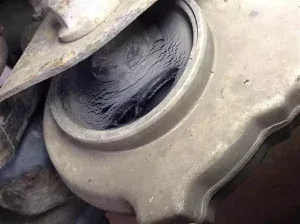
This wear is also one of the symptoms indicating damage to the suspension, so if you find wear on the front axle, or on the rear axle, but not on both together, or that the inner or outer edges of the front tires, for example, are wearing out faster than expected, the reason could be suspension damage. However, in reality, uneven wear on the tire tread does not necessarily mean that the suspension arms are damaged, as there are other reasons for this, such as damage to the suspension joints, or poor tire balancing.
- Unsafe brakes
If you notice that the car sways significantly when pressing the brakes hard, and that the stopping distance has increased from what it used to be, this could be a clear indication of damage to the rubber. This is because, when the rubber of the scissors gets damaged and its cracking increases, it will affect the entire suspension system, which in turn will affect the brakes, making them unstable.
Change the scissors' rubber.
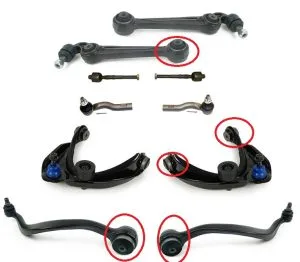
It is always advisable to promptly replace the control arm bushings when they are damaged, and not to postpone it, as delaying the change can exacerbate problems and cause more wear and tear on the car's suspension components. However, sometimes it is not possible to only replace the bushings, which may necessitate buying an entire new control arm. It is always preferable to have the bushings replaced by professionals, not because it's a difficult task, but because the disassembly and reassembly process may require specialized machinery. In addition to this, the appropriate type of bushings should be chosen for the car, as they vary from one car model to another, and it is not advisable to force them into place.Control Arm BushingsAvoid hitting it with a hammer as some people do, because this may cause damage to the bushing and the scissors after strongly knocking.
Frequently asked questions
What are the signs of bad control arm bushings?
The five main signs are steering wheel vibration while driving, clicking noises near the tires, loss of car balance, uneven tire tread wear and unstable brakes. The vibration gets stronger as speed increases or when you stop suddenly.
Why does my car make a clicking noise over bumps?
Damaged control arm bushings lose their flexibility and crack, so metal parts rub against each other. This makes clicking sounds near the tires, heard most on bumpy roads and potholes and when you brake.
Can bad control arm bushings affect braking?
Yes. Cracked bushings affect the whole suspension system, so the car may sway when you brake hard and the stopping distance can get longer.
Can I replace just the bushings or do I need a new control arm?
You can often replace only the bushings, but sometimes this is not possible and you need a whole new control arm. The right bushing type depends on your car model.
Should I replace control arm bushings myself?
It is better to have professionals do it, because removing and fitting the bushings may need specialized machinery. Do not hammer them into place, as this can damage the bushing and the control arm.
Related articles
 Suspension
4 Signs Indicate Damage to the Car's Knee Joint
Learn about the car's knee joint, its key characteristics, common causes of damage, warning signs, and related information.
4 min read Suspension
Understand the components of a car's suspension and how it works.
Suspension helps keep steering stable, supports safe control and passenger comfort, and maintains tire contact, alignment and vehicle height.
4 min read Suspension
3 Signs Indicating Damage to the Balance Nail
Learn how the balance nail supports car stability and the signs of damage, including heavy leaning during fast, sharp turns.
4 min read