
Suspension
Sway bar link: 5 signs that call for a check
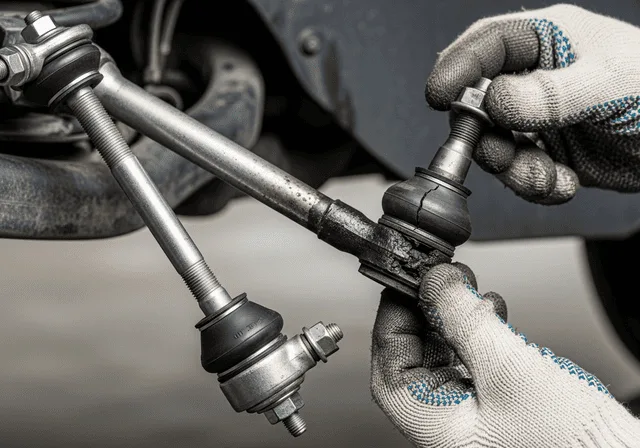
The sway bar link is a small rod that joins the sway bar to the strut or control arm, and clicking from the wheel area over speed bumps is one common sign of wear. The car may lean more in corners, but steering wheel vibration needs investigation and does not establish link failure on its own. A technician's inspection determines the fault, and replacing both sides depends on their condition and the manufacturer's requirements.
What is a sway bar link, and how does it differ from the sway bar and its bushing?
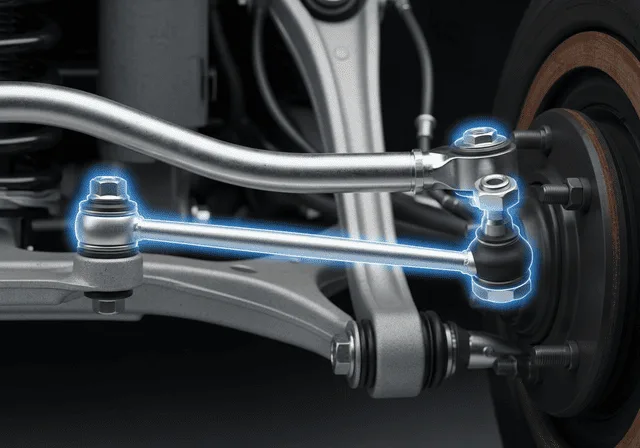
Three parts get mixed up, and each has its own name in the Speero catalogue. The sway bar (Stabilizer Bar) is the steel rod that runs across the car and joins the right side to the left. The sway bar link (Stabilizer Link) is the short arm that connects the end of the bar to the strut or control arm, with a ball joint at each end on most cars. The sway bar bushing (Stabilizer Bar Bushing) is the rubber that holds the bar to the chassis and lets it twist without noise. In everyday Arabic the link is called 'مسمار توازن' or 'تيش ميزان'. What usually wears is the link and the bushing, because they carry joints and rubber; the bar itself rarely breaks.
How does the sway bar work?
The sway bar reduces body roll in a corner. When suspension movement differs between the two sides, the bar twists and resists that difference. The link transfers force between the bar and the strut or control arm. If the link is loose or its joint is worn, the bar's effect may be reduced and you may hear the part moving in its play. A disconnected link can interrupt the bar's action between the two sides.
What are the signs of a bad sway bar link?
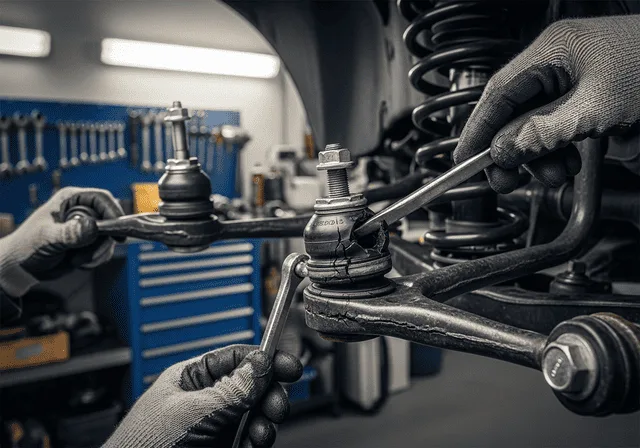
Speero recommends checking five possible warning signs, but they do not appear in a fixed order or prove link failure on their own.
1. Clicking over speed bumps and potholes
Listen for a metallic tick-tick from one wheel over bumps or broken road. It may come from the link's joint once it has play, and it sometimes disappears on smooth road. Clicking is a common symptom, but inspection determines its source.
2. The car leans more in corners
If the car leans onto one side more than before in roundabouts or corners, have the suspension inspected. A loose or disconnected link may reduce the bar's effect, but increased body roll has other possible causes too.
3. A shake or looseness in the steering wheel
Steering wheel vibration or looseness needs investigating rather than being blamed directly on the sway bar link. The link does not connect the steering to the wheels. Shaking at speed or steering play calls for inspection of the tires, steering and suspension.
4. Uneven tire wear
If you notice uneven wear, check the tires, alignment and suspension. Wear on one edge is not enough to diagnose a failed sway bar link.
5. A knock when braking or changing direction
You may hear a single knock when you brake hard or swing from right to left. A loose link moving in its play is one possible cause, but other parts can make the sound and its source needs to be identified.
Does a sway bar link cause shaking or noise?
Clicking over bumps is a common symptom worth investigating, while shaking alone does not establish link failure. The strength of the vibration does not identify its cause. If the shake is strong at a steady speed with no bumps, have the tires, steering and suspension inspected; you may need tire balancing depending on the findings.
What are the symptoms of a worn sway bar bushing?
Check the sway bar bushings if you hear squeaking or knocking over bumps or notice abnormal clearance around the bar. Sound alone does not distinguish a worn bushing from a worn link. The rubber cracks and dries out in Saudi heat and under dust, so if it is crumbling or there is excessive clearance around the bar, have a technician inspect it and determine whether it needs replacing. The bar rotating within the bushing is not, by itself, evidence of failure.
What causes a sway bar link to fail?
Inspect the link and its joint boots after impacts or when a new noise appears.
- Speed bumps and broken roads: every bump hits the joint, and high bumps taken fast shorten its life most.
- Dirt roads and desert trips: dust gets into the joint once its rubber boot cracks, eats the grease and ruins the ball.
- Heat: the rubber in the bushing and the joint boots hardens and cracks after a few summers.
- Impacts from below: a kerb or a stone bends the link or pops its joint.
- Age: the ball joint wears with use even with gentle driving.
How do you check a sway bar link yourself?
Speero recommends limiting home checks to observing symptoms and inspecting visible parts from a safe position. Confirming link failure needs a technician and may require the car to be lifted appropriately.
- 1Park on level ground, switch off the engine and apply the parking brake. Do not get underneath the car or reach near moving parts, and never go underneath a car supported only by a jack.
- 2Look at the rubber boot at each end if it is visible from a safe position. If it is cracked or grease is leaking, the joint needs inspection even if it is not clicking yet.
- 3Note when the sound occurs. Do not rock the car hard or get underneath it to trace the noise. Sound alone does not prove that the link is worn.
- 4At the workshop, the technician checks for abnormal play, inspects the bushings and compares both sides, with the suspension positioned for the vehicle's inspection procedure. Normal joint movement is different from clearance caused by wear.
Can you drive with a bad sway bar link?
Do not assume the car is safe to drive before it is inspected. If there is a loose part, contact with a tire or a clear change in stability, stop somewhere safe and arrange recovery. In other cases, have a technician assess whether you can safely drive to the workshop. Slowing down does not guarantee that the car is safe.
When should you replace a sway bar link, and do you replace both?
Replace the link when inspection confirms excessive play or breakage, because a worn joint does not recover. Inspect both sides, but a sound link does not automatically need replacing when the other one is changed. The decision depends on each side's condition and the manufacturer's requirements. Replace the bushing if inspection confirms it is damaged. There is no fixed mileage; symptoms and inspection are the reference.
How many sway bar links does a car have?
Confirm the number and positions of the links for your car's suspension layout before ordering. Most cars that use front sway bar links have two, one right and one left. If the rear anti-roll arrangement also uses two links, the total is four. A rear sway bar alone does not establish the number. In the Speero catalogue they are listed as front right, front left and rear stabilizer bar links.
Where do you find a sway bar link for your car?
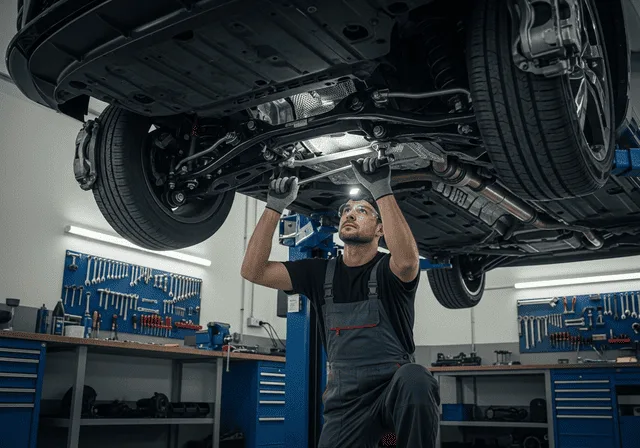
Speero lists the sway bar link and its bushing under suspension and arms, genuine (dealer) or aftermarket, and you pick your car by model and year so only the parts that fit it appear. The front right link differs from the left on some cars, so confirm the side before you order. If your car is a Toyota Camry or Hyundai Elantra, select its year on the model page and review the listed parts. If the noise comes from the strut rather than the link, the article on shock absorbers and their failure signs tells them apart.
Frequently asked questions
How do I know the sway bar link is bad?
Have the link inspected when you hear clicking over bumps or notice increased body roll in corners. Do not rely on moving it by hand alone. A technician distinguishes normal movement from excessive play and checks the joints and bushings to identify the fault.
Does a sway bar link cause the car to shake?
Shaking needs investigating; it is not proof of link failure. Clicking over bumps is a common symptom, but shaking at speed or steering play calls for inspection of the tires, steering and suspension. Vibration strength alone cannot identify the cause.
Does the sway bar cause clicking?
When you hear clicking, inspect the links, bushings and bar mountings. A worn link or bushing can make noise over bumps, but sound alone does not identify the part.
What is the difference between the sway bar link and the sway bar bushing?
At Speero, the link and bushing are separate components: the link is a short arm that connects the bar to the strut or control arm, and the bushing is the rubber that holds the bar to the chassis. Each part is replaced according to inspection findings; they do not automatically need replacing together.
Can I drive with a bad sway bar link?
Speero advises against assuming that driving to the workshop is safe without assessing the car's condition. If there is a loose part, tire contact or a clear stability problem, stop somewhere safe and arrange recovery. Slowing down alone is not enough to establish safety.
Do I have to replace both sway bar links together?
No. Inspect both sides and replace damaged parts according to the manufacturer's requirements. Failure on one side does not mean the other will fail within a set period. Replace the bushing if inspection confirms it is damaged.
How many sway bar links does a car have?
Confirm the number for your car's suspension layout. Designs using front sway bar links commonly have two at the front, making four in total if the rear also uses two. A rear sway bar alone does not establish that there are two separate rear links.
Where can I buy a sway bar link for my car?
Speero lists it under suspension and arms once you pick your model and year, genuine (dealer) or aftermarket, and the price shows on the part's page.
Related articles
Suspension
Types of Car Suspension Systems
Learn the types of car suspension systems, what each does and how to choose the right one for your car for a more stable, comfortable and safe drive.
11 min read Suspension
4 Symptoms Indicating Damage to the Car's Scissors
Car's scissors help maintain vehicle balance and stability. Learn the most common symptoms of damage and their role in safe driving.
4 min read Suspension
4 signs indicating damage to the car's axles
Learn four signs of car axle damage and how analyzing visible symptoms can help identify the source of a fault without checking every part.
4 min read