
Engine
Driveshaft: 3 Signs of Damage
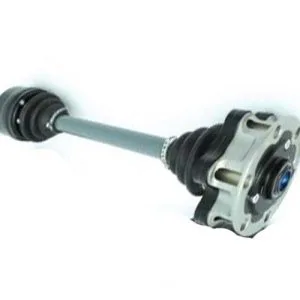
The driveshaft transfers torque from the gearbox to the differential in rear-wheel-drive vehicles and some four-wheel-drive vehicles. Its faults commonly appear as clunking when shifting into gear or pulling away, vibrations from beneath the vehicle, or unusual noises.
What is a driveshaft?
A driveshaft is a long shaft that transfers torque from the transmission, or gearbox, to the rear differential. It is usually found in rear-wheel-drive and four-wheel-drive vehicles, while most front-wheel-drive vehicles use half shafts to transfer torque to the front wheels. The shaft may be connected to a U-joint, centre support bearing, and other parts that vary by vehicle type and model.
Types of driveshafts
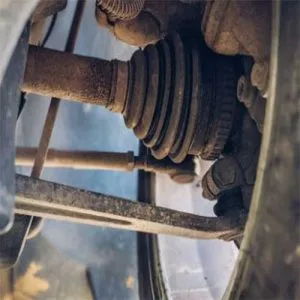
- Rear-wheel-drive vehicles: The driveshaft runs between the gearbox and the rear differential. It may be a single piece or split into two sections, joined by a U-joint that allows movement as the suspension angle changes.
- Four-wheel-drive vehicles: Some of these vehicles use more than one driveshaft to transfer torque to the front and rear axles. Most front-wheel-drive vehicles do not have a long driveshaft, because the gearbox and differential are at the front and power is transferred through half shafts.
Also read: Car fault sounds: the most common unusual car noises and their causes
Causes of driveshaft damage
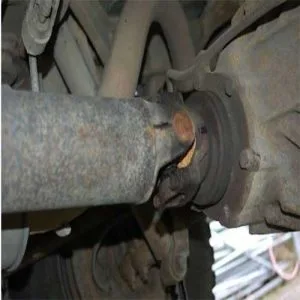
There are several causes of damage to the driveshaft or its components, including:
- The underside of the vehicle scraping against a speed bump or obstacle, which may bend or damage the shaft.
- Damage to the centre support bearing, sometimes called the carrier bearing, which affects the shaft's balance.
- Neglecting to lubricate the driveshaft U-joint at the required time.
- Damage to the U-joint or excessive play in it, which can cause clunking and vibration and may develop into separation of part of the shaft.
Signs of driveshaft damage
These are 3 common signs that call for an inspection of the driveshaft and its components:
- Clunking when shifting into gear or pulling away: You may hear one clunk or several clunks when shifting the gearbox into D or R, or when starting to move and lifting your foot off the accelerator. This sign may be linked to play in the U-joint or other shaft components.
- Vibrations from beneath the vehicle: Vibration may appear at a certain speed and then increase as speed rises. Ignoring vibration may damage the shaft, support bearing, or differential.
- Noise from beneath the vehicle: You may hear knocking or a metallic sound when accelerating or slowing down. The source of the sound should be checked because similar faults may come from other parts beneath the vehicle.
Driveshaft U-joint: its function and signs of damage
The driveshaft U-joint is the connection that lets the shaft transfer torque as the angle between the gearbox and differential changes. Damage to it, or dried-out grease inside it, may cause a clunk when shifting into D or R, whistling or squeaking at low speeds, and vibration that increases with vehicle speed.
In some vehicles, the U-joint is linked to a regular lubrication schedule: every 10,000 kilometres if your vehicle uses a greaseable U-joint. Check your vehicle's maintenance schedule to confirm the interval that applies to it.
The driveshaft centre support bearing, known as the carrier bearing, supports the shaft in vehicles that use a two-piece shaft. Damage may appear as a humming or buzzing noise from beneath the vehicle that increases with speed, or as noticeable vibration when pulling away.
Is it possible to drive a vehicle with a damaged driveshaft?
Speero does not recommend continuing to drive when there is strong clunking or clear vibration from the driveshaft until the fault is inspected. If the U-joint is severely damaged, the shaft may drop and strike the road, cutting power to the wheels. The underside of the vehicle or parts near the shaft may also be damaged.
The decision to repair or replace the shaft depends on the inspection result and the extent of the damage. Do not weld or modify the shaft before having it inspected by a specialist, because its balance is important for safe operation.
Driveshaft and axle parts for your vehicle
Speero lists 3,182 parts in the Axle & Differential category, and parts appear after you select your vehicle. Vehicle-specific pages with this category available include Toyota Hilux, Toyota Fortuner, Toyota Land Cruiser, Nissan Datsun, and Chevrolet Tahoe.
Frequently asked questions
What are the signs of driveshaft damage?
Speero lists 3 common signs: clunking when shifting into gear or pulling away, vibration from beneath the vehicle, and noise or knocking that appears when accelerating or slowing down.
What are the signs of a damaged driveshaft U-joint?
Signs of U-joint damage include a clunk when shifting the gearbox into D or R, squeaking at low speeds, and vibration that increases with vehicle speed.
Can I drive the vehicle if the driveshaft is damaged?
Speero does not recommend continuing to drive when there is strong clunking or clear vibration until the shaft is inspected. Severe U-joint damage may cause the shaft to drop and strike the road, cutting power to the wheels.
When should I lubricate the driveshaft U-joint?
Every 10,000 kilometres if the U-joint is greaseable. Also check your vehicle's maintenance schedule, because the interval may vary by design.
Is it better to repair or replace the driveshaft?
The decision depends on the condition of the shaft and the inspection result. Do not weld or modify the shaft before having it inspected by a specialist, as the damage may require replacement of a specific part or the entire shaft.
Do all vehicles have a driveshaft?
A driveshaft is usually found in rear-wheel-drive and four-wheel-drive vehicles. Most front-wheel-drive vehicles use half shafts to transfer torque to the front wheels.
Related articles
 Engine
Timing chain: failure signs, its noise and when to replace it
A bad timing chain may rattle at start-up, turn on the engine light or leave metal in the oil. Chain vs belt, the tensioner, and when to replace it.
3 min read Engine
Cleaning the car injectors in the best possible way.
Learn why cleaning car injectors matters, what causes dirt buildup, and the best method and solutions to restore engine performance.
4 min read Engine
3 Signs Indicating Damage to the Valve Seals
Valve seals are an important engine component. They control oil consumption and prevent oil from mixing with the fuel-air mixture.
4 min read