
Engine
The importance of the engine belts and when they should be changed.
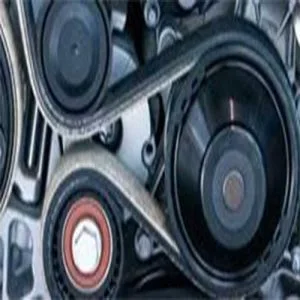
Engine belts, most people do not realize the intricacies involved in car manufacturing. It consists of numerous parts, each of which is indispensable. Every component has a special role, and no matter how small, it could significantly impact the operation of other parts. Today, this article is about one of the most crucial parts of a car; the engine belts. A lot of people may not know what they are or how important they are, and do not possess the knowledge of when to replace them. Therefore, dear reader, if you are one of these individuals, continue reading this article to the end, so you can get all the answers you are looking for.
What are engine belts and what do they look like?
Engine belts are a relatively small part of the car, but they play a significant role. They work in conjunction with the serpentine belt to keep the engine running properly. Despite the various types of engine belts, they all work to ensure the continuous operation of the engine by transferring kinetic energy through constant friction with the rotating pulleys. As for their shape, they are usually in the form of a V, unlike the timing belt in the engine, which is toothed. In some older cars, the engine belts used to be flat.
What does the engine belts consist of?
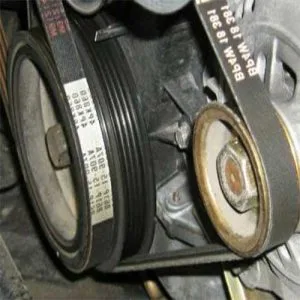
In addition to what was mentioned above, engine belts consist of several components, such as rubber and leather, along with some plastic materials, such as polyester, polyvinyl chloride, silicone, and polyethylene. Most older cars contained three belts in the engine, each specialized in a specific area. The first belt is responsible for the operation of the car's dynamo. The second belt is responsible for the air conditioner's compressor. As for the third belt, it manages the water pump. Of course, these belts contribute to connecting the components of the car engine to each other.
While there have been significant advancements recently, especially in the automotive industry, most modern cars now contain one or two belts. These two belts are the engine belt and the timing belt. The engine belt's role in these cars is to rotate each of the air conditioner compressor's pulleys, the car's dynamo, as well as the water pump with the crank pulley. As for the timing belt's role, it involves rotating the crankshaft and the engine's camshafts, in addition to ensuring synchronization in their rotation.
What are the faults in the engine's operation?
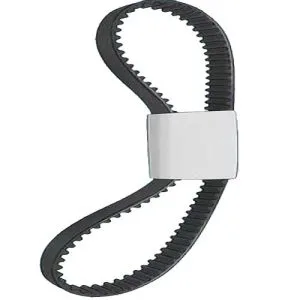
Some may wonder how to know if the engine belt is damaged or not, knowing that there are clear symptoms indicating the damage of the engine belt. Perhaps the most prominent of these symptoms is hearing a squeaking noise coming from the front of the car, along with several other symptoms such as the air conditioner ceasing to work, feeling heaviness, and having difficulty steering. The temperature in the car engine may also increase, especially since the engine belt plays a crucial role in providing the necessary energy to cool down the engine. Now, after identifying the symptoms of the engine belt malfunction, it is vital not to confuse them with the symptoms of a timing belt failure, which would cause significant engine damage after valves collide with the pistons, resulting in a lack of synchronization between the crankshaft and camshafts when the timing belt disconnects from all the pulleys.
Also read:5 Signs Indicating Oil Siphon Damage
When should the engine belts be changed?
In fact, the precise answer to this question can be found in your car's owner manual, which specifies the service life of the engine belt according to the type of car. However, in most cases, the lifespan of the engine belts can reach up to five years, as some cars can travel up to 150,000 kilometers without issues. But over time, a rise in the engine's temperature and heavy friction that the engine belt undergoes can cause significant damage to the engine belt.
Moreover, the hardening of one of the pulleys can increase the chance of the engine belt breaking. To ensure greater safety, it's recommended to change the timing belt after five years or after driving a distance of 100,000 kilometers. In addition to changing the timing belt, the pulleys, tensioners, and water pump should also be replaced if they are connected to it, as is the case with some cars, such as Ford. The goal of all these actions is preventative maintenance and avoiding repair costs in case of damage.
The process of changing the engine belt is not complicated, and does not require much effort, hardship, and precision. Anyone who has a little mechanical experience can change it.Engine BeltsOn the other hand, it is essential to choose the right technical expert to handle the timing belt replacement, due to the precision needed to calibrate the pulleys perfectly.
Frequently asked questions
How often should engine belts be changed?
Your car's owner manual gives the exact service life of the engine belt for your car. In most cases, engine belts last up to five years, and some cars travel up to 150,000 kilometers without issues.
What are the signs of a bad engine belt?
The most common sign is a squeaking noise from the front of the car. Other signs are the air conditioner stopping, heavy and difficult steering, and a rise in engine temperature.
What does the engine belt run in a modern car?
In most modern cars, the engine belt turns the pulleys of the air conditioner compressor, the dynamo and the water pump with the crank pulley.
When should the timing belt be changed?
The timing belt should be changed after five years or 100,000 kilometers. On some cars, such as Ford, the pulleys, tensioners and water pump should be replaced with it if they are connected to it.
Can I change the engine belt myself?
Yes. Changing the engine belt is not complicated, and anyone with a little mechanical experience can do it. Timing belt replacement needs a technical expert, because the pulleys must be calibrated precisely.
Related articles
 Engine
The importance of the engine gasket and when it should be changed.
Learn how the engine gasket prevents oil leaks, why it matters, the main types, and when it should be changed to protect engine parts from wear.
3 min read Engine
Is it necessary to warm up the car?
Learn why modern car engines do not need warming up before driving, and how this practice began with older vehicles in cold weather.
4 min read Engine
Fuel Pump Types and How They Work
Learn how a fuel pump moves fuel from the tank to the engine, the most common pump types, and how to choose, maintain, and repair one.
4 min read