
Engine
Piston rings: 5 signs they are worn, how to test and fix them
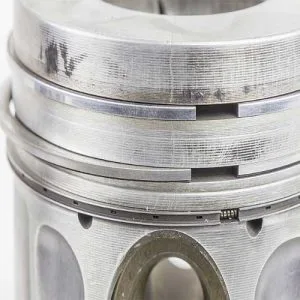
What is a piston ring?
A piston ring is a metal ring with one open gap. It sits in a groove cut around the piston and presses outward against the cylinder wall. Each piston usually carries three rings stacked above each other, and the full set for the engine is called the ring kit. The piston itself never touches the wall. The rings close the gap: they hold combustion pressure above them, scrape excess oil below them, and carry heat from the piston crown into the cylinder wall and on to the coolant.
That is why worn rings show up in two places at once: in the oil (it drops and burns) and in the pressure (it leaks and power fades).
Types of rings in a ring kit
The ring kit for each piston has two types:
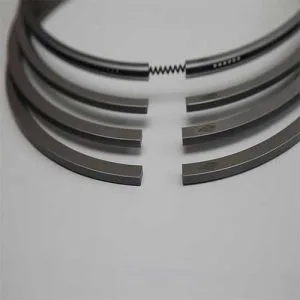
- Compression rings (top and second): hold combustion pressure inside the chamber, stop it blowing down into the sump, and carry most of the heat from the piston to the cylinder.
- Oil control ring (bottom): scrapes excess oil off the cylinder wall and returns it to the sump, leaving only a thin film for lubrication. When this ring wears, oil climbs into the combustion chamber and burns with the fuel.
On engines whose cylinders have worn, the cylinder is bored and a ring and piston set one size above standard is fitted. Speero lists ring sets in standard size and in the 025 and 050 oversizes for a number of engines, so get the size from your mechanic before you order.
What do piston rings do?
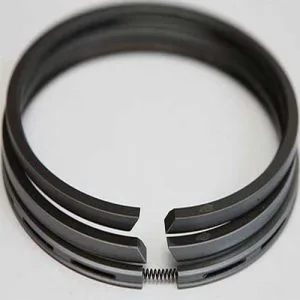
Rings have 4 jobs, and each failure sign matches a failure in one of them:
- Sealing pressure: they close the combustion chamber so the explosion pushes the piston with full force. Leaking pressure means weak power.
- Controlling oil: they leave a thin oil film on the cylinder wall and scrape off the rest. Failed scraping means burning oil and blue smoke.
- Moving heat: they carry heat from the piston crown into the cylinder wall. Without them the piston overheats, expands and scores the wall.
- Steadying the piston: they keep the piston centred in the cylinder and stop it rocking and knocking against the wall.
Also read: Valve cover gasket: 4 signs it is failing
The 5 signs of worn piston rings
1. Engine oil drops fast with no leak
The clearest sign. Worn rings let oil climb into the combustion chamber and burn with the fuel, so the dipstick drops between oil changes with no drop of oil under the car. If you are topping up between every change and there is no visible leak, the rings or the valve seals are the first suspects. The article 7 signs of low engine oil helps you tell the causes apart.
2. Blue or grey smoke from the exhaust
Burning oil makes blue-grey smoke that smells of burnt oil, and it gets heavier when you accelerate after a stretch at steady speed. Thick white smoke is usually coolant, not oil. The article white smoke from the exhaust explains the difference.
3. Weak power and higher fuel use
When combustion pressure leaks past the rings, the push on the piston weakens, so the car does not pull on hills and uses more fuel for the same trip. This sign is shared with spark plugs, injectors and the catalytic converter, so do not judge by it alone.
4. Low cylinder compression
The compression test at the workshop is the judge. Each cylinder is measured on its own, and the readings are compared with each other and with the service manual. Readings that are close together and match the manual mean healthy rings. One or more cylinders reading clearly lower than the rest means a leak past the rings or the valves. The spread between the highest and lowest reading should not exceed 10%.
5. Oil in the air filter or its hose
Pressure that leaks past the rings goes down into the sump and pushes oil vapour through the crankcase vent (PCV) into the air intake. If you find oil on the air filter or inside the air hose, the engine has excess crankcase pressure, and worn rings are its most common cause.
How to test piston rings yourself and at the workshop
Three steps, from easiest to most precise:
- 1Watch the oil and the smoke: note the dipstick level every week, and watch the exhaust colour at cold start and under acceleration. A steady drop with blue smoke is enough to take the car in.
- 2Dry then wet compression test: the mechanic measures each cylinder, then adds a little oil into the weak cylinder and measures again. If the reading rises after the oil, the oil sealed the gap for a moment and the fault is in the rings. If it stays the same, the leak is at the valves or the head gasket.
- 3Leak-down test: compressed air is fed into the cylinder and the leak percentage and its path are measured. Air coming out of the dipstick tube or the valve cover means a leak past the rings.
How to tell worn rings from worn valve seals
Both burn oil and make blue smoke. The difference is timing. Worn valve seals give a puff of blue smoke at start-up after a long stop, then it clears, because oil pools on top of the valves while the car sits. Worn rings give continuous smoke that grows under acceleration and after a stretch at steady speed, together with low readings in the compression test. The wet compression test settles it.
Fixing piston rings: does ring oil stop the smoke?
Products sold as ring oil or ring treatment, and oils thicker than the recommended grade, reduce the smoke for a while because they fill the gap between ring and wall and slow the oil climbing up. They buy weeks before the repair, not a way out of it. A worn or broken ring never returns to size with any additive, and the gap grows with every kilometre. Staying on treatments with an engine that burns oil raises the risk of a catalytic converter clogged by burnt oil, and of running the engine low on oil.
There is one real fix: open the engine and replace the ring kit, checking the cylinders and pistons and replacing whatever has worn.
Ring kit or a full engine rebuild?
A ring kit (new rings only, with gaskets and seals) is enough when the cylinder walls are intact with no scoring or wear, the pistons are in good shape, and the compression test showed a leak at the rings only. A full rebuild is needed when a cylinder is scored or out of round and needs boring, when the bearings are worn, or when the engine knocks. The mechanic decides after opening the engine and measuring the cylinders, not before.
When you order, pick your car (make, model and year) on Speero and open the engine and transmission section to see the ring sets, pistons and engine gaskets that fit your engine. Match the original part number and the size (standard or oversize) with what your mechanic specified.
What to do after replacing the rings
New rings need a running-in period to bed against the cylinder wall and seal fully. During it, avoid full throttle, high revs and long stretches at one speed, vary your speed, and change the oil and filter earlier than the usual interval because bedding-in debris collects in the first oil. After that, oil consumption returns to normal and the smoke disappears.
Frequently asked questions
How do I know my piston rings are worn?
The main signs of worn piston rings are engine oil dropping fast with no leak, blue or grey exhaust smoke, weak power, low cylinder compression, and oil in the air filter. Confirm with a wet compression test or a leak-down test at the workshop.
What do piston rings do in an engine?
Piston rings surround the piston and have 4 jobs: sealing combustion pressure, controlling the amount of oil on the cylinder wall, moving heat from the piston into the cylinder, and keeping the piston centred in the cylinder.
Does ring oil stop the smoke?
Ring oil and ring treatments reduce the smoke for a while because they fill the gap between ring and wall, but they do not repair a worn ring. The lasting fix is a new ring kit.
What is the difference between a ring kit and a full rebuild?
A ring kit replaces the rings, gaskets and seals only, and is enough when the cylinders and pistons are sound. A full rebuild includes boring the cylinders and replacing the pistons and bearings, and is needed when there is scoring, wear or knocking.
What colour is the smoke when the rings are bad?
Worn rings burn engine oil inside the combustion chamber, producing blue-grey smoke that smells of burnt oil and grows under acceleration. Thick white smoke usually comes from coolant, not from the rings.
How do I tell worn rings from worn valve seals?
Valve seals give a puff of blue smoke at start-up after a long stop, then it clears. Rings give continuous smoke that grows under acceleration, with low cylinder compression. The wet compression test separates the two.
Related articles
 Engine
5 Signs Indicating Clutch Pad Damage
Learn how the clutch pad works in manual cars and discover 5 signs of damage that need prompt attention to prevent further driving issues.
4 min read Engine
Spark plugs: laser vs regular, which is better for your car?
Learn how laser and regular spark plugs differ, and why laser plugs can offer better performance and a longer lifespan for some cars.
4 min read Engine
What is the engine piston and what is its importance in the car?
Learn what an engine piston is, why it is vital to your car, and how to identify signs of a faulty piston before engine problems cause a breakdown.
3 min read